The 'Why' Behind the Buy: Mastering Consumer Psychology for Deeper Impact
Golden Hook & Introduction
SECTION
Nova: What if the very foundation of your most carefully crafted strategic plans, your team motivation tactics, even your marketing campaigns, is built on a lie? A really convincing, deeply ingrained lie about human nature?
Atlas: Whoa, a lie? That's a bold claim, Nova. I'm listening. Are we talking about a subtle deception, or something more fundamental that we've all just… bought into?
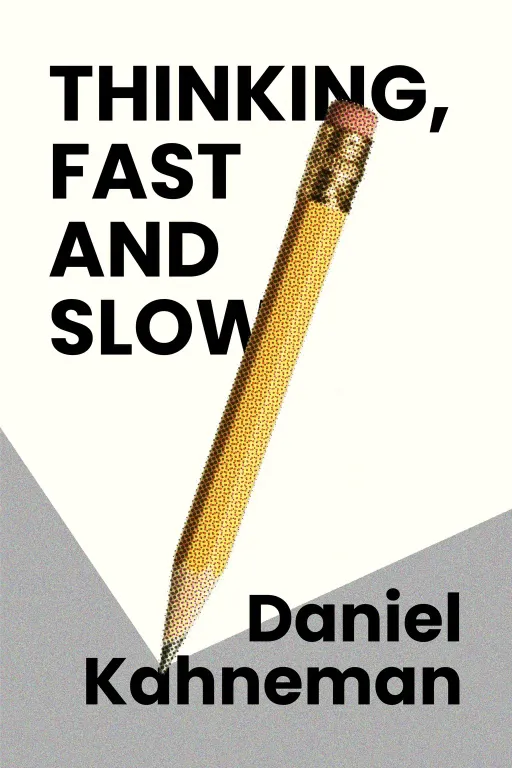
Nova: More fundamental than you might imagine, Atlas. We often operate under the assumption that humans are primarily rational beings, making logical choices based on clear information. But today, we're going to pull back the curtain on that assumption, guided by two towering figures in psychology and economics. We're diving into the brilliant insights of Daniel Kahneman's "Thinking, Fast and Slow" and Robert Cialdini's "Influence: The Psychology of Persuasion."
Atlas: That's fascinating. Kahneman, a psychologist, won the Nobel Prize in Economic Sciences, which itself speaks volumes about how intertwined these fields truly are. It implies that understanding human behavior isn't just a soft skill; it's critical to hard strategy.
Nova: Absolutely. His work fundamentally reshaped our understanding of decision-making, proving that the lines between psychology and economics are far blurrier than we once believed. And it’s that blurred line where true impact lies. So, let’s start by unraveling the internal architecture of our minds, as Kahneman so brilliantly laid it out.
The Dual Mind: Fast vs. Slow Thinking
SECTION
Nova: Kahneman introduces us to two distinct systems of thinking. System 1 is our fast, intuitive, emotional, and often unconscious mode. It's what allows you to recognize a friend's face instantly, or slam on the brakes without thinking. System 2 is our slow, deliberate, analytical, and effortful mode. That's what you engage when you're solving a complex math problem or carefully weighing the pros and cons of a major life decision.
Atlas: Okay, so System 1 is like autopilot, and System 2 is when we actually take the wheel. But if System 1 is so fast, how can it lead us astray? It sounds efficient.
Nova: Ah, that's the rub, Atlas. System 1 is incredibly efficient, but it's also prone to biases and heuristics—mental shortcuts that, while usually helpful, can lead to predictable errors. It's not that System 1 is inherently bad; it's just that it operates on assumptions and associations, and those can be flawed.
Atlas: Can you give an example? Because for someone trying to make data-driven decisions, the idea that our 'autopilot' is regularly making mistakes that we're unaware of is… unsettling.
Nova: Imagine this: a judge is presented with a case where a shoplifter is to be sentenced. Before hearing any details, the prosecuting attorney simply mentions, seemingly offhand, that shoplifting convictions in the district typically result in a 3-year sentence. Then, the actual arguments begin, detailing the specifics of this case. When the judge delivers the sentence, it's often strikingly close to that initial, seemingly irrelevant '3-year' number, even if the case merits less or more.
Atlas: Oh, I see. That’s the anchoring effect, isn't it? The initial piece of information, even if arbitrary, sets a benchmark for subsequent judgments. So, the judge's System 1 latched onto that number, and then System 2—the deliberate analysis—tried to justify it.
Nova: Precisely. The initial anchor, the 3-year mention, subtly influenced the judge's System 1. Even a highly trained System 2 mind, like a judge's, can be unconsciously swayed. It's a powerful demonstration of how biases, often rooted in System 1, steer our choices without our conscious awareness. This isn't about intelligence; it's about how our minds are wired.
Atlas: That makes me wonder, how many strategic plans or team targets have been subtly anchored by an initial, perhaps arbitrary, figure that someone threw out in a brainstorming session? We think we’re being rational, but the seeds of bias might have been planted much earlier.
Nova: Exactly. Overlooking this dual system can lead to flawed strategies and missed connections, whether you're trying to win over customers or motivate your team. It's a critical blind spot for many leaders.
The Six Pillars of Persuasion
SECTION
Nova: And if Kahneman shows us the internal architecture, Atlas, Cialdini gives us the external levers. It's like understanding the inner workings of the car, and then learning how to drive it for maximum impact. Cialdini, through years of undercover research, identified six universal principles of persuasion—triggers that reliably influence human behavior.
Atlas: Okay, so if I understand System 1, then Cialdini's principles are almost like the predictable shortcuts our System 1 takes? How does that play out in, say, motivating a team, beyond just sales?
Nova: You've got it. They're deeply ingrained human responses. Let's look at a couple. Take reciprocity. It's the powerful urge to return a favor. If someone gives us something, we feel an obligation to give back. In a team context, it's not just about gifts. It's about giving valuable information, offering help, or even just listening actively without immediate expectation.
Atlas: So, if a leader genuinely invests time and resources into developing their team members, offering mentorship and support, the team is more likely to reciprocate with loyalty, hard work, and commitment? That makes intuitive sense.
Nova: It absolutely does. It taps into that deep-seated social contract. Another powerful one is social proof. We tend to do what we see others doing, especially if those others are similar to us or are perceived as authorities. Think about how many people choose a restaurant based on how busy it looks.
Atlas: That's a perfect example. We inherently trust the wisdom of the crowd, even if the crowd is just a handful of people. But isn't there a fine line between persuasion and manipulation here? Especially for leaders who genuinely want to inspire, not just trick people into compliance?
Nova: That's a crucial distinction, Atlas, and Cialdini himself emphasizes it. These principles are like tools. A hammer can build a house or be used destructively. The key is intent and transparency. Ethical persuasion isn't about tricking System 1; it's about aligning with natural human tendencies to achieve mutually beneficial outcomes. For leaders, it means designing strategies and communication that resonate authentically, fostering genuine commitment rather than coerced compliance. When you lead with insight and understanding, you create deeper impact, not just superficial buy-in.
Atlas: So, it's about creating an environment where the desired actions feel natural and aligned with those internal psychological drivers, rather than imposing them. That's a powerful reframing.
Synthesis & Takeaways
SECTION
Nova: So, when we put Kahneman's internal biases together with Cialdini's external triggers, we see a much richer, more nuanced picture of 'why we buy,' or 'why we follow,' or 'why we decide.' It’s about recognizing that our minds are a complex interplay of intuition and logic, not just pure rationality.
Atlas: That's a profound shift. So, how acknowledging these non-rational aspects fundamentally change strategic planning or team motivation for our listeners, who are often trying to lead with insight and understanding?
Nova: It changes everything. It means moving beyond simply presenting logical arguments and instead, designing strategies that work human psychology, not against it. For strategic planning, it means anticipating cognitive biases in decision-making—both your own and your market's. For team motivation, it means understanding the deep-seated needs for reciprocity, social belonging, and commitment, and then structuring your leadership to fulfill those in an authentic way.
Atlas: It's not about forcing rationality; it's about understanding the currents of human nature and steering with them. It allows leaders to lead with empathy and greater impact, because they’re speaking to the whole person, not just the logical part.
Nova: Absolutely. And a practical step you can take today is to practice active listening in every conversation. Listen not just for the words, but for the underlying emotional currents, the unspoken assumptions, and the subtle cues that reveal System 1 at play. It deepens understanding and builds connection in ways pure logic never could.
Atlas: That's a fantastic, actionable insight. It moves us from abstract theory to immediate, impactful practice. Thank you, Nova.
Nova: My pleasure, Atlas. It's about continuous refinement, not a fixed destination.
Atlas: Indeed. And for our listeners, we hope this conversation sparked some deep reflection. What bias are you going to look for in your next meeting? How will you subtly apply a Cialdini principle for genuine connection?
Nova: Share your insights with us! We love hearing how these ideas resonate in your world.
Nova: This is Aibrary. Congratulations on your growth!