The Unseen Force: Decoding the Science of Influence
Golden Hook & Introduction
SECTION
Nova: What if I told you that most of your 'free will' is actually a carefully choreographed dance, and you're often just following the steps without even realizing who's leading?
Atlas: Whoa, that sounds a bit out there. Are you saying we're all just puppets on strings, Nova? Because I feel like I make my own choices... mostly.
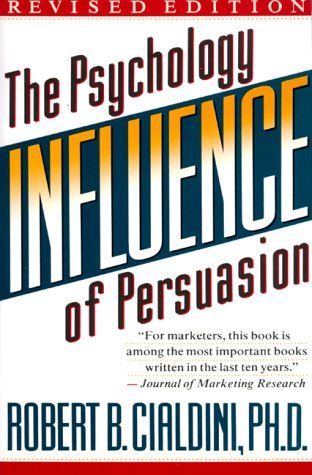
Nova: Mostly is the operative word there, Atlas! Today, we're pulling back the curtain on those invisible strings. We're diving into two absolute titans of psychological insight, starting with Robert Cialdini's groundbreaking book, "Influence: The Psychology of Persuasion."
Atlas: This sounds fascinating. I mean, we all want to understand how to get people to say 'yes,' right? But Cialdini... isn't he the guy who literally went undercover to figure this stuff out?
Nova: Exactly! Cialdini famously immersed himself in various 'influence' professions—car sales, fundraising, marketing. He wasn't just theorizing from an ivory tower; he was on the ground, observing and participating to understand what truly worked in the real world. That hands-on approach gives his work incredible weight.
Atlas: That’s a great way to put it. It’s like he became a secret agent of psychology. So, he's telling us how people get us to say yes. But then there's the other side of the coin, right? How our own minds trip us up?
Nova: Precisely. Which brings us to our second intellectual heavyweight: Daniel Kahneman and his monumental work, "Thinking, Fast and Slow." And what’s truly remarkable about Kahneman is that he's a psychologist who won the Nobel Memorial Prize in Economic Sciences. He wasn't an economist by training, yet his insights fundamentally reshaped how we understand human decision-making in economic contexts, challenging the very idea of human rationality.
Atlas: That makes me wonder, how does a psychologist win an economics Nobel? That's incredible. It really speaks to the interdisciplinary nature of understanding the human mind. So, we're talking about external influence and internal decision-making. That's a powerful combination.
Nova: It absolutely is. And together, these two books offer an unparalleled toolkit for navigating the complex world of human interaction. Let's start by unpacking Cialdini's "invisible strings"—his six universal principles of persuasion.
The Six Principles of Persuasion: Cialdini's Framework
SECTION
Atlas: Okay, so six principles. Lay them on me, Nova. How do these 'invisible strings' actually work?
Nova: The first is Reciprocity. It's simple, powerful, and deeply ingrained in us: we feel compelled to return favors, gifts, or acts of kindness. Cialdini saw this everywhere. Think about those Hare Krishna members at airports in the 70s and 80s.
Atlas: Oh, I've heard about this! They'd give you a flower, right?
Nova: Exactly. An unsolicited 'gift' of a flower. Most people didn't want the flower, but because they'd something, even unwanted, a powerful feeling of obligation was triggered. They'd then ask for a donation. The cause was the unexpected gift, the process was that feeling of indebtedness, and the outcome was a significantly higher rate of donations than if they'd just asked for money directly. People felt compelled to reciprocate, even if they secretly wanted to toss the flower.
Atlas: Wow, I can definitely relate. It’s like when someone holds a door for you, you almost instinctively feel like you have to hold the next one for them. But that sounds a bit manipulative, doesn't it? Where's the ethical line?
Nova: That's a crucial point, and Cialdini himself emphasizes that understanding these principles empowers us to use them ethically, or to defend against unethical use. He wasn't advocating for manipulation, but rather illuminating how influence works. The principles themselves are neutral; it's the intent behind their application that matters.
Atlas: That makes sense, but how can we spot them in the wild, so to speak? How do I know if I'm being swayed by reciprocity versus genuinely wanting to do something?
Nova: That's the challenge! Often, it's a sudden, almost unthinking urge to comply. If someone gives you something, even small, and then immediately asks for a favor, a little alarm bell should go off. It's about recognizing that feeling of obligation before you act on it without thought. Another powerful principle is Social Proof. We look to others to determine what's correct behavior. Think about canned laughter on sitcoms.
Atlas: Oh man, I hate canned laughter! It always feels so fake.
Nova: It does, but studies show it works! We're more likely to find something funny if we hear others laughing. Or think about those "best-seller" lists. We assume if a lot of people are buying it, it must be good. Or even simpler, when you're in an unfamiliar city looking for a restaurant, you're more likely to choose the one with a crowd inside. The cause is uncertainty, the process is looking to the behavior of others, and the outcome is conforming to that behavior.
Atlas: That’s a great example. I’ve definitely been that person choosing the crowded restaurant. It’s like we’re all just trying to follow the herd. But what if the herd is wrong?
Nova: Exactly! That's where critical thinking comes in. Social proof can lead to herd mentality, for better or worse. It's a powerful shortcut our brains use, but not always a reliable one. The key is to recognize when you're relying on it versus making an independent judgment.
The Dual-System Mind: Kahneman's Cognitive Biases
SECTION
Atlas: So, we've got these external forces pulling at us. But what about our own internal programming? I'm curious, how does our own brain get in on this 'choreographed dance' you mentioned earlier?
Nova: Ah, that's where Kahneman steps in with his revolutionary concept of System 1 and System 2 thinking. Think of System 1 as your fast, intuitive, emotional brain. It operates automatically and quickly, with little or no effort and no sense of voluntary control.
Atlas: So, like when I see a picture of a cute puppy and instantly feel happy? That's System 1?
Nova: Perfect example! Or when you instinctively recognize a familiar face, or slam on the brakes when you see a hazard. System 2, on the other hand, is your slow, deliberate, analytical brain. It allocates attention to effortful mental activities that demand it, like complex computations.
Atlas: Okay, so System 2 is like when I'm trying to solve a Sudoku puzzle or figure out my taxes. It takes effort.
Nova: Exactly. And the problem is, System 1 often jumps to conclusions and creates shortcuts, which Kahneman calls cognitive biases. These biases can lead us astray, often without us realizing it. One of the most common is the Anchoring Effect.
Atlas: Anchoring? Like dropping an anchor in the ocean?
Nova: Precisely. In a negotiation, for instance, the first number mentioned, even if arbitrary, acts as an 'anchor' that heavily influences subsequent judgments. Let's say you're buying a used car. The seller throws out a ridiculously high price. That's the anchor.
Atlas: And even if I know it's too high, it still kind of sticks in my head, right?
Nova: It absolutely does! System 1 latches onto that initial number, and even when System 2 tries to be rational, all your subsequent counter-offers or assessments will be biased towards that initial, often unreasonable, anchor. You might end up paying more than you initially would have if no anchor had been set. The cause is the initial number, the process is System 1's tendency to latch on, and the outcome is a biased negotiation.
Atlas: That’s amazing how subtle that is. I’ve been in those situations and never realized I was being anchored. What are some other ways System 1 biases lead us astray in daily life?
Nova: Oh, there are so many! Confirmation bias, for instance. We tend to seek out and interpret information in a way that confirms our existing beliefs. If you believe a certain political candidate is bad, you'll naturally pay more attention to news articles or social media posts that reinforce that belief, often dismissing contradictory evidence. System 1 loves to confirm what it already "knows."
Atlas: I totally know that feeling. It’s like my brain actively filters out anything that doesn't fit my narrative. So, understanding these systems, how does that actually help us? Does it make us immune to being anchored or confirming our biases?
Nova: Not immune, but it gives us a superpower: awareness. When you recognize that an initial number might be an anchor, your System 2 can kick in and consciously adjust. When you catch yourself only seeking information that confirms your view, you can deliberately look for opposing viewpoints.
Atlas: So, it's about giving System 2 a fighting chance against System 1's shortcuts.
Nova: Exactly. And here's where the two books powerfully connect. Persuaders, whether they realize it or not, often target our System 1's shortcuts. They use scarcity to trigger our intuitive fear of loss, or social proof to activate our tendency to follow the crowd. Understanding Kahneman helps us recognize Cialdini's principles are being deployed, because we see the underlying cognitive mechanism being exploited.
Atlas: That’s a great way to put it. It's like Cialdini shows us the external levers, and Kahneman shows us the internal buttons those levers are pushing.
Synthesis & Takeaways
SECTION
Nova: Absolutely, Atlas. It's about moving from being a passive participant in that 'choreographed dance' to understanding the steps, and even learning to lead occasionally.
Atlas: And that, to me, is the real power of these books. It's not just about avoiding being manipulated, but also about becoming more aware, more intentional in our own decision-making. It’s about integrity, both in how we are influenced and how we influence others.
Nova: Precisely. The unseen forces of influence are always at play, both outside of us and within our own minds. But with the insights from Cialdini and Kahneman, we transform from unwitting subjects to informed observers, capable of making clearer, more deliberate choices. We become the architects of our own decisions, rather than just passengers.
Atlas: That’s actually really inspiring. So, for our listeners, the tiny step we suggest this week is to simply observe. Think about a recent decision you made, big or small. Can you identify any of Cialdini's six principles at play, or see how Kahneman's System 1 might have jumped to a conclusion?
Nova: The power of observation is immense. It's the first step to reclaiming your agency. Once you start seeing these mechanisms, you can't unsee them, and your world of decision-making fundamentally changes.
Atlas: That's a profound thought to end on. Thank you, Nova.
Nova: Thank you, Atlas. This is Aibrary. Congratulations on your growth!