The Strategic Blind Spot: Why Intuition Isn't Enough for Lasting Impact
Golden Hook & Introduction
SECTION
Nova: What if the very instinct you trust most, your gut feeling, is actually leading your strategic decisions down a blind alley? We're often told to 'trust our gut,' but what if that 'gut' is riddled with predictable errors?
Atlas: Whoa, that's a bold statement, Nova. I imagine a lot of our listeners, especially those in high-stakes leadership roles, pride themselves on their intuition. It's almost revered in strategic circles.
Nova: Exactly, Atlas. And that's precisely the "Strategic Blind Spot" we're dissecting today, a concept explored in a powerful framework called 'The Strategic Blind Spot: Why Intuition Isn't Enough for Lasting Impact.' It's a provocative exploration into how our minds, even the sharpest ones, can play tricks on us, especially when connecting complex ideas.
Atlas: So, it's not just about what we know that can derail us, but what we we know, or how we instinctively process it, that gets us into trouble? That's going to resonate with anyone trying to build lasting solutions.
Nova: Absolutely. It argues that recognizing these inherent cognitive biases isn't a weakness; it's the first step toward truly strategic leadership and creating genuine, lasting impact. It's about elevating both systems and people, as you often say.
The Dual Systems of Thought & The Blind Spot Unveiled
SECTION
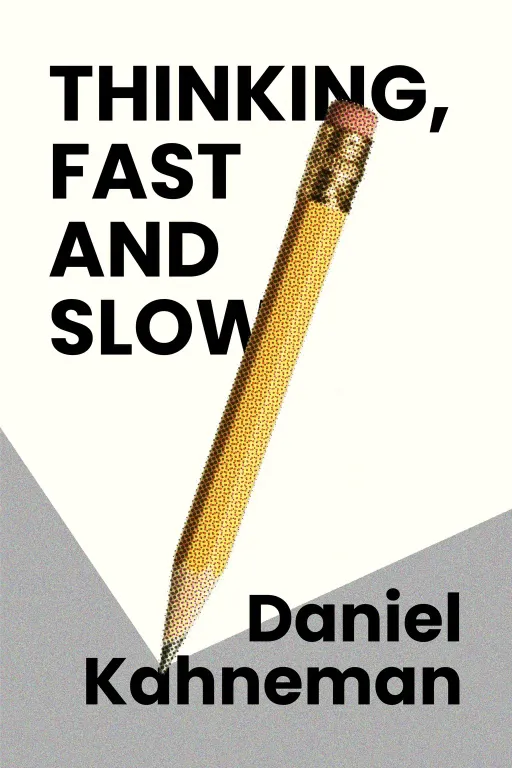
Nova: To truly understand this strategic blind spot, we need to dive into how our brains actually work. For decades, we've relied on the groundbreaking insights from Daniel Kahneman, the Nobel laureate, and his seminal work, "Thinking, Fast and Slow." He revealed that our minds operate on two distinct systems.
Atlas: Okay, so a dual-core processor for the brain? Can you break that down for us?
Nova: That's a great analogy, Atlas. System 1 is our fast, intuitive, emotional, and largely unconscious thinking. It's what allows you to instantly recognize a face, understand a simple sentence, or slam on the brakes without conscious effort. It's efficient, but it's also prone to biases and shortcuts.
Atlas: Right, like when you make a snap judgment about someone based on their appearance, or you just like a certain stock is going to perform well, even without hard data.
Nova: Precisely. Then there's System 2. This is our slow, deliberate, effortful, and logical thinking. It's what you use for complex calculations, learning a new language, or carefully weighing the pros and cons of a major strategic decision. It's rational, but it's also lazy. It prefers to let System 1 do most of the work.
Atlas: That sounds like a recipe for disaster in leadership. If System 1 is constantly taking the wheel, especially in a fast-paced environment where leaders are under immense pressure to make quick calls, aren't we just setting ourselves up for predictable errors? As a strategic architect, I'm always looking for those foundational flaws.
Nova: That's the strategic blind spot, Atlas. When leaders over-rely on System 1 for complex, long-term strategic decisions, they fall prey to predictable errors. Think of it like this: your System 1 might tell you that a new, flashy technology is a guaranteed success because it innovative, triggering an emotional response. But System 2, if engaged, would ask for the ROI, the market analysis, the implementation challenges.
Atlas: So, the "gut feeling" that a brilliant idea will just because it's brilliant, without deep analysis of human behavior or market realities, that's a System 1 trap? It sounds like the kind of unexamined bias that could influence a key decision, as the book asks.
Nova: Absolutely. And Kahneman's work, which earned him the Nobel Prize in Economic Sciences, wasn't just theoretical. It completely reshaped our understanding of human rationality, showing that we're not the purely logical beings we often imagine ourselves to be. His research, often done with Amos Tversky, moved psychology out of the lab and into real-world decision-making. It's why this concept is so crucial for strategic architects.
Atlas: So the goal isn't to eliminate System 1 – we need that quick thinking for survival – but to be aware of its shortcuts and know when to engage System 2.
Nova: Exactly. It's about self-awareness, knowing when your mind is playing tricks, and building systems to counteract those biases. It's about understanding that our minds, while incredibly powerful, have these predictable errors built-in.
Leveraging Biases for Strategic Design & The Shift
SECTION
Nova: Now, once we recognize these inherent biases and the dual systems at play, what do we do with that knowledge? This is where the concept of 'the shift' truly comes into its own, and it's beautifully illuminated by another groundbreaking work: "Nudge" by Richard H. Thaler and Cass R. Sunstein.
Atlas: Okay, so Kahneman tells us our minds misfire, and Nudge tells us about it? That sounds like the kind of practical application a human-centric innovator needs.
Nova: Precisely. Thaler, also a Nobel laureate, and Sunstein introduced the idea of "choice architecture." They show how understanding human biases allows us to design environments that gently guide people toward better outcomes. It's not about forcing choices, but about making the best choice the easiest or most obvious one.
Atlas: So, for someone in tech adoption, for example, instead of just building a great product and hoping people use it, you're saying we can subtly design the user experience to make the adoption process almost frictionless by anticipating their cognitive shortcuts?
Nova: That's a perfect example. Think about how many tech products fail not because they're bad, but because the onboarding process is overwhelming, or the default settings don't align with typical user behavior. A "nudge" might be setting the privacy settings to a more secure default, knowing most people won't bothered to change them, thus protecting users without them even realizing it. Or making the "opt-in" for a new feature the default, knowing most will stick with it.
Atlas: But wait, that sounds a bit like manipulation. Where's the line between gently guiding people towards better outcomes and just, well, tricking them? As someone who cares about elevating people, that's a critical ethical consideration.
Nova: That's a crucial distinction, Atlas. Thaler and Sunstein are very clear: nudges should be transparent, easy to opt-out of, and designed to improve welfare, not exploit vulnerabilities. The intent is key. It's about understanding human behavior to help people make decisions that are in their own best interest, or in the best interest of a well-defined strategic goal, responsibly. It’s about creating an environment where the path of least resistance is the path towards impact.
Atlas: That's a great way to put it. So, Nova's Take, which we mentioned earlier, that true strategic vision comes from understanding both our own cognitive shortcuts those of the people we aim to serve, really brings these two ideas together. It's about self-awareness and then leveraging that awareness to design for others.
Nova: Exactly. It’s a powerful blend of introspection and external observation. For any leader, any strategic architect, the deep question from our discussion today is: Where in your current strategies might an unexamined bias be influencing a key decision? Are you over-relying on a System 1 gut feeling for a System 2 problem? Are you designing your solutions, your tech, your processes, with an understanding of how human biases will actually play out?
Atlas: That's a question that could fundamentally shift how someone approaches their next big project or their entire organizational culture. It's about moving from simply having a vision to truly understanding the human element that will make or break that vision.
Synthesis & Takeaways
SECTION
Nova: Ultimately, the strategic blind spot isn't a flaw to be ashamed of; it's an inherent part of being human. The real power, the true strategic advantage, comes from acknowledging it. It's about cultivating that System 2 thinking, creating processes, and designing environments that account for our predictable irrationality.
Atlas: It transforms decision-making from a solitary, intuitive act into a deliberate, informed process. It’s about building those lasting solutions by deeply understanding the human element. For anyone who craves unique insights and enjoys challenging conventional thinking, this is a profound realization.
Nova: Indeed. It's about stepping beyond the immediate and connecting concepts, using that keen analytical mind to build something truly impactful, not just for systems, but for people. It’s an invitation to trust your inner wisdom, but also to temper it with informed deliberation.
Atlas: So, for our listeners, I’d really encourage you to sit with that question: Where in your current strategies might an unexamined bias be influencing a key decision? That self-reflection alone is a powerful first step.
Nova: Absolutely. Because recognizing the blind spot is the first step to seeing the path forward with clarity.
Nova: This is Aibrary. Congratulations on your growth!