The Silent Saboteur: Why Your Mindset Drives Business Outcomes.
Golden Hook & Introduction
SECTION
Nova: What if I told you that the biggest threat to your business isn't the competition, the economy, or even a bad product, but something far more insidious, hiding in plain sight within your own head?
Atlas: Internal? You mean like, a secret stash of stale donuts in the breakroom? Because that’s a real threat to my productivity.
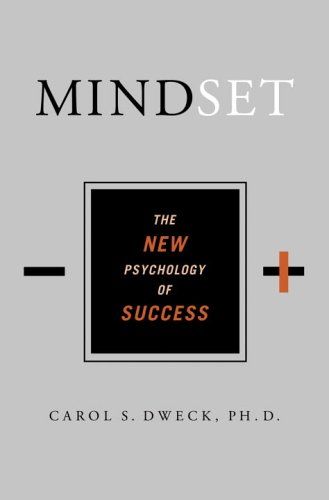
Nova: Well, Atlas, those donuts are a symptom, not the cause. Today, we're dissecting, which draws heavily from two titans of thought: Carol Dweck, whose groundbreaking work on mindsets has become a cornerstone of modern psychology and business strategy, and Daniel Kahneman, a Nobel laureate whose research unveiled the hidden architecture of human decision-making, forever changing how we understand our own minds.
Atlas: Oh, I love that. So we're talking about the invisible forces shaping our choices, the ones we rarely question because they feel so… us. For anyone trying to build something, these ideas aren't just academic; they're the difference between soaring and stalling.
Nova: Exactly. And the first one is truly foundational: our mindset. It's the lens through which we view our abilities and potential, and it can silently dictate our entire trajectory.
The Blind Spot: Fixed vs. Growth Mindset in Business
SECTION
Nova: Carol Dweck’s research, which has been widely celebrated for its profound insights, highlights two fundamental ways we approach capability: the fixed mindset and the growth mindset. Think of it like this: a fixed mindset is like a delicate hothouse flower; it believes its abilities are static, unchangeable. If it encounters a challenge, it wilts, fearing failure because failure means it's not good enough.
Atlas: Oh, I see. So the belief itself is the limitation. It's not that you grow, it's that you believe you or change your fundamental nature.
Nova: Precisely. Now, imagine a resilient, wild oak tree. That’s the growth mindset. It believes abilities can be developed through dedication and hard work. When it faces a challenge, it doesn’t see a threat to its identity; it sees an opportunity to stretch its roots deeper, to grow stronger branches. Failure isn't a verdict; it's feedback.
Atlas: That makes sense, but how does this actually play out in a real business scenario? Because I imagine a lot of our listeners might think they a growth mindset, but are they really? It's easy to say you embrace challenges, harder to do it when your company's future is on the line.
Nova: Absolutely. Let's take the story of a brilliant tech startup founder I once heard about. Let's call him Alex. Alex was a coding prodigy, built an incredible app with cutting-edge technology years ago. But his belief was, "I'm a great coder, this is my talent." When new programming languages emerged, and the market shifted, Alex resisted learning them. He'd say things like, "My skill set is solid, the market just needs to catch up." He blamed competitors for being 'flashy' and customers for not 'understanding true quality.'
Atlas: Oh man, I’ve seen this movie before. The product starts gathering dust while the founder is still polishing their outdated trophy.
Nova: Exactly. His fixed mindset about his coding ability prevented him from seeing that the needed to evolve. The cause was his rigid belief, the process was resisting learning and externalizing blame, and the outcome was his once-innovative product becoming obsolete, and eventually, his company failed to adapt.
Atlas: But wait, isn't there something to be said for focusing on your strengths? Isn't trying to be good at everything just spreading yourself too thin, especially for a busy entrepreneur?
Nova: That’s a great counterpoint, Atlas. It's crucial to understand that a growth mindset isn't about becoming a jack-of-all-trades or abandoning your core strengths. It’s about believing you learn and adapt to what’s necessary, even if it’s outside your comfort zone, and leveraging those new skills to enhance your strengths. Think of another founder, Sarah. Her strength was initially product design, but when her marketing efforts stalled, she didn't say, "I'm not a marketer." Instead, she dove into learning digital marketing analytics, taking courses, and experimenting. She saw it as a new skill to acquire to support her existing passion.
Atlas: Oh, I like that. She didn't abandon her product design strength; she it. She believed she could learn a new skill, not that she was inherently bad at marketing.
Nova: Precisely. Her business thrived because she saw every challenge as a puzzle to solve with new learning, not a judgment on her innate capabilities. So, it's about the belief in potential, not just the potential itself. That's a huge shift, and it directly impacts resilience and learning from failures in entrepreneurship.
Cognitive Biases: The Unseen Drivers of Business Decisions
SECTION
Nova: And speaking of invisible forces that shape our success, let's talk about the brain's secret shortcuts that often lead us down the wrong path, courtesy of Daniel Kahneman, whose Nobel Prize-winning work in behavioral economics has revealed just how non-rational we can be.
Atlas: Oh, the Nobel Prize winner! I'm ready for some intellectual fireworks. What kind of shortcuts are we talking about? Like, hitting 'reply all' when you shouldn't?
Nova: Even more fundamental than that. Kahneman, in, describes two systems of thought. System 1 is fast, intuitive, and emotional; it's what helps you recognize a friend's face or instinctively brake when a car swerves. System 2 is slower, more deliberate, and logical; it's what you use to solve a complex math problem or plan a strategic business move.
Atlas: So System 1 is great for not crashing your car, but maybe not for deciding on a multi-million dollar acquisition?
Nova: Exactly. While System 1 is incredibly efficient, it’s also prone to what Kahneman calls "cognitive biases" – systematic errors in thinking that affect the decisions and judgments we make. One of the most insidious in business is the "sunk cost fallacy."
Atlas: Oh, I’ve heard of that. Is that when you keep throwing good money after bad?
Nova: It is. Imagine a company that invested millions developing a new product. After two years, market research clearly shows the product won't be profitable. However, the leadership keeps pouring more money into it, saying, "We've already invested so much; we can't just give up now."
Atlas: That sounds rough, but I can definitely relate. It’s like when you’re halfway through a terrible movie, but you keep watching because you’ve already invested an hour and a half.
Nova: That’s a perfect example. The cause is the emotional attachment to past investment, the process is ignoring current data because of that attachment, and the outcome is compounding losses, chasing a ghost of a return. Objectively, the money is gone – it's "sunk." The rational decision is to evaluate the future potential, not the past spend.
Atlas: That makes me wonder, what's another one that really trips up business leaders? Because I imagine a lot of our listeners have felt the sting of a decision that, in hindsight, seems obvious, but felt right at the time.
Nova: Another pervasive one is "confirmation bias." This is where we tend to seek out, interpret, and remember information that confirms our existing beliefs, while dismissing information that contradicts them. Picture a CEO who is convinced their company's new service will disrupt the market. They hold meetings, and only hear positive feedback because their team knows what the CEO wants to hear, or they simply discount any dissenting opinions as "not understanding the vision."
Atlas: So they're essentially building an echo chamber around their own ideas, actively filtering out anything that might challenge their initial hunch.
Nova: Precisely. The cause is our brain's desire for consistency and efficiency, the process is selective information gathering, and the outcome can be a disastrous product launch because they never truly assessed the market objectively. They confirmed their belief rather than tested it.
Atlas: So our brains are basically trying to be efficient, but sometimes that efficiency makes us spectacularly inefficient, or worse, just plain wrong. It’s like our mental autopilot sometimes takes us off a cliff.
Synthesis & Takeaways
SECTION
Nova: Exactly. Both fixed mindsets and cognitive biases are about our internal operating system, the silent architects of our decisions. A growth mindset helps us see challenges as opportunities for skill development and adaptation, while understanding biases helps us recognize we're processing those challenges, allowing us to course-correct.
Atlas: So it's a two-pronged attack on our 'silent saboteurs.' It means we're not just victims of our own brains; we can actually reprogram our approach to business and life. How do listeners start to apply this?
Nova: Start with that deep question from our content: 'Where in your business are you operating with a fixed mindset, and how might shifting to a growth mindset change your next decision?' Really reflect on that. And when you're making a critical choice, take a moment to pause and ask yourself, 'What biases might be influencing me right now? Am I falling prey to the sunk cost fallacy? Am I only seeking information that confirms what I already believe?'
Atlas: That’s actually really inspiring. It gives us agency over our own thinking. It’s about conscious awareness leading to strategic advantage, giving us the power to truly grow our businesses, not just hope for it.
Nova: Precisely. The power to break free from these silent saboteurs lies entirely within our grasp.
Atlas: And we want to hear from you! How have these 'silent saboteurs' shown up in your business, and what shifts are you making? Share your insights with the Aibrary community. We love hearing your thoughts and experiences.
Nova: This is Aibrary. Congratulations on your growth!