The Science of Better Decisions: Stop Guessing, Start Knowing
Golden Hook & Introduction
SECTION
Nova: Decision.
Atlas: Oh, that’s a heavy one right out of the gate, Nova. Uh… regret.
Nova: Ha! Okay, fair. My turn: Bias.
Atlas: Oh, easy. Blind spot. Or, you know, that one uncle at Thanksgiving.
Nova: Perfect! Last one: Intuition.
Atlas: Gut feeling. Or… that time I I knew where I was going without GPS. Spoiler alert: I didn’t.
Nova: Atlas, I think you’ve just perfectly set the stage for our entire conversation today! We’re diving into the fascinating, sometimes frustrating, world of how we make decisions – and how often our brilliant brains take sneaky shortcuts.
Atlas: It’s true! I mean, we all think we’re rational, logical beings, right? But then you try to remember where you parked your car… or you're absolutely convinced a certain research hypothesis to be true because it just right.
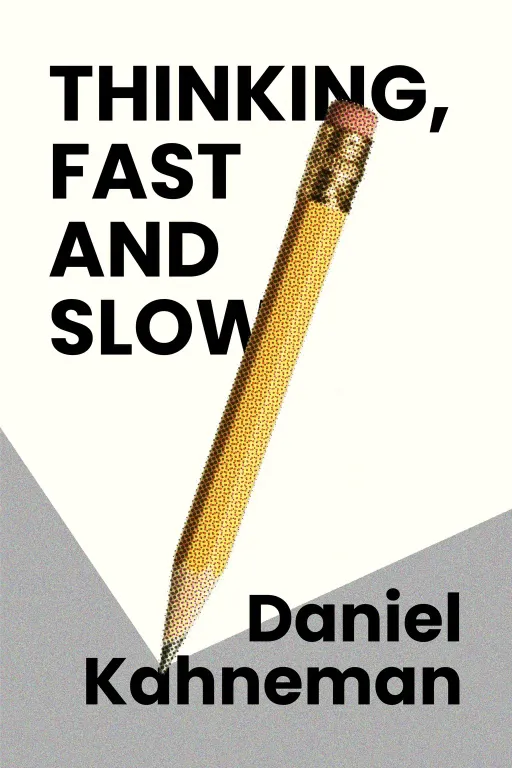
Nova: Exactly! And today, we’re unpacking the science behind those moments, drawing heavily from two absolute titans in the field: Daniel Kahneman’s groundbreaking work in “Thinking, Fast and Slow” and Richard H. Thaler and Cass R. Sunstein’s incredibly influential book, “Nudge.”
Atlas: Oh, these are foundational texts! I remember reading about Kahneman’s Nobel Prize. It wasn't even in economics, technically, was it?
Nova: You’re absolutely right! He won the Nobel Memorial Prize in Economic Sciences, but for his revolutionary work integrating psychological research into economic theory. He basically showed economists that humans aren't always rational actors. And then, years later, Thaler, one of the authors of “Nudge,” also won a Nobel for his contributions to behavioral economics, building directly on Kahneman's insights. It's a powerful intellectual lineage that fundamentally changed how we understand human choice.
Atlas: That’s incredible. So it’s not just abstract theory – this is about understanding the very fabric of our decision-making, which, for anyone passionate about exploring new knowledge, is like getting a cheat code for critical thinking.
Nova: Absolutely. And that curiosity about how we make sound, objective choices, especially in complex fields like science and research, is precisely what we’re exploring today.
The Dual Operating Systems of the Mind
SECTION
Nova: So, let’s kick things off with Kahneman’s most famous idea: the two systems of thought, System 1 and System 2. Think of them as two very different employees in your brain’s decision-making department.
Atlas: Okay, I’m intrigued. Are we talking about a fast, impulsive intern versus a slow, meticulous CEO?
Nova: That’s a brilliant analogy, actually! System 1 is your fast, intuitive, emotional, almost automatic response system. It's what tells you to duck when something flies at your head, or quickly recognize a face, or understand a simple sentence. It’s effortless, it’s always on, and it’s incredibly efficient.
Atlas: So, my gut feelings, my first impressions… that’s all System 1 at work. It sounds incredibly useful for day-to-day survival, for making quick judgments.
Nova: It is! But here’s the catch: System 1 is also prone to biases and heuristics – mental shortcuts that can lead us astray. It loves a good story, even if it’s incomplete, and it’s not great with statistics or complex logic. System 2, on the other hand, is your slow, analytical, effortful, logical thinker. It’s what you engage when you’re solving a complex math problem, trying to consciously ignore a distraction, or carefully weighing the pros and cons of a major life decision.
Atlas: Wow, that’s a clear distinction. So, how do we know which system is in charge at any given moment, and when should we inherently trust one over the other, especially when we're trying to be objective?
Nova: That’s the million-dollar question, isn’t it? And often, we know System 1 is in charge until it’s too late. Let me give you a classic example, the anchoring effect. Imagine you’re a researcher, and you're asked to estimate the economic impact of a new policy. Before you even start crunching numbers, someone casually mentions a very high, or very low, arbitrary number.
Atlas: Oh, I see where this is going. That initial number, even if it's irrelevant, would probably stick in my head and influence my own estimate, wouldn't it?
Nova: Precisely. That initial number acts as an 'anchor' for your System 1. It quickly grabs onto it, and then your System 2, when it eventually kicks in, doesn't start from a blank slate. Instead, it adjusts that anchor, often insufficiently. So, your final, supposedly objective, estimate ends up skewed towards that initial, arbitrary number. Your System 1 caused you to quickly latch onto a piece of information, and then your System 2 worked to rationalize around it, rather than independently.
Atlas: That’s wild! I can totally see how that would play out in, say, a grant proposal review, or even just setting a research budget. Someone mentions a previous project's cost, and suddenly, that becomes the unconscious baseline. But how can someone in a high-stakes research environment, under pressure, consciously override System 1 when it's so automatic? It sounds like we're constantly fighting our own brains.
Nova: You're not fighting it, Atlas, you're learning to manage it. The first step, as Kahneman argues, is simply awareness. Recognizing that System 1 is constantly generating intuitions and impressions, often biased ones. Then, when you encounter an important decision, especially one with significant implications, that's your cue to consciously engage System 2.
Atlas: So, what does that look like in practice? Just… pause?
Nova: Exactly. Pause. Ask yourself: "What biases might be influencing my initial reaction?" Seek out diverse information, even information that contradicts your initial gut feeling. Actively try to reframe the problem. If you're involved in, say, a peer review, don't just read the abstract and form an opinion; force yourself to dissect the methodology first, then the results, then the discussion, before letting your System 1 take over. It’s about building deliberate checks and balances into your process.
Nudging Towards Better Choices
SECTION
Nova: Speaking of setting ourselves up for success, what if the environment itself could help us make better decisions, almost effortlessly? This leads us beautifully into the work of Thaler and Sunstein in their book “Nudge.”
Atlas: Oh, this is where it gets really interesting – the idea that we can be guided without being forced. But what exactly is a 'nudge'? Is it manipulation, or is it genuinely helpful guidance? Where’s that ethical line?
Nova: That’s a crucial distinction, Atlas. A nudge, as they define it, is any aspect of the choice architecture that alters people's behavior in a predictable way without forbidding any options or significantly changing their economic incentives. It's about designing the environment so that the 'better' choice is the easier, more obvious, or default one. It's not manipulation because it preserves freedom of choice. You can always opt out.
Atlas: Okay, that makes sense. So, it's not about making healthy food the only option in a cafeteria, it's about putting it at eye level, right?
Nova: Perfect example! That’s a classic nudge. Or consider organ donation. In some countries, you have to actively to be an organ donor. In others, you’re automatically a donor unless you actively. The default choice, the 'nudge,' has a massive impact on donation rates, often without people even consciously thinking about it. The cause is a change in the default setting, the process is people sticking with the easiest option, and the outcome is significantly higher donation rates.
Atlas: That’s fascinating. It shows how powerful seemingly small design choices can be. For someone like our listeners, who are passionate about exploring new knowledge and perhaps even designing experiments or presenting findings objectively, how can we use 'nudges' to ensure clarity and reduce bias in how information is received, rather than accidentally introducing it?
Nova: That’s a brilliant question, and it speaks to the ethical and practical application of these insights. If you’re presenting data, for instance, you can nudge your audience towards a clearer understanding by: first, making the most important information visually prominent. Don't bury the lead. Second, using clear, unambiguous language that reduces cognitive load – don't make your audience work hard to understand your message. Third, framing your findings neutrally, avoiding loaded language that might trigger System 1 biases in your audience.
Atlas: So, it’s about being a benevolent architect of information, making the path to understanding as clear and unbiased as possible. Not just avoiding our own biases, but also helping others avoid theirs through thoughtful design.
Nova: Exactly. It’s about recognizing that every decision, every presentation, every choice we offer, is influenced by its context. And by consciously designing that context, we can subtly guide towards better, more objective, and more informed outcomes.
Synthesis & Takeaways
SECTION
Nova: Ultimately, Atlas, understanding our internal decision-making systems – those fast, intuitive System 1 impulses and our slow, deliberate System 2 – and then recognizing the external influences on those systems, like the 'nudges' all around us, gives us incredibly powerful levers for improvement.
Atlas: It really does. It's like gaining a superpower for navigating complexity. You realize that making better decisions isn't just about willpower; it's about awareness and thoughtful design, both of our internal processes and our external environments. So, for our curious listeners who are passionate about exploring new knowledge and making sound choices, what's one immediate, actionable thing they can do after this episode?
Nova: Here’s your tiny step, directly inspired by these insights: For your next important decision, pause. Just for a moment. And list three potential biases that might be influencing your thought process.
Atlas: Oh, I like that! It’s simple, but powerful. It forces you to engage System 2, to consciously look for those blind spots that System 1 loves to hide.
Nova: Exactly. That simple act of identifying potential biases – whether it’s anchoring, confirmation bias, or something else – forces you to slow down, question your initial gut reaction, and consciously consider alternative perspectives. It’s a small nudge to yourself, from yourself, towards more objective and reliable judgment. And that, in turn, leads to better research, better systems, and ultimately, a better understanding of the world around us.
Atlas: Fantastic. What a profound way to approach something we do countless times a day. Thank you, Nova.
Nova: My pleasure, Atlas.
Nova: This is Aibrary. Congratulations on your growth!