The Power of Persuasion: Understanding How Minds Are Changed
Golden Hook & Introduction
SECTION
Nova: You know, Atlas, I was thinking about how often we try to convince someone of something, and it just… bounces off. Like trying to argue with a brick wall.
Atlas: Oh, I know that feeling. Especially when you're absolutely convinced you're right, and they're just... not getting it. It’s infuriating.
Nova: Exactly! But what if the secret wasn't you said, but and you set the stage for it? What if the "yes" was already forming in their mind before you even uttered the crucial words?
Atlas: Hold on, you're saying there's a way to prime someone for agreement? Like setting a mental booby trap, but for good? That sounds a bit out there, but I'm intrigued.
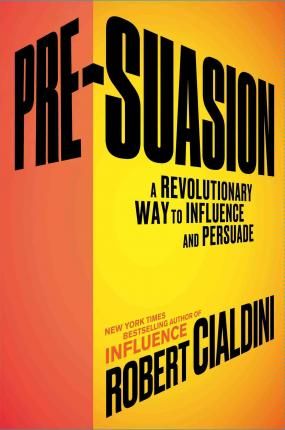
Nova: Well, it’s not exactly a booby trap. Today, we're diving into the fascinating world of persuasion, drawing heavily from two titans of the field: Robert Cialdini's "Pre-Suasion: A Revolutionary Way to Influence and Persuade," and Daniel Kahneman's groundbreaking "Thinking, Fast and Slow." Cialdini, a renowned social psychologist, spent decades studying influence, even going undercover to observe real-world persuaders. His work is incredibly practical, almost like a field guide to human compliance.
Atlas: So, we’re talking about more than just slick sales tactics. We’re getting into the psychology of how minds actually shift. That's a huge distinction. It’s not about tricking people, it's about understanding them.
Nova: Precisely. Kahneman, a Nobel laureate in Economic Sciences, gives us the scientific scaffolding with his work on System 1 and System 2 thinking—how our brains process information, often without us even realizing it. Together, these books illuminate the subtle yet profound ways our minds are open to influence, offering a toolkit for ethical persuasion and a deeper understanding of human behavior.
Atlas: That actually ties into something I've always wondered about. Like, how do some ideas just seem to stick, while others, no matter how well-reasoned, just slide right off? It makes me think about those times I I had a brilliant argument, and it just fell flat.
Nova: And that brings us perfectly to our first core idea: the concept of "Pre-Suasion" itself.
The Art of Pre-Suasion: Setting the Mental Stage
SECTION
Nova: Cialdini's "Pre-Suasion" posits that the moment you deliver your message is absolutely crucial for its acceptance. It's about strategically directing attention and cultivating receptiveness, even before the message is heard. Think of it as preparing the soil before planting the seed.
Atlas: So, it's not about the seed itself, but making sure the ground is fertile. I always thought persuasion was all about the strength of your argument, the facts, the logic. Are you saying that's secondary?
Nova: Not secondary, but often less effective if the groundwork isn't laid. Cialdini gives a brilliant example of a company selling expensive home insulation. Their sales pitch was solid, but their conversion rates were stagnant. They tried everything—different scripts, better training. Nothing moved the needle.
Atlas: Okay, so what did they do? Did they start offering free cookies to potential customers?
Nova: Funnily enough, a bit like that, but more psychological. Before calling potential customers, they simply changed the their receptionists asked. Instead of "How may I help you?", they started asking, "How are you doing today?" and waiting for the customer to respond, "I'm doing well."
Atlas: And that... changed everything? That’s it? Just a little pleasantry?
Nova: That little pleasantry, and the customer’s subsequent positive affirmation, subtly shifted their mindset. When the salesperson then called and asked if they were open to hearing about home insulation, the customers were already in a more agreeable, positive state of mind, primed to say "yes." Their conversion rates shot up by over 20%.
Atlas: Whoa. That’s a huge jump for such a tiny, almost invisible change. It's like, they weren't even aware they were being influenced. So the "pre-suasion" was in getting them to activate a positive self-perception, which then carried over to the next interaction.
Nova: Exactly. It's about creating a psychological state that makes your message more resonant. Another classic example Cialdini cites is a furniture store. They wanted to boost sales of their more expensive, high-end sofas. They tried highlighting features, quality, comfort.
Atlas: Let me guess, no luck. Because the customer was already thinking "expensive."
Nova: Precisely. So, before the customers even walked into the showroom, the store changed their website and advertising to feature images of fluffy clouds, soft blankets, and images of people relaxing in luxurious settings.
Atlas: So they were trying to put people in a "comfort" mindset?
Nova: And a "luxury" mindset, but more importantly, a mindset of. When customers then saw the expensive sofas, their minds were already primed to associate them with these feelings. Sales of their high-end items significantly increased. The message about the sofa's quality suddenly landed differently because the mental stage was already set for appreciation of comfort and luxury.
Atlas: That’s fascinating. It’s like, our brains are constantly making subconscious connections, and pre-suasion is about strategically guiding those connections. It reminds me of how a good storyteller builds suspense before the big reveal. You're not just telling the story; you’re making the audience for the story.
Nova: Exactly. It's a subtle but powerful shift from focusing solely on the message to focusing on the audience's state of mind the message. This is where Kahneman's work on System 1 and System 2 thinking becomes incredibly relevant.
System 1 & System 2: The Dual Process of Persuasion
SECTION
Nova: Kahneman’s "Thinking, Fast and Slow" introduces us to two distinct modes of thought: System 1, which is fast, intuitive, emotional, and automatic; and System 2, which is slow, deliberate, logical, and effortful.
Atlas: So, System 1 is like our autopilot, and System 2 is when we actually engage our brainpower. I can definitely relate to that. Most of my day feels like it’s running on System 1.
Nova: Most of our lives are, actually! System 1 is constantly at work, making snap judgments, forming impressions, and guiding immediate reactions. It’s efficient, but prone to biases. System 2 kicks in for complex problems, deliberate choices, or when System 1 runs into trouble.
Atlas: Okay, so how does this tie into persuasion? If someone's on autopilot, how do you even get them to engage System 2? Or do you try to bypass it entirely?
Nova: That’s the genius of understanding pre-suasion through this lens. Many traditional persuasion attempts aim squarely at System 2—presenting facts, figures, logical arguments. But if System 1 isn't already receptive, or if it's actively generating resistance, System 2 might never fully engage, or it might engage specifically to find flaws in your argument.
Atlas: So, pre-suasion is almost like a System 1 hack? You're setting up the environment to make System 1 more amenable to your message, so when System 2 finally look at it, it's already got a positive bias.
Nova: Precisely! Think about the insulation company example. Asking "How are you doing today?" and getting a positive response activates System 1's automatic association with positive feelings and agreeable behavior. When the sales pitch comes, System 1 has already paved the way. Or the furniture store: the fluffy clouds activate System 1’s association with comfort and luxury, making the expensive sofa seem more appealing at a glance.
Atlas: So, if you want someone to think logically about your proposal, you first need to make their intuitive, emotional System 1 feel good about it. That's almost counter-intuitive. I would have thought you’d want to jump straight to the facts.
Nova: That's the common misconception. Ethical persuasion acknowledges that we are not purely rational beings. We're driven by emotions, associations, and cognitive shortcuts. Cialdini's work, backed by Kahneman's research, highlights how important it is to understand these underlying psychological processes. It's about guiding attention and making certain ideas or emotions more salient the message hits.
Atlas: That’s a really profound insight. It’s not about manipulating people, but about understanding the human mind's natural wiring. So, instead of fighting against System 1, you learn to work with it.
Nova: Exactly. It makes your message not just heard, but and on a deeper, more automatic level, which then allows System 2 to process it more favorably.
Synthesis & Takeaways
SECTION
Nova: So, what we've really been exploring today is that the most powerful persuasion often happens in the quiet moments the main event. It's about understanding how our brains are wired to make quick judgments and associations, and then ethically leveraging that knowledge.
Atlas: It’s a complete reframe of what persuasion means. It’s less about a grand speech and more about subtle nudges and intelligent groundwork. For anyone who's ever tried to get buy-in on an idea, or even just convince a friend to try a new restaurant, this is gold.
Nova: Absolutely. The deep insight here is that true influence isn't just about the strength of your argument; it's about the psychological receptivity of your audience. It's about setting the mental stage, preparing the mind, and understanding that our fast, intuitive System 1 is often the gatekeeper for our slow, rational System 2.
Atlas: And it means we can all be more aware of how we're being influenced, and how we can influence others more effectively and ethically. It’s about being mindful of the entire communication process, not just the words we choose.
Nova: It’s a powerful lesson in human psychology. So, the next time you want to influence someone, don't just think about what you want to say. Think about what you can do you say it, to make them ready for your message.
Atlas: That's a challenge I'm definitely taking on. It makes me wonder about all the unconscious pre-suasive elements I've stumbled upon in my own life.
Nova: And that’s the beauty of it. This is Aibrary. Congratulations on your growth!