The Pattern Trap: Why History Isn't Always a Predictor, But a Teacher
Golden Hook & Introduction
SECTION
Nova: Most of us believe history repeats itself. We search for patterns, hoping they'll reveal the future, give us a roadmap. But what if the most important moments in history, the ones that truly change everything, are precisely the ones that repeat?
Atlas: Whoa. That's a bold statement, Nova. But wait, isn't that why we study history in the first place? To learn from it, to connect events, to find those reassuring patterns? For someone who tries to make sense of the past to prepare for the future, that's a tough idea to grapple with.
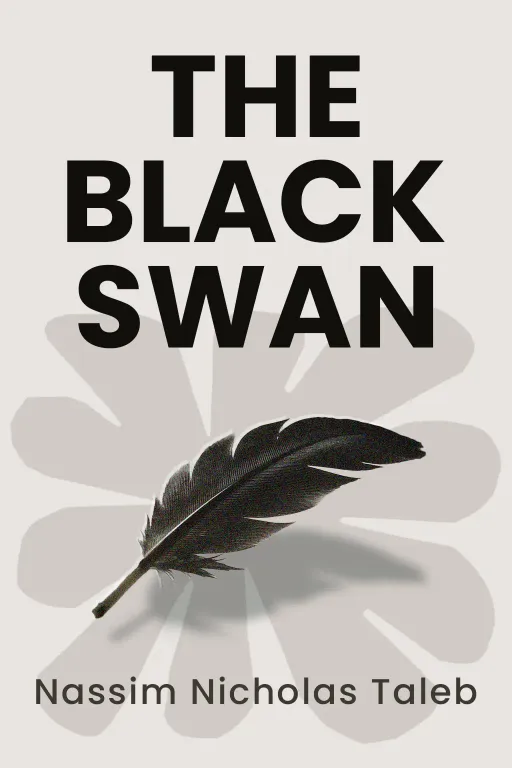
Nova: Absolutely, Atlas. And that's precisely the "Pattern Trap" we're diving into today. We're exploring why our ingrained reliance on historical patterns can actually be a dangerous blind spot, especially when faced with the truly transformative forces that shape our world. We're pulling insights from two monumental books that completely upended how we think about prediction and human rationality: "The Black Swan: The Impact of the Highly Improbable" by Nassim Nicholas Taleb, and "Thinking, Fast and Slow" by Daniel Kahneman.
Atlas: Two absolute titans whose work, I remember, caused quite a stir. Taleb's idea of the "Black Swan" became almost a household term, didn't it? It felt like he was saying, "Everything you thought you knew about risk is probably wrong."
Nova: He absolutely did. Taleb's work, especially "The Black Swan," wasn't just a book; it became a global phenomenon, sparking debates in economics, finance, and even government policy. It challenged the very foundations of how institutions assess risk, even though its core message was that many things are inherently. And then you have Daniel Kahneman, a psychologist, who won the Nobel Prize in Economics for showing us just our minds play tricks on us. These two together are a potent combination for understanding why we fall into the pattern trap.
The Black Swan Phenomenon: Embracing the Unpredictable
SECTION
Nova: So, let's start with Taleb's Black Swan. Imagine a turkey. Every day, for a thousand days, the farmer feeds it. The turkey observes this pattern: every day, food. Every day, safety. It builds a beautiful, coherent model of the world based on this historical data. It's fed, it's safe. It predicts tomorrow will be the same.
Atlas: Oh, I see where this is going. Thanksgiving.
Nova: Exactly. Day 1001, Thanksgiving morning, the pattern breaks catastrophically. For the turkey, that's a Black Swan event. It's an outlier, completely outside its regular expectations, it carries an extreme impact, and it's rationalized only the fact – "Oh, well, it was Thanksgiving, of course." But the turkey had no way of predicting it.
Atlas: That's a stark image. It makes you realize how many of our own assumptions are built on similar, seemingly robust patterns. Can you give us a classic human example? Something that truly illustrates this blind spot, perhaps an event that redefined an era but was fundamentally unpredictable?
Nova: Think about the rise of the internet in the 1990s. Before then, communication was largely analog, decentralized, or expensive. Experts from the 70s and 80s, even brilliant ones, predicted incremental improvements in existing technologies – faster modems, better phone lines. But very few, if any, truly foresaw a global, interconnected digital web that would fundamentally transform every aspect of human life – from commerce to social interaction to geopolitical power.
Atlas: It's incredible to think that something so ubiquitous now was once a Black Swan. I remember those early days, and it felt like a niche thing. Nobody really grasped the scale of it.
Nova: Absolutely. The impact was extreme, it wasn't predicted by any existing models, and now, in hindsight, we can weave a perfect narrative of its inevitable rise. But try telling someone in 1985 that they'd be carrying a device in their pocket that accesses all human knowledge and lets them talk to anyone on the planet instantly. They'd think you were crazy.
Atlas: So, are you saying all historical analysis is futile then? For someone who tries to connect events, to build detailed accounts, and find meaning, that's a tough pill to swallow. It feels like it undermines the very purpose of studying the past.
Nova: Not futile at all, Atlas. It's about understanding the of our prediction and the of certain events. It's about recognizing that while many things are predictable within certain parameters, the truly game-changing forces often come from outside those parameters. The point is not to predict the next Black Swan, but to build systems that are robust enough to withstand them, and even to benefit from their unexpectedness. It's about cultivating antifragility, as Taleb would say.
Cognitive Traps: Why Our Brains Miss the Obvious
SECTION
Nova: And that brings us perfectly to we're so bad at spotting these Black Swans. It's not just the events themselves; it's our own minds playing tricks on us. This is where Daniel Kahneman's work from "Thinking, Fast and Slow" becomes so incredibly illuminating. He talks about something called the "narrative fallacy."
Atlas: Narrative fallacy? That sounds like something I do every day without realizing it. How does our brain create these "coherent stories" that lead us astray?
Nova: Our brains are wired for coherence, for making sense of the world. We crave stories with clear causes and effects, even when reality is messy and random. So, when something complex happens, like a major stock market crash or a political upheaval, our "System 1" thinking—our fast, intuitive, emotional brain—jumps to create a simple, satisfying story that explains it. We connect the dots, even if those dots are actually miles apart.
Atlas: So, our need to connect events, to build a story, actually makes us vulnerable to these traps? That's almost ironic. For a chronicler who loves to trace human stories and find patterns, this is a profound challenge to how I process information.
Nova: It is! Think about a successful startup. We often hear the narrative: "The visionary founder had this brilliant idea, worked tirelessly, and disrupted an industry." It's a great story. But Kahneman would argue that this narrative often ignores countless random factors: lucky timing, unexpected market shifts, a key hire who happened to be available, or a competitor's misstep. We selectively remember the elements that fit the heroic narrative and discard the randomness.
Atlas: So, we create a clean, linear story after the fact, making it seem inevitable, when in reality, it was a complex dance of skill, luck, and unforeseen circumstances. That's a powerful point. It's like we're constantly editing history to fit our preferred plotline.
Nova: Exactly. And this leads to hindsight bias, where we believe we "knew it all along," and overconfidence in our ability to predict the future. It prevents us from truly embracing the inherent uncertainty that drives historical unfolding. Kahneman's key insight here is that recognizing these cognitive biases helps us move beyond simple cause-and-effect thinking. It's about understanding that our brains prefer coherent stories over complex realities, and that preference can distort our view of causality and randomness.
Synthesis & Takeaways
SECTION
Nova: So, bringing it all together: Black Swans are out there, those highly impactful, unpredictable events. And our brains, as Kahneman so brilliantly showed, are wired to miss them, to build neat stories that obscure the true randomness and complexity of life. The real skill, the true wisdom, isn't in trying to predict the unpredictable. It's in recognizing our limitations and building resilience.
Atlas: That's a profound shift in mindset. So, Nova, how might focusing solely on past patterns, and our innate desire to find them, prevent our listeners—especially those who meticulously analyze data and trends, who seek understanding and connection—from seeing the truly transformative forces at play today?
Nova: It creates a dangerous blind spot. If you're constantly looking for what happened, you're not looking for what happen, especially the things that defy precedent. The beauty of the unknown isn't a weakness to be feared, but an opportunity for true innovation, adaptation, and even profound personal growth. It's about being prepared for anything, not predicting everything. It's about cultivating a mindset that expects the unexpected and sees uncertainty not as a threat, but as the very fabric of reality.
Atlas: That's actually really inspiring. It makes you think about how many of our daily assumptions are built on shaky ground. It's a call to embrace that unknown, isn't it? To be more humble about our predictive powers.
Nova: Precisely. As Taleb himself once wrote, "The great majority of things that have happened in our world have come from the unpredicted." It’s a powerful reminder that true insight often comes from looking beyond the comfortable patterns.
Atlas: We'd love to hear from you – what's a 'pattern trap' you've fallen into, or a 'Black Swan' that caught you by surprise in your own life or work? Share your insights with the Aibrary community.
Nova: This is Aibrary. Congratulations on your growth!