The Invisible Hand: How Your Mind Dictates Startup Success (and Stress).
Golden Hook & Introduction
SECTION
Nova: Atlas, quick, first thing that comes to mind: 'Startup growth.'
Atlas: Oh man, 'Late nights, caffeine, and a constant pit in my stomach.'
Nova: Perfect. Now, 'Rational decision-making.'
Atlas: A mythical creature, honestly. I'm not sure I've ever seen one in the wild.
Nova: Exactly! And that, my friend, is precisely where we're going today. Welcome to 'The Invisible Hand: How Your Mind Dictates Startup Success.'
Atlas: That title alone resonates with anyone trying to scale something from nothing. It’s like a promise that someone finally understands the chaos.
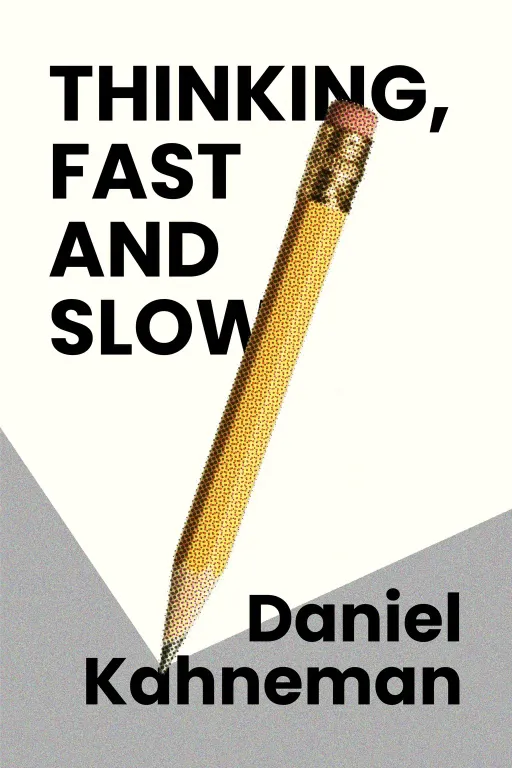
Nova: Absolutely. Today, we're pulling back the curtain on two foundational texts that, while academic in origin, are absolutely essential for any founder or growth leader. We're talking about Daniel Kahneman's seminal work,, and Richard H. Thaler and Cass R. Sunstein's game-changing book,.
Atlas: And these aren't just obscure academic papers, right? Kahneman and Thaler both won Nobel Prizes for bringing these psychological insights into economics. That's serious intellectual firepower.
Nova: It is! Their work fundamentally shifted our understanding of human decision-making, moving it from a purely logical process to one deeply influenced by psychology and context.
Atlas: Oh, I like that. So for growth officers building 0-1 strategies, especially in an AI native edtech startup, how do these profound academic insights actually play out when you're trying to hit numbers and onboard users? Because sometimes, it feels like all you have your gut.
Deep Dive into Core Topic 1: The Illusion of Rationality (System 1 vs. System 2 Thinking)
SECTION
Nova: That's the million-dollar question, Atlas. And it brings us directly to Kahneman's revolutionary concept of two systems of thinking. Imagine your mind has two distinct operators. System 1 is your fast, intuitive, emotional, almost automatic pilot. It’s what tells you to hit the brakes instantly when a car swerves or recognizes a friend's face in a crowd.
Atlas: Okay, so like the fight-or-flight response, but for daily decisions? That sounds incredibly powerful, especially in a startup where you're constantly making rapid decisions.
Nova: Precisely. It’s efficient, but it’s also prone to biases and shortcuts. Then there's System 2: your slow, deliberate, logical, and effortful thinker. This is the part of your brain that solves complex math problems, plans your day, or critically evaluates a new market strategy.
Atlas: Right, like when I'm trying to figure out if our churn rate is actually improving or if I'm just looking at vanity metrics. That takes focus.
Nova: Exactly. The problem, especially in high-stakes, fast-paced environments like a startup, is that we often System 2 is in control, making purely rational decisions, when in reality, System 1 is quietly, sometimes powerfully, running the show. This is what we call the 'blind spot.'
Atlas: So, are you saying our gut instincts, which feel so powerful and necessary for quick pivots in a fast-paced growth environment, are actually leading us astray more often than not? That sounds rough.
Nova: Not always astray, but often with predictable biases. Think about anchoring, for example. A founder might set an initial valuation for their startup based on an arbitrary early offer, and then all subsequent negotiations are "anchored" to that number, even if market conditions change dramatically. System 1 latches onto that first number.
Atlas: Oh, I've seen that. Or the sunk cost fallacy, where you keep pouring resources into a failing product feature just because you've already invested so much. It's hard to let go.
Nova: It is! That's System 1 saying, "Don't waste what you've already committed!" rather than System 2 rationally assessing future potential. Or the availability heuristic, where a growth team overestimates the success rate of a new channel because they recently heard a splashy success story about it, ignoring broader market data.
Atlas: That makes me wonder, how do you even identify when System 1 is taking over, especially when you need to make decisions quickly? Because in an early-stage startup, waiting for System 2 to leisurely deliberate isn't always an option.
Nova: That’s the challenge. The key is to build processes that System 2 engagement at critical junctures. It means stepping back, asking challenging questions, seeking diverse opinions, or even implementing pre-mortems. It's about recognizing that System 2 requires effort, and under stress, we naturally default to the path of least resistance – System 1. And that's where a lot of startup stress comes from, feeling like you're constantly fighting your own intuitive shortcuts.
Deep Dive into Core Topic 2: Architecting Choices (The Power of Nudges in Growth Strategy)
SECTION
Nova: Now, if our minds are prone to these shortcuts and biases, what if we could design the environment to help us make shortcuts? This is where Thaler and Sunstein's comes in, introducing the concept of 'choice architecture.'
Atlas: Okay, choice architecture. What exactly does that mean? Like, rearranging the furniture in my office to make me more productive?
Nova: In a way, yes, but on a much broader scale. A 'nudge' is any aspect of the choice environment that alters people's behavior in a predictable way without forbidding any options or significantly changing their economic incentives. Think about how cafeterias arrange food: putting healthy options at eye level, making them more accessible. People don't lose the choice to eat unhealthy, but they're 'nudged' towards healthier options.
Atlas: That's a great way to put it. I can see how that would be powerful. But isn't that just manipulation? How does a growth leader use this ethically, especially in edtech where trust and genuine learning outcomes are paramount?
Nova: That's a critical point, and Thaler and Sunstein are very clear on the ethical dimension. Nudges should be transparent, easy to avoid, and designed to improve welfare. In edtech, for example, it’s not about tricking someone into buying a course. It's about designing the learning platform to 'nudge' students towards completing modules, engaging with difficult concepts, or practicing regularly.
Atlas: Can you give an example? Like, how would an AI native edtech startup apply this?
Nova: Absolutely. Imagine an edtech platform where the default setting for a new course is 'daily practice reminders' rather than 'no reminders.' The user can easily turn them off, but the default 'nudges' them towards consistent engagement, which statistically leads to better learning outcomes. Or, showing learners how many of their peers have successfully completed a challenging quiz before they even start it, using social proof to 'nudge' confidence.
Atlas: Oh, I get it! So it's like setting up the environment to make the 'right' decision, or the beneficial decision, the easiest or most obvious one, without taking away freedom. That's actually really inspiring. So for someone building 0-1 growth strategies, this isn't about grand, disruptive shifts, but rather small, intelligent tweaks to the user journey that have outsized impact?
Nova: Exactly. It's about understanding that people are busy, often distracted, and prone to System 1 thinking. Instead of fighting that, you design it. You make the path of least resistance the path you want them to take – whether it's completing an onboarding flow, trying a new feature, or committing to a learning habit. It's a subtle but profound shift from demanding rationality to architecting for human reality.
Synthesis & Takeaways
SECTION
Nova: So, bringing it all together, the invisible hand is really two hands. It's understanding our inherent cognitive architecture from Kahneman, recognizing those powerful System 1 biases. And then, it's consciously designing the 'choice environment' around it, using Thaler and Sunstein's insights to 'nudge' people towards better outcomes.
Atlas: I can definitely relate to that. It’s like, first, acknowledge the quirks of the human brain, and second, don’t just expect people to be perfectly rational; help them get there.
Nova: Precisely. It’s about moving beyond simply hoping your users or your team will make the 'right' decision, to actively shaping the context in which those decisions are made. It's a proactive, psychologically informed strategy.
Atlas: That makes me wonder, for all our listeners out there building and growing, where in your growth strategies are you relying too heavily on gut instinct when a more deliberate approach, perhaps a small, ethical nudge, is truly needed?
Nova: It’s a question worth pondering. Because mastering these insights allows leaders to move beyond reactive problem-solving to proactive, psychologically informed strategy, ultimately reducing stress and driving more sustainable success.
Atlas: I love that. Take one growth challenge you're facing. Can you identify a System 1 bias at play, and then brainstorm a small, ethical 'nudge' that could shift behavior? That's a powerful exercise.
Nova: It truly is. It transforms the invisible hand from a source of stress into a tool for thoughtful, impactful growth.
Atlas: This is Aibrary. Congratulations on your growth!