The Invisible Architect: How Decision-Making Shapes Your System's Destiny.
Golden Hook & Introduction
SECTION
Nova: What if the very intelligence and intuition you pride yourself on as a designer is secretly leading your systems astray? We're talking about the silent saboteurs lurking within your own brilliant mind, Atlas.
Atlas: Whoa, silent saboteurs? That sounds like something out of a spy thriller, Nova! But honestly, as someone who designs for resilience, the idea that could be the weak link is... unsettling. I always thought more experience meant less susceptibility to those kinds of errors.
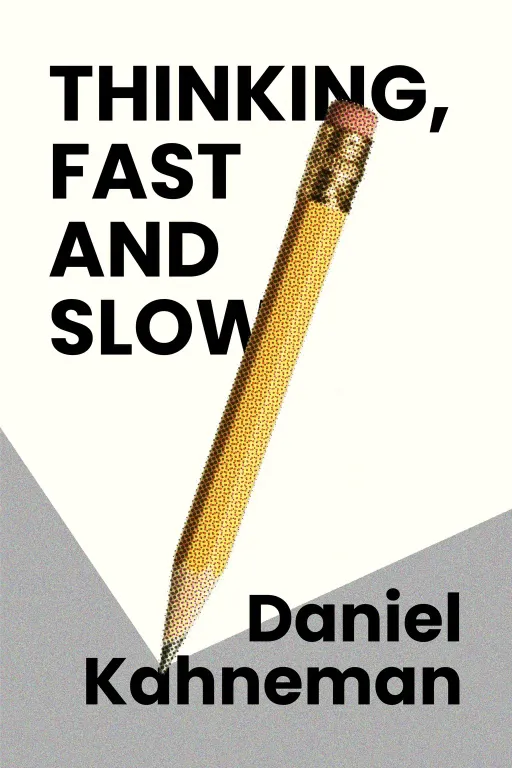
Nova: That's the trap, isn't it? The belief that expertise makes us immune. But the truth is far more fascinating. Today, we're unmasking "The Invisible Architect," an episode deeply inspired by Daniel Kahneman's groundbreaking work, "Thinking, Fast and Slow." Kahneman, a Nobel Memorial Prize winner, spent decades, alongside his brilliant collaborator Amos Tversky, completely reshaping our understanding of human decision-making. Their research isn't just academic; it's a blueprint for understanding why even the most rational builders can fall prey to cognitive biases.
Atlas: Right, "Thinking, Fast and Slow" is one of those books that everyone talks about, and for good reason. It’s widely acclaimed for its insights. But for our listeners who are deep into designing complex systems, how does this psychological deep dive into human thought processes actually apply to the nuts and bolts of building something robust? Where do these "invisible architects" show up in a system design?
Nova: They show up everywhere, Atlas, often disguised as efficiency or intuition. They are our "blind spots" – those mental shortcuts, or cognitive biases, that subtly but powerfully steer our design decisions. Think about it: you're designing a complex system, making hundreds of choices every day. It's impossible to consciously analyze every single variable. Our brains have evolved to take shortcuts, and while often helpful, these shortcuts can lead to systems that don't truly reflect our original intent.
Atlas: So, you're saying that even when I'm meticulously planning, drawing diagrams, and running simulations, there's this hidden force, this "invisible architect," making calls without my conscious approval? That's actually a bit terrifying.
The Invisible Architect: Unmasking Cognitive Biases in System Design
SECTION
Nova: It is, but recognizing it is the first step to mastery. Let's dive into a common scenario. Imagine a team tasked with designing a new, cutting-edge data analytics platform. Early on, a highly respected senior architect brings a strong vision to the table: "Users want maximum customization and granular control over their data presentation." He’s had success with this approach in the past. This initial, strongly voiced idea acts as an anchor.
Atlas: I know that feeling. Once a strong vision is articulated, especially by an influential voice, it's hard to shake. It feels like the north star.
Nova: Exactly. Now, as the design process unfolds, the team starts conducting user research. Some feedback comes in suggesting users actually prefer simplicity and guided workflows, not endless customization options. But here’s where the "invisible architect" steps in, specifically with confirmation bias. The team, unconsciously, starts to interpret all the data through the lens of that initial anchor. They highlight quotes supporting customization, and they downplay or rationalize away feedback that emphasizes simplicity.
Atlas: So, they're not intentionally ignoring data, but their brains are filtering it to confirm what they already believe to be true. That’s insidious. It’s not about malice, it’s about a deeply ingrained mental pattern.
Nova: Precisely. The cause here was that initial anchor, combined with the team’s unconscious drive to confirm it. The process involved biased data interpretation and selective listening. The outcome? A technically impressive but overly complex system that users find difficult to navigate and ultimately underutilize. It fails to achieve its core objective of broad user engagement, not because of a technical flaw, but because of a cognitive one. The system doesn't truly reflect what the users needed, or even what the team they intended to build.
Atlas: That’s a powerful example. I imagine a lot of our listeners, especially those designing for resilience, can relate to that feeling of a project veering off course despite everyone’s best intentions. It makes me wonder, how do we even begin to spot these biases when they’re so… invisible? What are some red flags that a design decision might be more influenced by a blind spot than pure logic?
Nova: Great question. One red flag is an overabundance of certainty early in a complex project, especially when real-world data is still sparse. Another is a team that consistently finds data to support a single, pre-existing idea, without genuinely exploring alternatives or critically challenging their own assumptions. It’s when the discussion feels less like genuine exploration and more like a justification of a foregone conclusion.
Atlas: So, if these biases are lurking, and even experts are susceptible, how do we even begin to fight back? Or better yet, design them? Because building resilient systems means designing for human fallibility, not just technical failures.
Kahneman's Dual-System Thinking: Designing for Cognitive Resilience
SECTION
Nova: And that naturally leads us to the core of Kahneman's work: the two systems of thought. He posits that our minds operate on two speeds. There's System 1, which is fast, intuitive, emotional, and largely automatic. It's what allows you to instantly recognize a face, or instinctively slam on the brakes. And then there's System 2, which is slow, deliberate, logical, and requires effort. That's what you use to solve a complex math problem or carefully analyze a business proposal.
Atlas: Okay, so System 1 is like the gut reaction, and System 2 is the deep, focused thinking. I can see how System 1 could be a source of those biases you mentioned. It's quick, but maybe not always accurate for complex decisions.
Nova: Exactly. Neither system is inherently "bad." System 1 is incredibly efficient and essential for daily life. The problem arises when we rely on System 1 for decisions that genuinely require the rigor of System 2. In architectural design, for instance, a critical security system upgrade is being proposed. The initial assessment, driven by System 1 thinking from an experienced team, suggests reusing an existing, familiar encryption module because "it’s always worked before" and "it's what we know."
Atlas: That's classic. The path of least resistance, familiarity bias kicking in. It feels safe because it's known.
Nova: It does. The cause here is System 1's quick judgment, leveraging familiarity and past success. However, this fast thinking overlooks subtle, evolving threat landscapes and new vulnerabilities that might have emerged. It’s an example of the availability heuristic, where we overestimate the likelihood of events based on how easily examples come to mind. If it’s always worked, it must always work.
Atlas: So, how do you engage System 2 in a scenario like that, especially when there’s pressure to deliver quickly? Is it just about telling people to "think slower"? That seems a bit simplistic.
Nova: It's not just about slowing down, Atlas; it's about designing processes that System 2 engagement. In our security system example, a more System 2-driven process would involve implementing an independent red team review, a deep dive into emerging vulnerabilities, and a formal cost-benefit analysis of alternative, potentially less familiar, but more robust solutions. This deliberate effort, even if it adds initial time, would likely reveal a critical flaw in the old module given new threats.
Atlas: That makes sense. So, instead of just trusting the gut feel of "it's always worked," you introduce structured checks and balances that demand a more analytical, effortful review. The process itself becomes the mechanism for cognitive resilience.
Nova: Precisely. The outcome of such a System 2-driven approach isn't just a technically compliant system, but a truly resilient security system that anticipates and protects against a broader, more complex range of threats. It's about designing human fallibility by building in deliberate points for critical reflection.
Atlas: So, it’s about creating an architectural process that inherently questions its own assumptions, that forces a pause, and brings in diverse perspectives to push past that initial, comfortable System 1 answer. I can see how that’s crucial for fortifying creations against the unexpected, which is something our listeners deeply care about.
Synthesis & Takeaways
SECTION
Nova: Absolutely. What Kahneman teaches us is that true mastery in system design isn't just about technical prowess or elegant code. It's about mastering the human element, particularly one's own mind. The most resilient systems, the ones that genuinely reflect their creators' intent and stand the test of time, are those built with an awareness of human cognitive architecture – its brilliance and its blind spots – woven into their very fabric.
Atlas: That's actually really inspiring. It reframes the challenge from just building better tech to building better for our tech. It's about being an architect of your own decision-making, not just the system itself.
Nova: It is. The invisible architect isn't just a force to be resisted; it's a part of us that we need to understand and integrate into our design philosophy. It's about designing processes that act as intelligent safeguards against our inherent shortcuts, ensuring that our systems are robust not only against external threats but also against our internal biases.
Atlas: That thought alone could change how many of our listeners approach their next big project. So, for all our architects, strategists, and creators out there, think about a recent significant design decision you made. Were there hidden biases that might have influenced your approach? What's one small, deliberate step you could take in your design process to invite more System 2 thinking, to build with that cognitive resilience in mind?
Nova: It's a powerful question because the answers lie within each of us.
Atlas: This is Aibrary.
Nova: Congratulations on your growth!