The Innovator's Blind Spot: Why Intuition Isn't Enough
Golden Hook & Introduction
SECTION
Nova: Your intuition, that gut feeling, that flash of insight you trust most in innovation? It's often steering you straight into a blind spot.
Atlas: Whoa, Nova, that's a bold claim. I mean, for strategic innovators, intuition is practically a superpower. Are you truly saying our most trusted internal compass is actually leading us astray?
Nova: Absolutely, Atlas. We're talking about something far more subtle than just 'making a mistake.' It's about unseen biases, mental shortcuts hardwired into our brains, subtly steering our most critical decisions without us even realizing it. These aren't flaws of intelligence; they're features of how our minds work.
Atlas: That's fascinating. I imagine a lot of our listeners, the purposeful leaders navigating uncertainty, feel like their intuition is their edge. So, what's really going on behind the scenes?
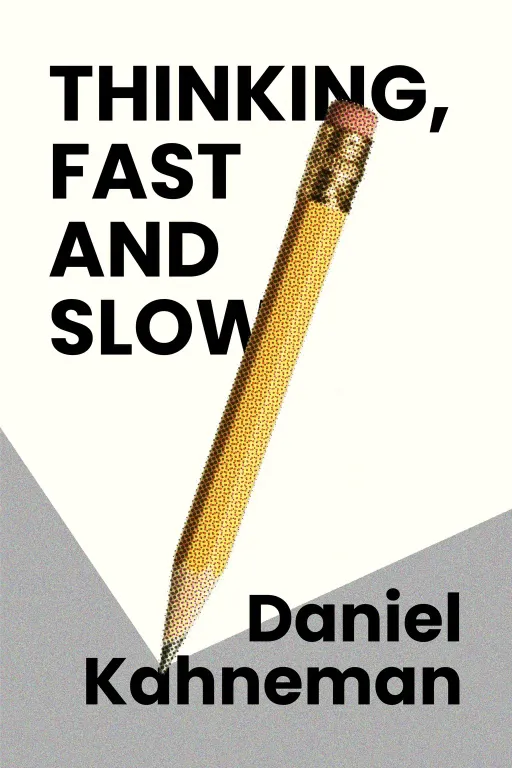
Nova: Well, today we’re diving into the groundbreaking work that fundamentally shifted our understanding of human rationality. We’re drawing insights from two Nobel Prize winners: Daniel Kahneman, author of the seminal book, "Thinking, Fast and Slow," and Richard Thaler, who, with Cass Sunstein, gave us "Nudge." These brilliant minds didn't just write books; they unveiled the hidden architecture of human decision-making, showing us that our brains operate on two very different, often conflicting, systems.
Atlas: So, they basically peeled back the curtain on our own minds. That sounds like essential reading for anyone trying to transform systems.
The Unseen Architects of Our Decisions: System 1 vs. System 2 Thinking
SECTION
Nova: Exactly. Kahneman reveals these two systems of thought. Think of System 1 as your brain's mental autopilot: it’s fast, intuitive, emotional, and operates almost unconsciously. It's the system that lets you recognize a friend's face instantly or slam on the brakes without thinking.
Atlas: Okay, so it’s the quick-draw, instinctive part of our brain. That sounds pretty efficient for a world-changer on the go. What’s System 2?
Nova: System 2 is your careful co-pilot. It’s slow, logical, effortful, and deliberate. This is what you engage when you're solving a complex math problem or meticulously planning a grand vision into actionable steps. It's the voice of reason. The challenge, especially for high-pressure innovators, is that we often over-rely on System 1, even when a System 2 problem is staring us in the face.
Atlas: Hold on. So you're saying that in a high-stakes meeting, when I need to make a strategic call quickly, my brain's 'autopilot' might be making that decision instead of my 'co-pilot'? That feels… dangerous.
Nova: It can be. Let me give you an example. Imagine a leader, let's call her Sarah, negotiating a critical partnership. Her team has prepared extensive data, but the other side opens with a wildly high offer – an 'anchor.' Sarah, under pressure, feels a gut instinct to counter aggressively, but her initial counteroffer is still unconsciously influenced by that initial high anchor, pulling her away from her data-driven target. She like she's being rational, but her System 1 has already set a subconscious boundary.
Atlas: Wow. So even when we think we’re being objective, that initial number, even if it's ridiculous, has already subtly shifted our perception of what's reasonable? It's like that number just sticks in your head and you can’t fully shake it.
Nova: Precisely. It’s an anchoring bias. System 1 latches onto the first piece of information and makes it disproportionately influential. Over-relying on System 1, especially under pressure, can lead to these predictable errors in judgment. It’s incredibly efficient for dodging a falling object, but terrible for valuing a complex asset.
Atlas: That's a bit unsettling. For leaders who are constantly making decisions in uncertain environments, how do you even begin to override that? It sounds like we're fighting our own brains.
Nova: It's less about fighting and more about awareness and strategic pausing. System 1 is powerful because it conserves mental energy. System 2 is a resource hog. Our brains naturally default to shortcuts. Think about hiring: a quick, positive first impression of a candidate, a System 1 judgment, can unconsciously bias a hiring manager to interpret subsequent objective data through a rose-tinted lens, even if that data should raise red flags.
Atlas: So, the very efficiency that helps us navigate daily life can become a liability when we're trying to make truly innovative, unbiased decisions. It’s not just about being smart; it’s about knowing you’re being smart.
The Power of Context: How 'Nudges' Manipulate Our Choices
SECTION
Atlas: That makes me wonder, Nova, if our internal biases are creating these blind spots, are external factors doing the same thing? Is the world around us also subtly manipulating our choices without us realizing it?
Nova: Oh, absolutely, Atlas! This is where Thaler and Sunstein's work on 'nudges' comes in. They show how subtle changes in context can powerfully guide choices, often exploiting our inherent irrationality. A 'nudge' is any aspect of the choice architecture that alters people's behavior in a predictable way without forbidding any options or significantly changing their economic incentives.
Atlas: So, like, a grocery store placing candy bars right at the checkout? That’s a nudge?
Nova: That's a classic, simple example, yes! But let's look at a more strategic one. Imagine a company trying to boost employee participation in their 401k retirement plan. Traditionally, employees had to actively 'opt-in' by filling out forms. Participation rates were low. Then, a strategic innovator decided to 'nudge' them. They changed the default: now, employees were automatically enrolled, but they could 'opt-out' if they wished.
Atlas: Let me check if I got that right. They flipped the default. Instead of having to choose to join, you had to choose to join.
Nova: Exactly. This tiny change, from opt-in to opt-out, has been shown to dramatically increase participation rates in retirement plans. It's not coercion; employees are still free to opt out. But the subtle power of the default, the path of least resistance, guides them toward a choice that's generally in their long-term best interest. The decision feels less like an active choice and more like just accepting what is.
Atlas: That's incredible. So, a leader trying to transform systems could actually design their environment to encourage better choices for their team or their customers. But isn't there a fine line between guiding choices and outright manipulation? For someone driven by impact and ethical leadership, that feels a bit dicey.
Nova: That's a crucial point, and it's what Thaler and Sunstein address with 'libertarian paternalism.' The idea is to design choice environments that 'nudge' people towards better outcomes. It's about helping people make choices they would likely make if they had perfect information, unlimited time, and no cognitive biases.
Atlas: Can you give an example of how a strategic innovator might a better system using these principles, ethically?
Nova: Certainly. Think about designing a new software interface. Instead of just presenting options, an innovator could default to the most energy-efficient setting, or subtly highlight the more sustainable material choice in a product configurator. It doesn't remove the other options, but it gently steers the user towards a choice that aligns with broader company values or societal goals, making the 'right' choice the 'easy' choice. It helps you build systems that inherently guide users towards their own long-term benefit, or an ethical outcome, without them even feeling pushed.
Atlas: So, understanding these nudges empowers innovators not just to avoid their own blind spots, but to proactively design environments that foster better, more purposeful decisions for everyone involved. It's about being an architect of choice, not just a problem-solver.
Synthesis & Takeaways
SECTION
Nova: Precisely, Atlas. The innovator's blind spot isn't a lack of intelligence; it’s a lack of awareness of these underlying forces—both the System 1 shortcuts in our own minds and the System 2 nudges in our environments. True innovation, the kind that transforms systems and makes a significant contribution, requires us to understand and account for both. We have to be willing to question our strongest intuitions and dissect the subtle influences around us.
Atlas: That's a powerful synthesis. It almost feels like we need to approach every strategic decision with a built-in 'bias detector' and 'nudge scanner.' For our listeners, the purposeful leaders navigating uncertainty, this brings us back to that deep question: "What strategic decision have you made recently where a deeper pause, or a reconsideration of the 'nudge' you were under, might have revealed a different path?"
Nova: And that's exactly the action. Start small. Next time you're about to make a significant decision, take a deliberate 'cognitive pause.' Ask yourself: "What System 1 shortcuts might I be taking? What subtle nudges in my environment are influencing me?" It’s a simple practice, but it unlocks incredible clarity.
Atlas: It's about embracing that journey of discovery, recognizing that our ideas have power, but only when we truly understand the ground they stand on. It's about designing a better future by understanding the present, including our own minds.
Nova: Absolutely. Thank you for joining us on this journey to illuminate the unseen.
Atlas: This is Aibrary. Congratulations on your growth!