The 'Influence' Trap: Why Pure Logic Fails in Human Psychology
Golden Hook & Introduction
SECTION
Nova: What if the most important decisions you make every day—the ones you swear are purely logical—aren't actually made by "you" at all? What if invisible forces are pulling the strings?
Atlas: Whoa, hold on, Nova. Are you saying I’m not in charge of my own brain? Because I like to think I’m a pretty rational guy, especially when it comes to strategy.
Nova: Oh, Atlas, we all do! And that, my friend, is precisely the 'influence trap' we’re diving into today. It’s the fascinating, sometimes unsettling, truth that beneath our conscious reasoning, powerful cognitive biases and social forces are constantly at play, subtly steering our choices.
Atlas: That sounds a bit out there. But I’m intrigued. For our listeners who are strategic seekers, who want to understand user and team motivation deeply, this feels like it could be a game-changer.
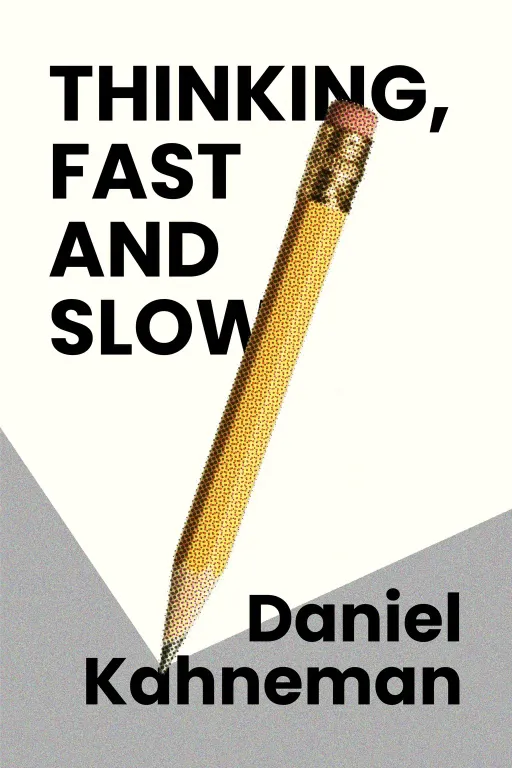
Nova: Absolutely. And to unpack this, we’re leaning on two absolute titans in the field. First, the groundbreaking work of Daniel Kahneman, particularly his Nobel Prize-winning insights laid out in "Thinking, Fast and Slow." He fundamentally changed how we understand human judgment and decision-making.
Atlas: Kahneman, yes, I’ve heard his name whispered in boardrooms. A Nobel laureate in Economics for a psychologist? That's quite a feat.
Nova: It is! He showed the world that economics isn't just about rational actors. And then, we have Robert Cialdini, the master of persuasion, and his seminal book "Influence." What makes Cialdini's work so compelling is that he didn't just theorize; he spent years going undercover, working in various sales and marketing jobs to truly understand how influence works in the real world. That hands-on research gives his principles an incredible practical weight.
Atlas: So, one gives us the 'why' we make decisions, and the other gives us the 'how' we can guide those decisions? I’m here for it. As an empowering leader, I’m always looking for ways to build people and strong cultures, not just make quick sales.
The Unseen Architects of Our Decisions: Kahneman's Dual Systems
SECTION
Nova: Exactly. So, let’s start with Kahneman’s revolutionary idea: our minds operate with two distinct systems. Imagine them as two characters living inside your head. We have System 1, which is fast, intuitive, emotional, and largely unconscious. It’s the part of you that instantly recognizes a friend’s face, or slams on the brakes if a car swerves. It’s effortless.
Atlas: Right, like when I see a complex problem and my gut reaction is either 'I got this' or 'Nope, absolutely not.' That’s System 1 kicking in.
Nova: Precisely. And then there’s System 2. This is the slow, deliberative, logical part. It’s what you use to solve a complex math problem, compare two product specifications, or carefully plan your next quarter. It requires effort, focus, and concentration.
Atlas: Okay, so I have a fast, gut-feeling brain, and a slow, thinking brain. I can see that. But how does System 1 actually trip us up? Especially in a high-stakes environment like leading a team or strategizing a product launch?
Nova: Here’s where it gets fascinating. System 1 is brilliant at creating coherent stories with whatever information it has, even if that information is incomplete or biased. It jumps to conclusions. And crucially, it often overrides System 2, especially when we’re busy, tired, or overconfident. Think of a scenario: a leader is interviewing a candidate. System 1 might immediately form a strong, positive impression based on a superficial trait—say, their charisma or shared alma mater—even before System 2 has had a chance to evaluate their actual skills and experience thoroughly.
Atlas: Oh, I’ve definitely seen that. Someone walks in, they’re charming, they’re confident, and suddenly, the hiring manager is overlooking some red flags on the resume. It’s like System 1 decides, "I like this person!" and then System 2 just goes along for the ride.
Nova: Exactly! Kahneman calls these "predictable errors in judgment." System 1 will find a plausible story, even if it’s wrong, and System 2 is often too lazy or too busy to challenge it. This isn't just about hiring. It impacts how we perceive market data, how we interpret customer feedback, or how we react to an unexpected setback. We create narratives that fit our existing beliefs or our initial gut feeling, rather than objectively analyzing the situation.
Atlas: That’s a bit unsettling. It means our "rational" decisions are far less rational than we think. So, how does understanding this help me build a stronger team or a better product, beyond just avoiding mistakes? Because for a strategic seeker, it's about empowerment, not just prevention.
Nova: That’s a fantastic question, Atlas. And it’s where the power lies. Acknowledging System 1’s influence means you can proactively design processes to engage System 2. For instance, when evaluating a product idea, instead of just going with initial enthusiasm, you might implement a "pre-mortem" exercise. You ask, "Imagine this product failed miserably a year from now. What went wrong?" This forces System 2 to look for flaws, rather than System 1 just building a rosy narrative.
Atlas: That’s brilliant. It's like building in speed bumps for my intuitive brain, to make sure my deliberate brain gets a say. I can see how that would lead to more sustainable growth and better decisions.
The Six Pillars of Persuasion: Cialdini's Influence Principles
SECTION
Nova: And that leads us perfectly to these underlying systems are subtly influenced. Robert Cialdini, after spending years embedded in sales and marketing, gave us the blueprint. He identified six universal principles that consistently guide human behavior and decision-making. Let's focus on two incredibly powerful ones: Social Proof and Reciprocity.
Atlas: Okay, Cialdini. I’ve heard his name come up when people talk about marketing psychology. But for an empowering leader, someone who cares about human potential, I need to know: isn't this just manipulation? Because that feels… inauthentic. I’m looking to build trust, not trick people.
Nova: That’s a crucial distinction, Atlas, and it’s why Cialdini emphasizes ethical application. Let’s take Social Proof first. It’s the principle that we’re more likely to do something if we see others doing it, especially people we perceive as similar to ourselves. Think of an empty restaurant versus one with a line out the door. Which one are you more likely to trust for a good meal?
Atlas: The one with the line, obviously. It signals popularity, quality, that others have vouched for it. So, if everyone else is doing it, it must be the right thing. I get that.
Nova: Exactly. Now, the manipulative way would be to create fake reviews or testimonials. The authentic, ethical way? It’s about genuinely highlighting the successes and positive experiences of your team members or customers. So, if you’re launching a new internal initiative, instead of just mandating it, you share stories of early adopters who are seeing real benefits. You create a genuine sense of community buy-in.
Atlas: So, it’s not about faking popularity, but about amplifying genuine positive experiences. That’s a very different lens. It’s about showing, not telling, the value. I can see how that builds trust.
Nova: Precisely. It taps into our System 1's shortcut: "If others like me are doing it, it must be good or safe." And then there’s Reciprocity. This is the ingrained human tendency to feel obligated to return a favor or a gift. If someone does something nice for us, we feel a psychological pull to do something nice for them in return.
Atlas: So, I send a gift basket to a client, and suddenly they're obligated? How does that work in a product strategy meeting, for instance? Or with a team member who's struggling? Because a gift basket feels a bit… transactional for building genuine influence.
Nova: It’s not about the size of the gift, Atlas, but the spirit of giving first. In a strategic context, it could be sharing valuable insights or resources without expecting anything immediate in return. For a struggling team member, it might be offering extra support, mentorship, or your time, simply because you care about their growth, not because you want them to owe you.
Atlas: Ah, I see. It's about genuine generosity and support, which then naturally fosters a sense of loyalty and a desire to contribute back. It builds a positive cycle.
Nova: It absolutely does. When you give first, authentically, you activate that principle of reciprocity in a way that builds strong relationships and a collaborative culture. It’s about creating an environment where people to contribute and help each other, rather than feeling forced.
Synthesis & Takeaways
SECTION
Nova: Ultimately, both Kahneman and Cialdini show us that human behavior isn't a spreadsheet; it's a symphony of intuition, emotion, and social cues. Our decisions are profoundly influenced by factors often invisible to our conscious minds.
Atlas: So, for the strategic seeker and empowering leader, how do we use this knowledge to truly build people and sustainable growth, rather than just 'tricking' them into doing what we want? Because it feels like a fine line.
Nova: It is a fine line, but the distinction is authenticity and precision. Acknowledging these unconscious drivers allows us to communicate more effectively, lead with greater empathy, and design products and strategies that genuinely serve user needs. It's about understanding the underlying human psychology so you can guide behavior towards positive outcomes, not exploit vulnerabilities. It's about building trust by aligning with how people naturally make decisions, rather than fighting against it.
Atlas: That’s actually really inspiring. It frames influence not as a dark art, but as a deep understanding of human potential. It means we can create environments where people thrive because we’ve accounted for how their minds truly work.
Nova: Exactly. So, for every leader, every strategist, every person striving for impact, here’s a deep question to ponder: How might acknowledging these unconscious drivers, these System 1 shortcuts and Cialdini's principles, change your next team discussion or product strategy meeting?
Atlas: We’d love to hear your thoughts on that! Share your insights and join the conversation in the Aibrary community.
Nova: This is Aibrary. Congratulations on your growth!