The Human Element: Understanding the Psychology Behind Conflict.
Golden Hook & Introduction
SECTION
Nova: What if the biggest threats to global peace aren't just rogue states or resource wars, but something far more insidious, operating invisibly inside the minds of the very leaders tasked with preventing conflict? I'm talking about the quiet saboteurs: our own human brains.
Atlas: Hold on, are you saying that all those complex geopolitical strategies, the alliances, the treaties... they're being undermined by what's happening inside someone's head? That feels almost... too simple for the grand chessboard of international relations.
Nova: It feels simple, Atlas, but the evidence is anything but. Today, we're diving into "The Human Element: Understanding the Psychology Behind Conflict," a fascinating exploration built upon the groundbreaking work of Nobel laureates Daniel Kahneman and Richard Thaler. Their insights shattered the myth of purely rational decision-making, not just in economics, but in every arena where humans make choices.
Atlas: Oh, Kahneman and Thaler... their work is legendary for flipping economics on its head. But applying it to the cold, hard calculus of international conflict? That's a leap. I've always been taught to analyze states as rational actors, driven by clear national interests.
Nova: Exactly! And that's the blind spot we're addressing. We assume rational actors, but human psychology plays a crucial, often underestimated, role. Understanding this helps us predict and, crucially, mitigate crises. We're talking about how our wiring shapes the world.
The Invisible Hand of Bias: How Our Minds Drive Conflict
SECTION
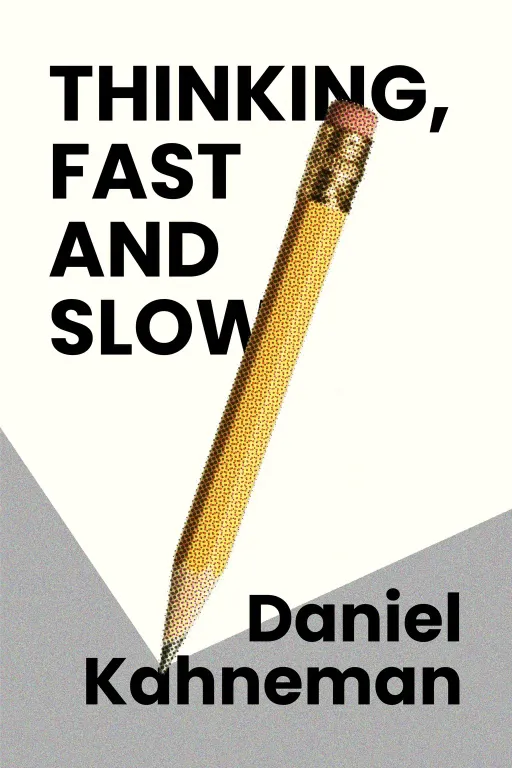
Nova: Let's start with Kahneman's work, particularly from his seminal book, "Thinking, Fast and Slow." He introduced us to the idea of System 1 and System 2 thinking: fast, intuitive, emotional versus slow, deliberate, logical. The problem is, even when we think we're in System 2 mode, System 1 biases are constantly pulling the strings.
Atlas: Okay, so, in the pressure cooker of a diplomatic crisis, with intelligence reports flying around and the clock ticking... I can see how System 1 might take over. But what kind of biases are we talking about that could actually derail a nation's fate?
Nova: Think about confirmation bias. It's the tendency to search for, interpret, favor, and recall information in a way that confirms one's pre-existing beliefs or hypotheses. Imagine a leader convinced a rival nation is inherently aggressive. Every piece of intelligence, even ambiguous signals, gets filtered through that lens. They see aggression, not a potential olive branch.
Atlas: That makes me wonder about historical diplomatic failures. I can think of countless instances where two sides seemed to be talking past each other, each convinced of the other's malevolent intent. It's like they were operating in different realities. Can you give us a vivid example?
Nova: Absolutely. Consider the lead-up to the 1962 Cuban Missile Crisis, a moment when the world teetered on the brink. US intelligence was heavily biased towards interpreting Soviet actions as purely aggressive, a direct challenge. There was a strong confirmation bias at play, where any sign of Soviet military buildup in Cuba was immediately seen as an offensive move, rather than a defensive one or a bargaining chip.
Atlas: So basically, intelligence analysts and policymakers were already expecting the worst, and that expectation colored everything they saw? That's a terrifying thought when nuclear war is on the table.
Nova: Precisely. The framing of the situation as an existential threat, a test of wills, amplified that bias. It made it incredibly difficult for alternative interpretations to gain traction. Leaders were getting information, but their System 1 was already telling them the story. It took immense effort, and some incredible luck, for cooler heads to prevail and for a more System 2 analysis to shift the framing towards negotiation rather than immediate escalation.
Atlas: That's fascinating, because as a historian, you often look at the geopolitical forces, the ideologies, the power dynamics. But to think that a subconscious cognitive shortcut could be the hinge point for such monumental events... it reframes everything. It suggests that a different presentation of intelligence, or a leader with a higher degree of self-awareness about their own biases, could have fundamentally altered the course of history.
Nova: It absolutely does. It puts a human face, or rather, a human brain, on the grand narratives of history. And it highlights how even the most experienced, most intelligent minds, under immense pressure, are not immune to these psychological pitfalls.
The Subtle Architects of Peace (or War): Nudging Decisions in Geopolitics
SECTION
Nova: Now, if our brains can lead us astray, can they also be subtly guided towards better outcomes? This brings us to the insights from Richard Thaler and Cass Sunstein's "Nudge." They show how small, seemingly insignificant changes in the "choice architecture"—how options are presented to us—can have powerful effects on our decisions.
Atlas: So you're saying that the way a peace treaty is worded, or the order in which proposals are presented to a negotiator, could subtly sway their decision without them even realizing it? That sounds incredibly powerful, but also a little… manipulative. As a diplomat, I'd be wary of being 'nudged' without my knowledge. Where's the line between guiding towards a better outcome and just plain trickery?
Nova: That's a brilliant question, and it's where the ethics of nudging come in. Thaler and Sunstein emphasize that a "nudge" should be transparent and easily avoidable, and it should always serve the individual's long-term best interest, or in this context, the collective best interest of peace and stability. It's about designing choices that make the desired outcome easier, not forcing it.
Atlas: Okay, so it's not about deception, but about smart design. Can you give an example of how this might play out in a geopolitical context? I'm curious how this translates from, say, saving for retirement to preventing an international incident.
Nova: Imagine a high-stakes negotiation where two nations are trying to agree on a disarmament treaty. The default option, if no agreement is reached, might be a continuation of the arms race, which is costly and dangerous for both. A "nudge" here could be carefully designing the negotiation process to make mutual concessions the easiest, most visible, and most appealing path. For instance, framing the benefits of cooperation in terms of shared security and economic prosperity, rather than just the concessions each side has to make.
Atlas: That’s a subtle but significant difference. It's about framing the narrative in a way that highlights the gains from cooperation, rather than the losses from compromise. It's appealing to a different part of the brain, perhaps.
Nova: Exactly. Or consider how public opinion can be nudged during a humanitarian crisis. If the media consistently frames a refugee situation in terms of shared human suffering and the potential for positive integration, rather than as a threat or burden, it can significantly alter public receptivity and political willingness to act. It's about how the story is told.
Atlas: That's really insightful. It means that the language used, the images chosen, the sequence of information... these aren't just cosmetic choices in diplomacy or public messaging. They are fundamental architects of how people perceive and react to complex international issues. And it makes me wonder if these 'nudges' work the same way across different cultures, or if it's highly context-dependent. A nudge that works in one society might backfire in another.
Nova: You've hit on a crucial point, Atlas. Cross-cultural governance is a next destination for many in this field. The effectiveness of nudges is absolutely culturally sensitive. What's perceived as a helpful default in one culture might be seen as an intrusive imposition in another. Understanding cultural psychology is paramount to applying these principles ethically and effectively in a global context. It adds another layer of complexity, but also another layer of potential for sophisticated, nuanced diplomacy.
Synthesis & Takeaways
SECTION
Nova: So, what we've really been talking about today, from Kahneman's biases to Thaler and Sunstein's nudges, is the deeply human core of international relations. It’s moving beyond abstract state interests and recognizing that the individual minds of leaders, diplomats, and citizens are profoundly shaping world events.
Atlas: It makes you rethink everything, doesn't it? When we look back at historical diplomatic failures, or even successes, knowing about these cognitive biases and the power of nudges... it completely reframes how you analyze them. It shifts the blame, or the credit, from pure strategy to the unpredictable, yet often predictable, human element. What's the biggest lesson a modern diplomat or historian should take from Kahneman and Thaler?
Nova: The biggest lesson is humility and self-awareness. It's recognizing that even the most well-intentioned, intelligent actors are subject to the same cognitive shortcuts as anyone else. Acknowledging that our own brains can be our greatest allies or our most dangerous saboteurs is the first step. It encourages us to design better systems, to question our assumptions, and to actively seek out diverse perspectives to counter our inherent biases.
Atlas: So it's about building a kind of psychological resilience into our diplomatic processes, knowing that human nature is always at play. That’s a profound insight, and it's one that should empower anyone involved in analyzing or shaping global events.
Nova: Absolutely. That awareness, that self-reflection, is the first step towards building more resilient, more peaceful international systems. It’s about leveraging our understanding of the human mind not just to explain conflict, but to actively engineer pathways to peace.
Nova: This is Aibrary. Congratulations on your growth!