The Hidden Cost of 'Rationality': Why Emotions Drive Decisions
Golden Hook & Introduction
SECTION
Nova: What if the biggest lie you tell yourself every day isn't about others, but about your own decisions? What if your 'rational' choices are actually a masterpiece of emotional manipulation, happening right under your nose?
Atlas: Whoa, Nova. That's quite the opening. Are you saying my morning coffee choice wasn't a calculated decision based on caffeine content and bean origin? It felt incredibly logical at the time.
Nova: Oh, I like that. Your coffee choice might be a perfect example, Atlas. Because most of us walk around convinced we're paragons of logic, making purely objective decisions. But today, we're pulling back the curtain on that illusion. We're diving into the hidden costs of what we is rationality, and why our emotions and subconscious biases are the true puppeteers of our choices.
Atlas: That makes me wonder, how deep does this rabbit hole go? Are we talking about some fringe philosophy, or is this backed by serious research?
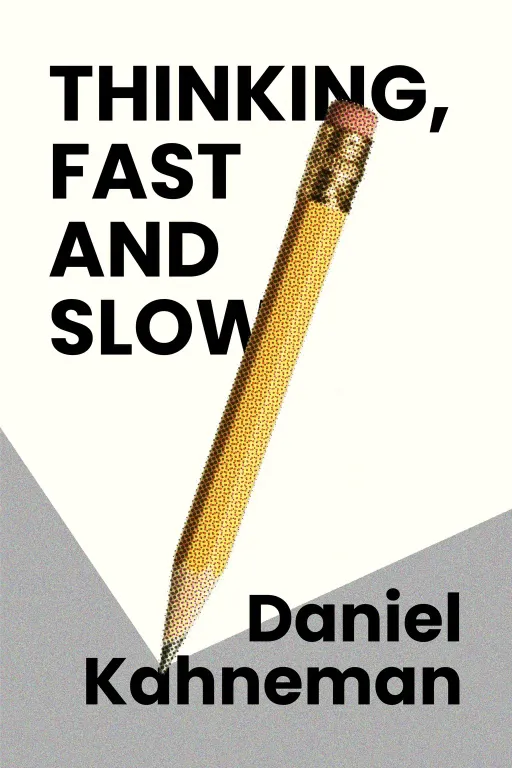
Nova: Absolutely backed. We're drawing heavily from two titans in the field: Daniel Kahneman's groundbreaking work in "Thinking, Fast and Slow," and Dan Ariely's incredibly insightful "Predictably Irrational." Kahneman, a psychologist, actually won the Nobel Memorial Prize in Economic Sciences for his work on how people make judgments and decisions, which was a huge shake-up for the world of economics.
Atlas: That's fascinating. A psychologist winning an economics prize. That alone tells you something about the interplay of these fields.
Nova: Exactly. And Ariely, a behavioral economist, brings a unique perspective. His personal experience with severe burns, and the long, painful recovery, actually became a lens through which he observed and understood the deep irrationalities in human behavior, even in the most basic decisions about pain and healing. His multidisciplinary approach makes his work incredibly relatable and profound.
Atlas: Wow. So, this isn't just theory; it's rooted in some very real, very human experiences.
Nova: It truly is. And the core of our podcast today is really an exploration of why our decisions are rarely as rational as we think, and how understanding our inherent biases can be a profound tool for self-improvement and strategic advantage. Today we'll dive deep into this from two perspectives. First, we'll explore the fundamental clash between our fast, emotional brain and our slow, logical one, then we'll discuss how our irrationality is surprisingly predictable, and finally, we'll uncover how this knowledge can be a secret weapon in your personal and professional strategies.
The Illusion of Pure Logic: System 1 vs. System 2 Thinking
SECTION
Atlas: So, you mentioned this "blind spot" we have about believing we're logical. Can you unpack that a bit? Because I genuinely believe I approach most things, especially work-related challenges or even my endurance training, with a very analytical mindset.
Nova: I hear you, Atlas, and that's a very common, very human belief. But Kahneman, in "Thinking, Fast and Slow," gives us a powerful framework to understand why that's often an illusion. He introduces us to two systems of thinking: System 1 and System 2.
Atlas: Okay, System 1 and System 2. Sounds a bit like a sci-fi movie. What's the difference?
Nova: Think of System 1 as your intuition. It's fast, automatic, emotional, and largely subconscious. It's what allows you to recognize a friend's face, or duck when a ball flies at you, or even understand simple sentences without effort. It's constantly running in the background, making snap judgments and interpretations.
Atlas: So, it's my brain's autopilot. The efficient, quick responder.
Nova: Exactly. Now, System 2 is your conscious, effortful, logical thinking. It's what you use to solve a complex math problem, fill out a tax form, or deliberately choose between two equally attractive options. It's slow, deliberate, and requires mental energy.
Atlas: Oh, I see. So System 1 is effortless, System 2 is work. That explains why I sometimes avoid those complex math problems.
Nova: You've hit on a key point. System 2 is inherently lazy. It prefers to defer to System 1 whenever possible because it conserves mental energy. And because of that, System 1 often dominates our decisions, even when we we're being logical.
Atlas: But how often does System 1 really dominate? I mean, surely for big decisions, System 2 kicks in, right?
Nova: Not as much as we'd like to believe. Let me give you a classic example Kahneman uses, often called the "Bat and Ball" problem. I'll read it, and I want you to tell me the first answer that pops into your head.
Atlas: Alright, hit me. I'm ready.
Nova: A bat and a ball cost $1.10 in total. The bat costs $1.00 more than the ball. How much does the ball cost?
Atlas: Oh, that's easy! The ball costs ten cents.
Nova: And there it is! That's your System 1 speaking. It's fast, intuitive, and for most people, it's the very first answer that comes to mind. It feels right.
Atlas: Wait, was it wrong? Oh, I need to think about this... If the ball was ten cents, and the bat was a dollar more, that would be $1.10 for the bat... and ten cents for the ball... that's $1.20 total! Oh, man.
Nova: Precisely. The correct answer is five cents for the ball, which makes the bat $1.05, totaling $1.10. Your System 1 quickly offered the "ten cents" answer because the numbers are easy to process, and it requires no real mental effort. To get to the correct answer, you have to engage your System 2, slow down, and consciously override that initial, intuitive response.
Atlas: That's incredible. I felt so confident! So, System 1 just throws out the easiest answer, and System 2 is too tired to check its work sometimes.
Nova: Exactly. This isn't about being unintelligent; it's about how our brains are wired for efficiency. System 1 is brilliant for survival and everyday tasks, but it's also prone to systematic errors, especially when confronted with problems that simple but are actually designed to trick it. For anyone who optimizes strategies or trains for peak performance, overlooking this fundamental aspect of human decision-making is a crucial blind spot.
Predictably Irrational: The Systematic Nature of Our Biases
SECTION
Atlas: So, my brain is taking shortcuts and I don't even realize it. That's a bit unsettling. But is it just random errors? Or is there a pattern to this madness?
Nova: Oh, there's absolutely a pattern, Atlas. And that's where Dan Ariely's work in "Predictably Irrational" becomes so illuminating. He argues that our irrationality isn't random or senseless; it's systematic. We make consistent, predictable errors in judgment, and understanding these patterns is incredibly powerful.
Atlas: Predictable irrationality. That sounds like an oxymoron. How can irrationality be predictable?
Nova: It's all about context and framing. Ariely demonstrates that our choices are heavily influenced by the way information is presented to us, even when the underlying value of the options hasn't changed. Our brains aren't evaluating things in absolute terms; they're constantly comparing and contrasting.
Atlas: So, it's not about being illogical, it's about being consistently illogical in certain situations?
Nova: Precisely. Let's take a classic example, what behavioral economists call the "Decoy Effect." Imagine you're subscribing to a magazine, and you see these options:
Nova: Option A: Online-only subscription for $59.
Nova: Option B: Print-only subscription for $125.
Nova: Option C: Online and Print subscription for $125.
Atlas: Okay, so clearly Option C is the best deal. You get both for the same price as just print.
Nova: That's your System 1 making a quick, intuitive comparison. But here's the kicker: in Ariely's original experiment, when MIT students were presented with just Option A and Option C, a significant number chose Option A, the cheaper online-only option.
Atlas: Really? So the print-only option, which seems like a terrible deal, actually changed how people viewed the other options?
Nova: Exactly! The print-only option, Option B, is the "decoy." It's intentionally designed to be inferior to Option C, making Option C look like an absolute steal. Without that decoy, people's preferences shift. That decoy makes the combined offer seem much more valuable by comparison, even if, on its own, it might not have been the preferred choice. We predictably choose the option that looks best, not necessarily the option that is objectively best for us.
Atlas: That’s a great example. So, we're not just making mistakes; we're being nudged into making specific mistakes because of how choices are framed. It's like our brains can be hacked.
Nova: You could say that. And this knowledge is a powerful tool. It means you can design better strategies, whether you're trying to influence consumer behavior, encourage healthier choices, or even optimize your own financial strategies. You can anticipate human responses more accurately because you understand these systematic "bugs" in our mental software.
Atlas: I can definitely relate to that "hacking" idea. I mean, for anyone trying to optimize systems, whether it's financial planning or even designing a training regimen, understanding these predictable biases feels like a secret weapon. It allows you to design around them, or even leverage them ethically.
Synthesis & Takeaways
SECTION
Nova: So, what we've really explored today, through Kahneman and Ariely, is that our brains are magnificent machines, but they come with built-in shortcuts and biases. The 'hidden cost of rationality' is the illusion that we're always in control of our logical faculties.
Atlas: It sounds like the real power comes from acknowledging that we're not always rational, and then using that awareness to our advantage. It's about designing systems or strategies that account for these human quirks.
Nova: Absolutely. Because optimization, whether it's in financial strategies, organizational design, or even personal development like endurance training, is incomplete if it doesn't acknowledge the human element. If you're designing a system for people, you have to understand how people make decisions, not just how you wish they would. The Bat and Ball problem shows us how easily our intuition can lead us astray, and the Decoy Effect reminds us that our choices are constantly being shaped by context.
Atlas: That gives me chills. This isn't just theory; it's a profound insight into navigating the world. It makes me think about where I might be overlooking the 'irrational' human element in my own strategies.
Nova: And that's the perfect question for our listeners. Where in your financial strategies, your career choices, or even your endurance training, might an 'irrational' human element be overlooked? What blind spots are you carrying, and how can understanding these predictable biases help you design better strategies for yourself?
Atlas: That's a powerful challenge. Take a moment to reflect on that, listeners. Where are your hidden costs of rationality?
Nova: This is Aibrary. Congratulations on your growth!