The Hidden Cost of Busyness: Why Understanding Your Mind Matters More Than Ever.
Golden Hook & Introduction
SECTION
Nova: What if the very things we chase—productivity, efficiency, constant 'doing'—are actually making us effective, and costing us more than we ever imagined?
Atlas: Oh man, that sounds like my Monday morning. The hidden cost of busyness, right? It feels like we're all on this treadmill, pushing harder, but sometimes ending up further behind.
Nova: Exactly! We're so focused on external metrics, on checking off tasks, that we often completely overlook the internal operating system running the whole show. We ignore the dual nature of our own thinking and the vast landscape of our emotions, and that, Atlas, is a direct path to burnout and frankly, a lot of suboptimal outcomes.
Atlas: That's a powerful way to put it. So, what's really going on under the hood? What are these internal mechanics we're missing?
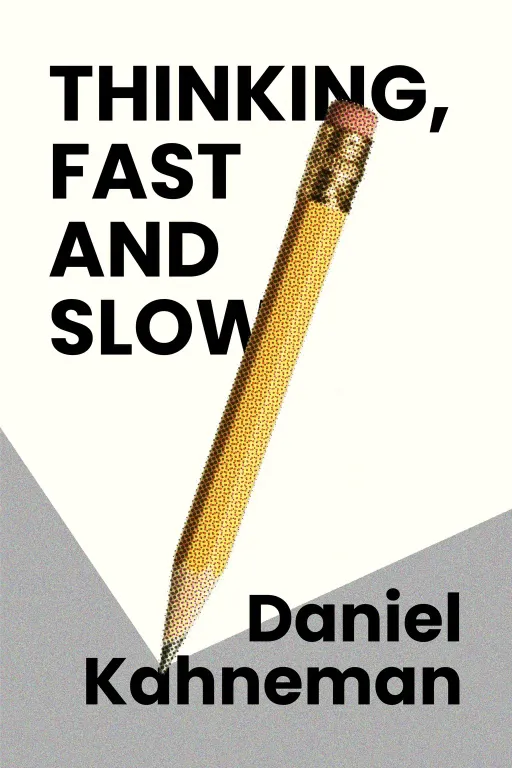
Nova: Well, to really understand this, we have to start with a revolutionary insight from a truly remarkable mind: Daniel Kahneman. He wrote the groundbreaking book "Thinking, Fast and Slow." What's fascinating about Kahneman is that he's a psychologist, but his work was so profound in explaining human judgment and decision-making that he actually won the Nobel Memorial Prize in Economic Sciences. It was a huge moment, showing that psychology isn't just about feelings; it directly impacts our economy and our lives.
Atlas: Wow, a Nobel for a psychologist in economics. That really underscores the weight of his ideas. But "Thinking, Fast and Slow"—can you break that down for us? What are these two systems?
Nova: Absolutely. Kahneman essentially identified two distinct modes of human thought, which he playfully called System 1 and System 2. They're not actual physical parts of your brain, but rather different ways your mind operates.
The Dual Engines of Your Mind: System 1 and System 2 Thinking
SECTION
Nova: Imagine driving your car to work every day. You've done it a thousand times. You get in, you start the engine, you might be humming a song, thinking about your grocery list, or planning your day. You're navigating traffic, changing lanes, hitting the brakes, all without consciously thinking about each individual action. That, my friend, is System 1 at its finest.
Atlas: Oh, I know that feeling! It’s like autopilot. Fast, intuitive, almost unconscious. Like when you instinctively swerve to avoid a pothole, or when you immediately know someone's angry just by the look on their face.
Nova: Precisely! System 1 is our gut reaction, our intuition. It’s quick, effortless, and often emotional. It's fantastic for survival and efficiency. It allows us to make split-second decisions, recognize faces, understand simple sentences. But here's the kicker: because it's so fast and relies on mental shortcuts, it's also highly susceptible to cognitive biases. It can jump to conclusions, make assumptions, and be swayed by superficial information.
Atlas: So, is busyness just us over-relying on System 1? Because when I'm swamped, I'm definitely in autopilot mode, just reacting to emails and demands without much deep thought.
Nova: That's a fantastic observation, Atlas. In our perpetually busy world, we're constantly pushing our System 1 to the limit. We're bombarded with information, needing to make quick decisions, and it feels efficient. But this reliance can lead to errors, poor judgment, and that "hidden cost" we talked about. We're making decisions based on intuition or habit, when sometimes we really need to engage a different part of our mind.
Atlas: Okay, so if System 1 is the fast, intuitive autopilot, what's System 2?
Nova: System 2 is the complete opposite. Think of it as the deliberate, analytical, effortful part of your brain. It's what kicks in when you're solving a complex math problem, learning a new language, or carefully weighing the pros and cons of a major life decision—like buying a house or changing careers. It requires focus, attention, and conscious effort.
Atlas: That sounds rough, but… who has time for System 2 thinking when you're constantly busy? It sounds exhausting. For our listeners who are managing high-pressure teams or juggling multiple projects, this concept might feel impossible to implement.
Nova: I can definitely relate to that feeling, Atlas. It's not about always engaging System 2; that be exhausting. It's about recognizing when System 1 is leading you astray and consciously activating System 2. It’s like knowing when to use cruise control on the highway versus when you need to take manual control to navigate a winding mountain road. The key is intentionality. For example, if you're about to make a significant financial investment, relying solely on your gut feeling might lead to regret. Taking the time to research, analyze data, and critically evaluate options is crucial. Ignoring this dual nature means you're leaving critical decision-making to chance, or worse, to biases you didn't even know you had.
Atlas: That makes sense. It’s about being aware of which gear you're in. And I guess understanding that interplay can really help you avoid those cognitive traps Kahneman talks about.
Emotional Intelligence: The Unseen Force Driving Success
SECTION
Nova: Absolutely. And speaking of making intentional decisions, there's another crucial layer to our internal landscape that often gets overlooked in the pursuit of 'rational' success, and it's equally powerful, if not more so.
Atlas: Oh, I’m curious. What’s that?
Nova: Emotional intelligence. This concept was really popularized by Daniel Goleman with his seminal book, "Emotional Intelligence." Before Goleman, the conversation around success was heavily skewed towards IQ, towards raw intellect. But Goleman argued that emotional intelligence—our ability to understand and manage our own emotions, and to understand and influence the emotions of others—is actually critical for success than IQ alone. His work became a cornerstone of modern leadership development because it shifted the paradigm.
Atlas: Okay, but wait, emotional intelligence... isn't that just 'being nice' or 'having good people skills'? How is it a 'foundational competitive advantage'? For our strategic listeners, it might sound a bit soft, not something that directly impacts the bottom line.
Nova: That's a common misconception, Atlas, and it's precisely why understanding it deeply is so important. It's far from "soft." Goleman breaks EQ down into five core components: self-awareness, self-regulation, motivation, empathy, and social skills. Think about a brilliant but volatile CEO—high IQ, perhaps, but if they lack self-regulation and empathy, they might alienate their team, make rash decisions based on anger, or miss crucial cues from their market. Their brilliance is undermined by their emotional blind spots.
Atlas: Ah, I can see that. I imagine a lot of our listeners have worked with someone like that. The genius who just can’t connect, or the one who flies off the handle. So, what’s a real-world example of EQ being a competitive advantage?
Nova: Imagine two project managers. One, let's call her Sarah, is incredibly intelligent and technically skilled. She knows every detail of the project. But when deadlines loom, she becomes stressed and snaps at her team, failing to delegate effectively, and struggles to understand why her colleagues are disengaged. Her low self-regulation and empathy create a toxic environment. Then there's Mark. He's smart, but perhaps not a technical wizard like Sarah. However, Mark is highly self-aware; he recognizes his own stress and manages it proactively. He's empathetic, understanding his team's pressures, and uses his social skills to motivate them, mediate conflicts, and build a cohesive unit.
Atlas: So, Mark, with his higher EQ, probably leads a far more productive and innovative team, even if Sarah has a higher IQ?
Nova: Exactly. Mark's team is more resilient, more collaborative, and ultimately, more successful. His emotional intelligence allows him to navigate the complex human dynamics that are inherent in any project. He can regulate his own emotions, preventing burnout and poor decisions, and he can read the room, fostering an environment where others thrive. That's not a soft skill; that's strategic genius. It's the difference between a team that just performs and a team that excels and innovates.
Atlas: For someone who feels emotionally overwhelmed by their demanding schedule, how does developing EQ actually help them avoid burnout and make better decisions? Because that's a very real pain point for many.
Nova: That's a crucial question. Developing self-awareness allows you to recognize the early signs of stress and emotional fatigue they lead to burnout. Self-regulation helps you choose a constructive response instead of reacting impulsively. Empathy allows you to better understand client needs or team struggles, leading to more effective solutions and stronger relationships. These aren't just feel-good qualities; they are practical tools for managing your internal state, communicating effectively under pressure, and ultimately, making more robust, sustainable decisions. It helps you build resilience, which is essential in any demanding field.
Synthesis & Takeaways
SECTION
Nova: Ultimately, Atlas, understanding your thinking systems and mastering your emotional landscape aren't separate endeavors; they're two sides of the same coin for truly intentional living and leading. They're about understanding the 'why' behind your decisions and reactions.
Atlas: Wow, that’s actually really inspiring. It brings us back to that deep question from the book content: "Consider a recent decision: which thinking system dominated, and how did your emotions play a role?" It's an invitation for all of us to become active observers of our own minds.
Nova: Precisely. As our "Nova's Take" emphasizes, mastering your mental and emotional processes is not some optional, soft skill. It is a foundational competitive advantage in field. It's how you move beyond just being busy to being truly effective, resilient, and insightful. It's how you cultivate a mind that works you, not against you, especially when the demands are high.
Atlas: So, for our listeners, what's one tiny step they can take today to start this journey of discovery?
Nova: Maybe just for today, try to catch yourself when System 1 takes over without you realizing it. Or notice how an emotion influences your next word or action. Just that moment of observation is the first powerful step towards self-mastery. Embrace the journey of discovery, because every page of self-awareness holds a profound lesson.
Atlas: That's a great way to put it. It’s about bringing consciousness to the unconscious. Thank you for this incredible insight, Nova.
Nova: My pleasure, Atlas. It's a journey worth taking.
Atlas: This is Aibrary. Congratulations on your growth!