The Hidden Algorithms: How Our Minds Make Decisions
Golden Hook & Introduction
SECTION
Nova: Atlas, quick game for you. I'm going to throw out a scenario, you just give me the first word or phrase that pops into your head. Ready?
Atlas: Oh, I like this! Ready as I’ll ever be. Hit me.
Nova: Alright. You see a flash sale, 70% off. Your first thought?
Atlas: Buy now! No, wait, is it really 70%? But...
Nova: Exactly! Okay, next one. You're driving, and someone suddenly cuts you off.
Atlas: RAGE! Pure, unadulterated road rage!
Nova: Perfect. Last one: you're asked to solve a complex math problem, say, 17 times 24 in your head.
Atlas: Uh... panic? And then.... Or just give up. Definitely not doing that in my head right now.
Nova: See? That rapid-fire 'buy now!' or 'rage!' response, then the sudden desire to avoid the math problem – that's our hidden algorithms at play. Today, we're pulling back the curtain on how our minds actually make decisions, revealing those algorithms that often operate beneath our conscious awareness.
Atlas: Oh, I love this! Because honestly, we all we're so rational, right? But then you have moments like that flash sale or the road rage, and you realize there's something else going on. We're talking about the groundbreaking insights from titans like Daniel Kahneman, and Richard Thaler and Cass Sunstein, whose work in behavioral economics has literally reshaped how we understand the human mind. Their insights even earned them Nobel Prizes, which tells you just how profoundly they changed the game.
Nova: Absolutely. And their research shows us that our decisions are rarely as rational as we believe. It’s not just about willpower or logic; it’s about understanding the internal machinery of our minds. So, let’s peel back the layers and dive into the two distinct systems in our brain that constantly shape our thoughts and actions.
The Dual Operating System of Your Mind: System 1 vs. System 2
SECTION
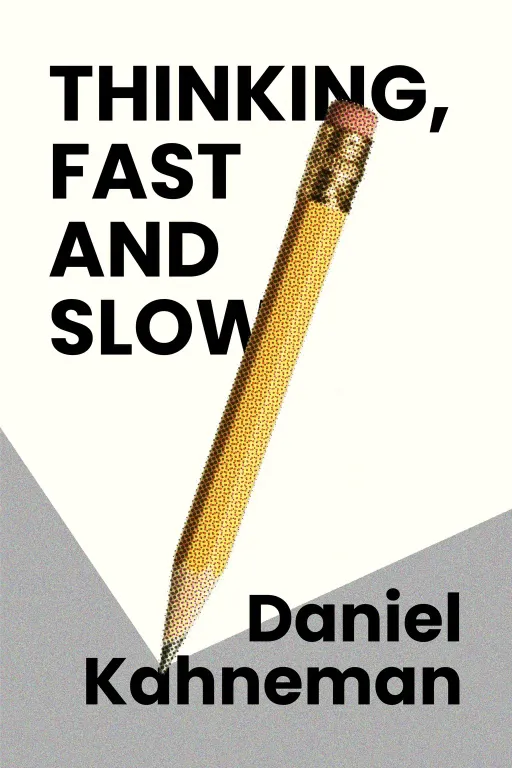
Nova: Kahneman, in his seminal work, introduced us to what he calls System 1 and System 2. Think of them as two characters living inside your head, each with a very different personality. System 1 is the fast, intuitive, emotional, almost automatic one. It’s the one that screamed 'buy now!' at the flash sale or 'RAGE!' when you got cut off. It’s brilliant at making quick judgments, recognizing faces, understanding simple sentences, or driving a car on a familiar route without much conscious thought.
Atlas: Oh man, that sounds like the part of my brain that handles my morning coffee routine. Just pure instinct. So, what exactly System 1 doing in that moment? Is it just guessing? Or is it running on some kind of internal autopilot?
Nova: It's running on autopilot, but a highly sophisticated one. It relies on heuristics, mental shortcuts, patterns it's learned over a lifetime. It’s incredibly efficient, but that efficiency comes at a cost: it can be prone to biases and errors because it prioritizes speed over accuracy. It jumps to conclusions. Take a classic example: I tell you that a bat and a ball together cost $1.10. The bat costs $1.00 more than the ball. How much does the ball cost?
Atlas: Oh, I know this one! Ten cents! Wait. No. That can’t be right. If the ball is ten cents, and the bat is a dollar more, then the bat is $1.10. And together that’s $1.20. See, my System 1 just screamed 'ten cents!' at me.
Nova: Exactly! Your System 1’s immediate, intuitive answer was ten cents. But if you engage your System 2—the slow, deliberate, logical, effortful system—you'd realize the answer is five cents for the ball, and $1.05 for the bat. Together, $1.10.
Atlas: Wow, that's such a perfect illustration. So System 2 is like the diligent, slightly lazy accountant who only gets called in when System 1 can't handle it, or when the stakes are high enough for us to ourselves to think harder. Does System 2 ever just 'wake up' on its own, or do we have to consciously activate it?
Nova: System 2 be activated by surprise, like when your System 1's initial answer feels off, or when you encounter something novel. But often, System 2 is fundamentally lazy. It prefers to conserve energy. It's perfectly happy to let System 1 run the show most of the time, even if System 1 makes mistakes. This is why we fall for so many cognitive biases – System 2 isn't always vigilant enough to correct System 1's snap judgments.
Atlas: That makes me wonder, though. If our default setting is this fast, intuitive, error-prone System 1, how much of our lives are we actually living on autopilot, making decisions we aren't even fully aware of? And how does understanding this help us understand other people’s sometimes baffling behavior?
Nova: That’s the real power of these insights. It moves us beyond simply judging people as 'irrational' or 'stupid' and helps us see the underlying psychological drivers. It reveals that much of what we attribute to conscious choice or unique personality is often just System 1 operating as designed, or rather, as designed for certain complex situations. We're all wired this way.
The Art of the Nudge: Guiding Decisions for Better Outcomes
SECTION
Nova: Okay, so if our System 1 is so prone to these quick, sometimes flawed judgments, what can we about it? We can't just switch off System 1. We can't force everyone to engage their lazy System 2 all the time. That’s where the brilliant concept of 'nudges' comes in, championed by Richard Thaler and Cass Sunstein.
Atlas: So, it's not about forcing people, it's about making the 'right' choice easier? I’m curious, what do you mean by 'nudges'? Like, a gentle push in the right direction?
Nova: Exactly! A nudge is any aspect of the choice architecture that alters people's behavior in a predictable way without forbidding any options or significantly changing their economic incentives. It's like guiding System 1 towards better outcomes, subtly. Think about it: if you want people to eat healthier, you don't ban junk food. You put the fruit at eye level in the cafeteria, or make the healthy option the default.
Atlas: That’s a great way to put it. So, in other words, it's about making the path of least resistance also the path of most benefit. Like, not telling me I buy that flash sale item, but maybe putting a 'do you really need this?' pop-up first.
Nova: Precisely. One of the most famous examples of a successful nudge is automatic enrollment in retirement savings plans. Historically, people had to to their 401. Most didn’t, because System 2 was too lazy to fill out the forms, and System 1 didn't feel the immediate urgency. But when companies switched to, making participation the default unless you, participation rates skyrocketed.
Atlas: Wow, that's incredible. Just changing the default option had such a massive impact. But wait, this brings up an interesting point. Isn't there a fine line here? If we're subtly guiding people's choices, even for their own good, isn't that a bit... manipulative? Where’s the line between a helpful nudge and an overbearing push that disrespects freedom?
Nova: That's a crucial question, and it's one Thaler and Sunstein address directly. They call their approach 'libertarian paternalism.' The 'libertarian' part means preserving freedom of choice—no options are removed. The 'paternalism' part means it's okay for institutions to try and influence choices in a way that will make choosers better off, as judged by themselves. The key is transparency and the ability to easily opt-out. A good nudge helps people make the choice they have made if their System 2 were fully engaged, rather than being swayed by System 1's biases. It respects individual autonomy while acknowledging our cognitive limitations.
Atlas: I can see how that would be powerful. So, for our listeners who are trying to apply this to their own lives, or even just understand the people around them, what's a simple example of a nudge they could implement for themselves or observe in their daily lives?
Nova: A great personal nudge is simply changing your environment. If you want to eat healthier, don't just rely on willpower. Nudge yourself by making healthy snacks easily visible and accessible, and unhealthy ones out of sight. If you want to exercise more, lay out your workout clothes the night before. You're leveraging System 1's preference for ease and defaults. Or, when you're trying to communicate effectively, understand that people might be operating from System 1. Frame your message to appeal to their intuition, then provide the System 2 logic to back it up.
Synthesis & Takeaways
SECTION
Nova: So, what we've really explored today are these hidden algorithms that run our lives. On one hand, the lightning-fast, often flawed System 1, always looking for shortcuts. On the other, the deliberate, but easily fatigued, System 2. And then, the brilliant insight that we can design our environments, and even our communication, to gently steer System 1 towards better outcomes through smart 'nudges.'
Atlas: That’s going to resonate with anyone who struggles with making consistent good choices. It’s liberating to realize it’s not always a personal failing, but often just our brain’s default settings. It helps us decode human actions, both our own and others', moving beyond surface-level observations to deeper psychological drivers.
Nova: Exactly. Understanding these systems equips you with a powerful lens to see beyond the immediate. It helps us understand why we procrastinate, why we fall for marketing tricks, or why we sometimes act against our own best interests. And crucially, it gives us tools to design a world, and a personal life, where making good decisions is just a little bit easier.
Atlas: That's actually really inspiring. It means we're not just victims of our own brains or our environment. We can actually become the architects of our choices. So, for everyone listening, here’s a tiny step: observe just one decision you make today. Try to identify if your fast, intuitive System 1 or your slow, deliberate System 2 was primarily at play. Just notice it.
Nova: That simple act of observation is the first step to mastering these hidden algorithms within us.
Atlas: Powerful stuff.
Nova: This is Aibrary. Congratulations on your growth!