The Foundational Pillars of Critical Thought
Golden Hook & Introduction
SECTION
Nova: Alright, Atlas, let's kick things off with a little challenge. You’ve delved into some profound insights today. Give me your five-word review of what we’re about to unpack.
Atlas: Oh, that's easy. "Think better, argue smarter, win."
Nova: "Win." I love that. Succinct, powerful, and perfectly captures the essence of what we're talking about today. We are cracking open two intellectual powerhouses that, when combined, offer a masterclass in critical thinking.
Atlas: Absolutely. These aren't just academic exercises; they're foundational toolkits for anyone looking to navigate complexity, whether in business, personal growth, or even fortifying their worldview.
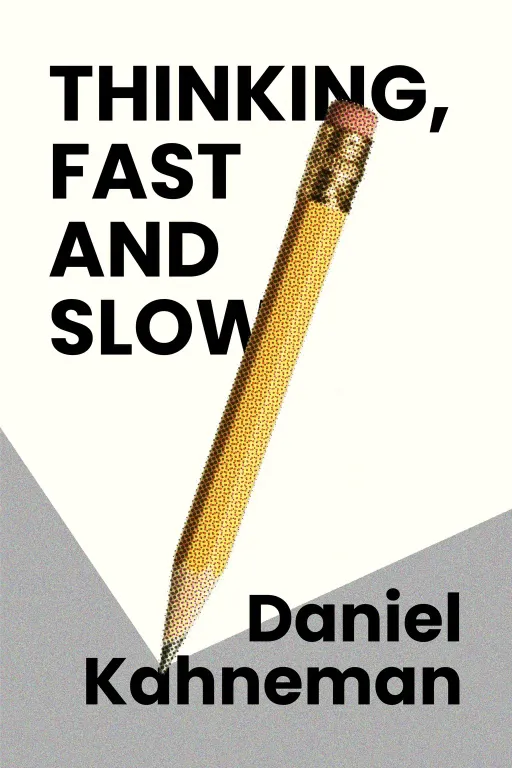
Nova: Exactly. We're talking about Daniel Kahneman's seminal work, "Thinking, Fast and Slow," and Anthony Weston's incredibly practical "A Rulebook for Arguments." Kahneman, a Nobel laureate in Economic Sciences, completely revolutionized our understanding of human decision-making, showing us the hidden forces at play in our minds. It's not just about economics; it's about psychology, neuroscience, and how we actually make choices.
Atlas: Wow, a Nobel laureate. That really grounds the scientific rigor behind his insights. And Weston’s "Rulebook" sounds like the perfect complement.
Nova: It truly is. Weston’s book, while deceptively slim, has become a go-to for anyone wanting to sharpen their reasoning, from aspiring philosophers to seasoned debaters. It’s about building arguments that don’t just persuade, but genuinely stand up to scrutiny.
Atlas: So, we're essentially talking about mastering our internal operating system and then learning how to communicate its outputs effectively and persuasively? That sounds like the ultimate strategic advantage for anyone building something meaningful.
Nova: Precisely. It's about understanding the mechanics of your own thought processes first, then equipping yourself with the tools to articulate those thoughts with clarity, precision, and logical soundness. And that brings us directly to our first pillar: the fascinating, often surprising, world of cognitive biases.
The Dual Engines of Thought: Unmasking Cognitive Biases
SECTION
Nova: So, let's dive into Kahneman's groundbreaking work. He introduces us to two systems that govern our thinking: System 1 and System 2. Think of System 1 as your brain's autopilot – it's fast, intuitive, emotional, and operates automatically with little to no effort. It's what makes you swerve to avoid an obstacle while driving, or instantly recognize a familiar face.
Atlas: Oh, I like that analogy: autopilot. So, that's our gut feeling, our instant reactions, the snap judgments we make without even realizing it?
Nova: Exactly. And then there's System 2. This is the deliberate, slower, more analytical part of your brain. It's what you engage when you're solving a complex math problem, trying to recall a distant memory, or consciously weighing the pros and cons of a major life decision. It requires effort, focus, and intentionality.
Atlas: I can definitely relate to that. Sometimes I feel my brain literally warming up when I switch from autopilot to deep thinking. But when does that autopilot, System 1, get us into trouble? Because a lot of entrepreneurs, a lot of strategists, they often talk about trusting their gut.
Nova: That's the crucial question, Atlas. While System 1 is incredibly efficient and often accurate, it's also the source of most of our cognitive biases. It loves shortcuts, patterns, and stories, even if they're incomplete or misleading. Take, for instance, the anchoring effect. This is a classic System 1 trap.
Atlas: The anchoring effect? What does that look like in the wild?
Nova: Imagine you're negotiating a deal. The first number mentioned, even if it's completely arbitrary, tends to "anchor" the rest of the negotiation. If a seller starts with an outrageous price, even if you negotiate it down significantly, your final offer will likely still be higher than if they had started with a more reasonable number. Your System 1 latches onto that initial anchor.
Atlas: Hold on, so even if I consciously know the first number is ridiculous, my brain still uses it as a reference point? That's kind of infuriating. It feels like my own mind is subtly sabotaging my rational thought.
Nova: It happens all the time! Or consider confirmation bias. System 1 loves to seek out and interpret information in a way that confirms our existing beliefs. If you're an entrepreneur deeply committed to a particular product or business idea, you're more likely to notice and value data that supports its success, and dismiss data that points to its flaws.
Atlas: That sounds like a recipe for disaster in strategic growth. It’s like wearing blinders to anything that challenges your initial vision. How do you, as a strategic builder, overcome that kind of inherent mental inertia, especially when you're deeply invested?
Nova: That's where consciously engaging System 2 comes in. It's not about eradicating System 1—it's essential for daily functioning—but recognizing its pitfalls. For the entrepreneur, it means actively seeking out disconfirming evidence, creating devil's advocate roles in meetings, or building diverse teams specifically to challenge assumptions. For the apologetic seeker, it means rigorously examining premises that might contradict cherished beliefs, rather than just reinforcing them.
Atlas: So, it's about building a disciplined habit of questioning your own initial thoughts and seeking out perspectives that might actively disprove your current stance. That’s a powerful mental muscle to develop. It sounds like System 2 needs a workout plan.
Nova: Precisely. It's about slowing down. When the stakes are high, whether in a financial decision or a theological inquiry, you need to consciously shift gears. Ask yourself: what assumptions am I making? What evidence am I ignoring? What would someone who disagrees with me say? This deliberate engagement of System 2 is what allows for truly critical thought to emerge.
Building Unshakeable Arguments: Logic as a Strategic Tool
SECTION
Nova: And that's a perfect segue, Atlas, because once you've done the deep, slow thinking, once you've wrestled with your own biases thanks to Kahneman, how do you articulate those well-reasoned thoughts to others? How do you build an argument that is not just persuasive, but logically sound and truly unshakeable? This is where Anthony Weston's "A Rulebook for Arguments" becomes an invaluable guide.
Atlas: So, we're moving from to what we've thought, in a way that stands up to scrutiny. What's the biggest mistake people make when trying to make a point, whether it's in a business pitch, a philosophical debate, or even just a disagreement with a colleague?
Nova: One of the most common and damaging mistakes is falling into logical fallacies. Weston meticulously breaks these down. Take, for example, the fallacy. Instead of attacking the argument itself, people attack the person making it. "Well, you would say that, you're a!"
Atlas: Oh, I see that everywhere, especially online. It totally derails any productive conversation. It feels like a cheap shot, designed to shut down debate rather than engage with it.
Nova: Exactly. It's a classic System 1 reaction—emotional, fast, and completely illogical. Another big one is the fallacy. This is where you misrepresent someone else's argument, making it sound weaker or more extreme than it actually is, and then you attack your distorted version. It's easier to knock down a straw man than a real argument.
Atlas: That’s a bit like someone saying, "Oh, so you want to invest in this new sustainable technology? I guess you don't care about making a profit then!" when what you actually said was you want profit and sustainability. It creates a false dichotomy.
Nova: A perfect example! Weston's book teaches you to identify these structural weaknesses, not just in others' arguments, but in your own. For a philosophical seeker trying to fortify their faith with reason, understanding these fallacies is like having an internal radar for intellectual dishonesty, both from others and within themselves. For the strategic builder, it's about crafting a business case that is so logically robust that it anticipates and disarms potential criticisms before they even arise.
Atlas: So it's not just about winning an argument, but about building arguments that are fair, clear, and precise. That sounds like it cultivates trust and credibility, which is essential for scaling any vision, whether it's a financial empire or a moral purpose. How does mastering these argument rules give someone a strategic edge in the real world?
Nova: It gives you an incredible edge because it forces clarity. When you know you have to construct a sound argument, you have to truly understand your own position, its premises, and its conclusions. You can't hide behind vague statements or emotional appeals. This rigor translates directly into better decision-making, clearer communication with your team, more compelling pitches to investors, and more profound, respectful dialogues in any arena. It elevates the entire conversation.
Atlas: It sounds like it helps you cut through the noise and get to the core truth of a matter. And that truth, whether it's in faith or finance, is what we're all really seeking.
Synthesis & Takeaways
SECTION
Nova: So, Atlas, we've talked about understanding our internal biases through Kahneman's work and building rigorous external arguments with Weston's "Rulebook." How do these two foundational pillars connect for our philosophical entrepreneurs, apologetic seekers, and strategic builders?
Atlas: It sounds like understanding Kahneman helps you build the internal integrity of your thought process, ensuring your foundations are sound and you're not falling prey to your own mental shortcuts. And then Weston helps you build the external integrity, the structure that allows you to share those sound thoughts in a way that truly resonates, convinces, and withstands challenges. It's about intellectual honesty, first with yourself, then with the world.
Nova: Exactly. It’s the journey of synthesis that you embody. It's about aligning financial freedom with moral purpose, about fortifying faith with reason, and about scaling a business vision built on truth and logic. When you master your own mind and then master how you communicate its insights, you gain a strategic advantage that is ethical, powerful, and deeply purposeful. It’s a moral imperative for anyone driven by purpose.
Atlas: It’s a journey of continuous refinement, both internally and in how we engage with the world. It’s about becoming a better thinker, a better communicator, and ultimately, a better builder. For our listeners who are ready to dive deeper into this, what's one actionable step they can take this week to start applying these principles?
Nova: This week, try to identify one important decision you're facing where you suspect your System 1, your autopilot, might be in overdrive. Then, consciously engage your System 2. Ask yourself: what assumptions am I making? What evidence am I missing? What would a credible person who disagrees with me say? Slow down to speed up your clarity.
Atlas: I love that. It's about intentionality, about bringing that deliberative thought to the moments that truly matter. And it aligns perfectly with that journey of synthesis we're all on – connecting faith, finance, and philosophy.
Nova: Indeed. Thank you for joining us on this exploration of critical thought. Keep building, keep seeking, and keep growing.
Atlas: This is Aibrary. Congratulations on your growth!