The 'Decision Paralysis' Trap: How to Make Better Choices Under Pressure.
Golden Hook & Introduction
SECTION
Nova: We're often told to "trust our gut," especially when the clock is ticking, when the pressure is on. It's almost a badge of honor, isn't it? That swift, decisive action.
Atlas: Absolutely. It feels primal, powerful. Like you’re tapping into some deep, inherent wisdom. "Go with your gut!" is practically a mantra for navigating tough spots.
Nova: But what if that gut feeling, that instantaneous flash of insight, is actually the very thing leading us into the decision paralysis trap? What if, more often than not, it’s a beautifully packaged shortcut to predictable errors and missed opportunities?
Atlas: Whoa, really? That’s a pretty bold claim to kick us off with. Are you saying our deepest intuitions are actually… unreliable? That’s going to resonate with anyone who’s made a snap decision they later regretted.
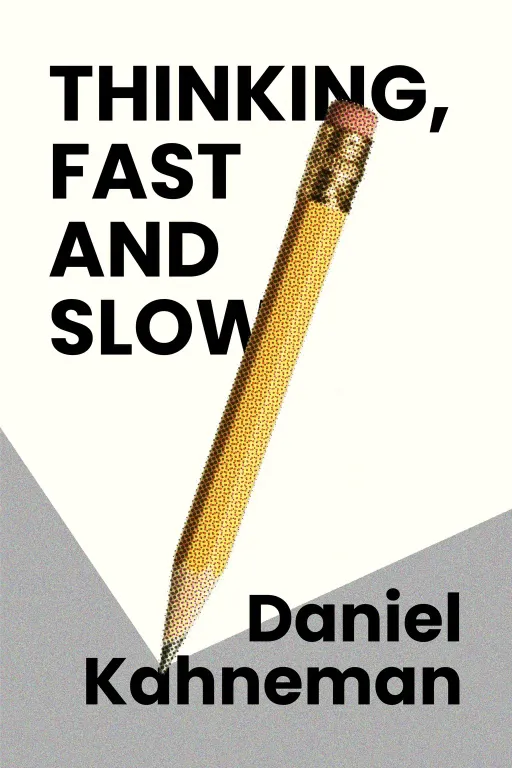
Nova: I am. And we’re dissecting this very human dilemma today, drawing heavily from two monumental works. First, Daniel Kahneman's "Thinking, Fast and Slow," a book so impactful it earned him a Nobel Memorial Prize in Economic Sciences, even though he's a psychologist. And then, Richard Thaler and Cass Sunstein's widely acclaimed book "Nudge," which introduced a whole new way of thinking about choice architecture.
Atlas: A Nobel for a psychologist in economics? That’s already fascinating. It immediately tells you this isn’t just about abstract theories, but about real-world human behavior and its economic consequences. So, where do we even begin to unpack this idea that our gut might be leading us astray?
Unmasking the Two Systems of Thought: System 1 vs. System 2
SECTION
Nova: We begin inside our own heads, Atlas. Kahneman’s breakthrough insight, which is truly foundational, is that our minds operate with two distinct systems. He calls them System 1 and System 2. Think of System 1 as the brain's autopilot. It's fast, intuitive, emotional, and works automatically, without much effort. It's what lets you recognize a familiar face, understand simple sentences, or react to a sudden loud noise.
Atlas: Right, like when you slam on the brakes without even thinking. That's System 1. It’s efficient.
Nova: Exactly. It's brilliant for survival and everyday tasks. But, because it's so fast and operates on assumptions and heuristics, it's also prone to predictable errors and biases. It jumps to conclusions. Now, System 2 is the brain's diligent navigator. It's slow, deliberate, logical, and requires effort and concentration. It’s what you use to solve a complex math problem, fill out a tax form, or carefully weigh the pros and cons of a major life decision.
Atlas: So, System 1 is the quick decision-maker, and System 2 is the thoughtful, analytical one. I can see how relying too much on System 1, especially for important decisions, could be problematic. But how often does System 1 actually lead us astray? Can you give an example of how this 'autopilot' can really mess up a decision?
Nova: Oh, all the time. Let’s take the "anchoring effect." This is a classic System 1 bias. Imagine you’re at a car dealership. The salesperson starts by showing you a ridiculously expensive car, say, priced at $70,000. Now, you’d never buy that car. But then, they show you a second car, still pricey at $45,000.
Atlas: Okay, I’m with you.
Nova: Because your System 1 has been "anchored" by that initial $70,000 price tag, the $45,000 car now seems like a much better deal, even if it's still overpriced for its actual value. Your brain's fast system latched onto the first number, and your slow, deliberate system then struggles to fully adjust away from that initial, irrelevant anchor. The cause is System 1's tendency to latch onto the first piece of information it receives. The process is that this initial anchor unconsciously skews your perception of subsequent values. And the outcome? You might feel like you got a great deal on a $45,000 car, when objectively, it might only be worth $35,000.
Atlas: Wow, that’s actually really sneaky. So basically, the very first piece of information, even if it’s totally irrelevant, sets a mental benchmark that’s hard to shake. It’s like setting the bar for a high jump incredibly high, and then a slightly lower bar still feels like a huge accomplishment, even if it’s actually quite low.
Nova: Exactly! And this isn't just about car sales. It impacts everything from salary negotiations to how we perceive discounts in a store. Our quick, intuitive System 1 is constantly making these snap judgments, often without us even realizing it, and System 2, our more rational self, is often too lazy or too busy to correct it. What’s even more interesting is how this plays out for someone managing a complex project with tight deadlines. Under pressure, you’re forced to make rapid decisions, often relying on that very System 1, which can lead to quick, but potentially biased, judgments.
Atlas: That makes me wonder, how do we even begin to recognize when our System 1 is running the show, especially when it feels so natural? It seems like we're caught in this internal struggle we're not even aware of.
The Power of Nudges: Designing Better Choices
SECTION
Nova: That’s a brilliant question, and it naturally leads us to our second core idea, which offers a powerful external solution to our internal biases. If our internal systems are so prone to error, what about the world around us? This is where Richard Thaler and Cass Sunstein’s "Nudge" theory comes in.
Atlas: Nudge? Like a gentle push?
Nova: Precisely. They argue that by understanding how people actually make decisions – with all their System 1 biases – we can design "choice architecture" that subtly guides people towards better outcomes without restricting their freedom of choice. It’s about making the desired option the easiest or most obvious one.
Atlas: Okay, so it’s not about forcing people, but making the "right" decision more likely. That sounds like a powerful concept, but also, isn’t that just manipulation? Where’s the line between a helpful nudge and something that feels a bit more coercive?
Nova: That's a critical distinction, and Thaler and Sunstein are very clear about it. A true nudge preserves freedom of choice. You can always opt out. It’s about presenting options in a way that leverages our inherent biases for good. For example, consider organ donation policies. In some countries, you have to actively "opt-in" to be an organ donor. The default is not being a donor.
Atlas: And the numbers for organ donation in those countries are typically lower, right? Because people often don't get around to filling out the forms or making the active choice.
Nova: Exactly. Now, compare that to countries where the default is "opt-out." You are automatically an organ donor unless you actively choose to remove your name from the registry. The cause here is understanding System 1's preference for the path of least resistance – the default option. The process is simply changing that default. The outcome is a significantly higher rate of organ donation, saving countless lives, all without anyone losing the freedom to choose. It’s leveraging inertia.
Atlas: So, the nudge isn’t about tricking people, but about recognizing human psychology and designing systems that work it, rather than against it. That's a huge shift from just telling people to "make better choices." It's about making better choices easier to make. I'm curious, how can listeners apply this to lives? Beyond governments nudging citizens, how can I "nudge" myself towards better habits or clearer thinking to avoid my own decision paralysis?
Nova: That's the beauty of it. Once you understand the principles, you can become your own choice architect. For instance, if you struggle with decision paralysis about what to eat for dinner after a long day, a self-nudge could be to pre-plan your meals for the week. Or, if you want to avoid impulse purchases, a nudge might be unsubscribing from marketing emails or putting a 24-hour delay on online purchases. You're designing your environment to make System 1's automatic choices align with System 2's long-term goals.
Atlas: It’s like setting up guardrails for your own brain. I love that. So, it's not just about overcoming external pressures, but about proactively structuring your internal and external world to support better decisions.
Synthesis & Takeaways
SECTION
Nova: Precisely. The synthesis here is profoundly empowering. Kahneman shows us the internal battle, the sneaky ways our brains can trip us up, especially under pressure. He reveals the blind spots of our gut feelings. Then, Thaler and Sunstein offer a way to navigate that terrain, to literally redesign the landscape of our choices. Understanding our internal biases empowers us to recognize when we're vulnerable to poor decisions. And understanding nudges empowers us to design environments—both for ourselves and for others—that support better decision-making, effectively sidestepping decision paralysis.
Atlas: It’s not about eliminating pressure, but about creating systems where pressure doesn’t automatically lead to poor outcomes. It’s about moving from passive reception of our environment to active, iterative engagement in learning how to make better choices. That's a powerful shift in perspective.
Nova: It truly is. It transforms the challenge of decision-making from a purely willpower-based struggle into an intelligent design problem. It's about recognizing that our brains are magnificent, but they have quirks, and we can account for those quirks.
Atlas: So, for our listeners today, when was the last time a swift 'gut decision' led you astray, and how might a more deliberate approach, or a cleverly designed 'nudge' in your environment, have changed the outcome? What small tweak could you make to your own "choice architecture" this week?
Nova: That's a fantastic question to ponder. Because ultimately, the goal isn't to eliminate gut feelings entirely, but to understand when to trust them and when to pause, to engage that System 2, or to simply make the path to the best decision as clear and easy as possible.
Atlas: It's about becoming a conscious decision-maker, rather than a reactive one.
Nova: Exactly. This is Aibrary. Congratulations on your growth!