The 'Decision Paralysis' Blind Spot: How to Act with Conviction
Golden Hook & Introduction
SECTION
Nova: What if I told you the more data you collect, the harder it becomes to make a decision? That sometimes, more information isn't power, it's paralysis.
Atlas: Whoa, really? That feels almost counterintuitive, doesn't it? I imagine so many of our listeners, especially those in leadership roles, have felt that exact pressure cooker of having too much information and still feeling completely stuck. It’s like the ultimate paradox for someone trying to lead and inspire.
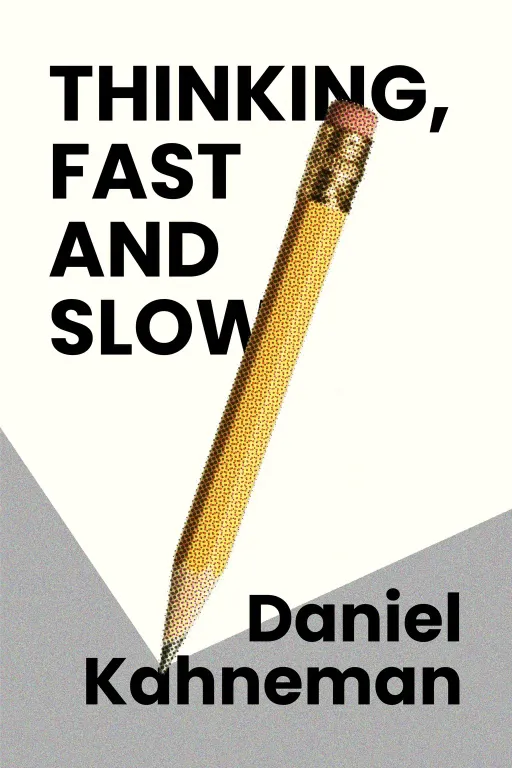
Nova: Absolutely, Atlas. It's a blind spot that plagues even the most seasoned leaders. And today, we're diving headfirst into that very challenge with insights from a truly groundbreaking work: "Thinking, Fast and Slow" by the brilliant Daniel Kahneman.
Atlas: Kahneman, right. Isn't he the one who won a Nobel Prize? But I thought he was a psychologist, not an economist. How does that fit into decision-making for leaders?
Nova: That's precisely what makes his work so revolutionary and why we highlight it today. Kahneman, a psychologist by training, actually won the Nobel Memorial Prize in Economic Sciences for his pioneering work on prospect theory. He fundamentally reshaped our understanding of human judgment and decision-making, showing that our minds don't always operate with perfect rationality. His insights bridge psychology and economics, making them incredibly potent for anyone navigating complex choices, from the boardroom to personal life.
Atlas: That's incredible. So, he's basically giving us the cheat codes to our own brains, especially when we're trying to balance that gut feeling with all the spreadsheets.
Nova: Exactly. And the core of our podcast today is really an exploration of how to transcend the common trap of decision paralysis by understanding the fundamental forces that shape our thoughts and choices. We're going to illuminate how to act with conviction, not just hope.
The 'Decision Paralysis' Blind Spot
SECTION
Nova: So, let's start with this 'Decision Paralysis' blind spot. Many leaders find themselves in this uncomfortable middle ground, caught between a mountain of data and a powerful, often conflicting, intuition. It's like standing at a crossroads with a GPS telling you one thing and your gut screaming another.
Atlas: Oh man, I know that feeling. It's the worst. You're trying to boost confidence in your team, but internally, you're just second-guessing every single move. What’s really going on there? Why do we get so tangled up?
Nova: Well, let's paint a picture. Imagine an executive, we'll call her Sarah, at the helm of a rapidly growing tech company. She's facing a critical decision: whether to launch a new product line that her market research team says is a guaranteed success. The data is overwhelmingly positive—projected revenue, customer demand, competitor analysis, all pointing to a green light.
Atlas: Sounds like a no-brainer then, right? Just follow the numbers.
Nova: Not so fast. Sarah has this nagging gut feeling, a deep intuition that something is off. She's seen similar data before, and it didn't pan out. Her intuition is whispering about market saturation, about a subtle shift in consumer behavior that the models haven't quite captured. She spends weeks agonizing. She calls more meetings, commissions more reports, tries to find data to either validate her gut or silence it.
Atlas: I can totally visualize that. It’s like she’s digging herself deeper into the problem, not closer to a solution. The more she digs, the more confused she gets.
Nova: Precisely. The internal conflict is immense. She delays the launch, which costs the company potential market share. When she finally makes a decision, it's a watered-down compromise, not a bold, decisive move. The lost opportunities, the team's morale dip, and her own self-doubt linger. She's stuck because she doesn't understand the mechanisms behind her own thinking.
Atlas: That’s going to resonate with anyone who struggles with making high-stakes calls. For our listeners who are aspiring leaders, who want to make an impact, that indecision is the enemy of influence. So, what's causing this internal tug-of-war? Why does our brain do this to us?
Nova: It's often due to something we call cognitive biases, these hidden shortcuts our brains take. And this is where Kahneman's work becomes our compass. The deep question he implicitly asks us to consider is: when faced with your next big decision, pause to identify whether your fast, intuitive thoughts or your slow, logical ones are dominating. How might you bring them into better balance? That's the key to moving from paralysis to conviction.
Kahneman's 'Thinking, Fast and Slow'
SECTION
Nova: This naturally leads us to the second key idea we need to talk about, which provides the framework to understand Sarah’s dilemma: Kahneman's revolutionary concept of System 1 and System 2 thinking. He shows us that our minds operate with two distinct, yet interconnected, systems.
Atlas: Okay, so what’s the difference? Are we talking about two different brains in our head?
Nova: Not exactly two brains, but two distinct modes of operation. Think of System 1 as your fast, intuitive, emotional, almost automatic thinking. It's what allows you to recognize a friend's face instantly, or slam on the brakes if a child runs into the road. It's effortless, often unconscious, and incredibly powerful for rapid assessments.
Atlas: So you're saying System 1 is our 'gut reaction'? My intuition, that immediate feeling.
Nova: Exactly. It's the origin of that gut feeling Sarah had about the product launch. Then we have System 2. This is your slow, logical, effortful, and deliberate thinking. It's what you engage when you're solving a complex math problem, meticulously planning a strategic project, or consciously weighing the pros and cons of a major life decision. It requires concentration and energy.
Atlas: I see. So System 1 is the Ferrari, quick and flashy, and System 2 is the tractor, slow and powerful for heavy lifting. But how do they interact, and more importantly, how do we know which one to trust when they give us conflicting signals?
Nova: That's the million-dollar question, and it’s where the 'Nova's Take' really comes into play. Let's look at another scenario to understand their interplay. Imagine a veteran firefighter walking into a burning building. System 1 kicks in immediately. He might feel a subtle shift in the air pressure, hear a faint groan from the structure, or smell a specific type of smoke that his conscious mind hasn't even registered yet, but his gut screams "get out!" And he acts instantly, saving lives.
Atlas: Wow, that’s incredible. That's pure intuition, honed by years of experience.
Nova: Now, contrast that with a structural engineer, who, after the fire, meticulously analyzes blueprints, material stress points, fire propagation models, and statistical data on building collapses. That's System 2 at work. Both are essential. The firefighter's System 1 saves lives in the moment, while the engineer's System 2 helps design safer buildings for the future.
Atlas: That’s a perfect example of their strengths. But what if the firefighter's gut told him something was wrong, but the data from his past experience said it was fine? Or if the engineer's calculations showed a building was safe, but his intuition felt uneasy? For someone trying to influence with impact, knowing when to trust your gut versus crunch the numbers is everything.
Nova: Absolutely. The critical insight isn't to pick one system over the other. The goal is to understand their strengths and their pitfalls, and to consciously bring them into better balance. System 1 is brilliant at pattern recognition and quick judgments, but it's prone to biases and can be overly confident. System 2 is rigorous and logical, but it's slow and tires easily.
Atlas: So, it’s about acknowledging both voices, and then knowing when to let one lead, or when to put the brakes on the other. It's like having a mental superpower for better decisions.
Nova: Exactly. It's about recognizing when your System 1 might be leading you astray—perhaps due to a strong emotional reaction or a faulty heuristic—and then engaging your System 2 to apply deliberate, logical reasoning. Or conversely, knowing when System 2 is overthinking and you need to trust that well-honed System 1 intuition, especially in areas where you have deep expertise.
Synthesis & Takeaways
SECTION
Nova: So, bringing it all together, the journey from decision paralysis to conviction isn't about eliminating either data or intuition. It's about being aware of this powerful internal dialogue between your fast, intuitive System 1 and your slow, deliberate System 2.
Atlas: That makes so much sense. It’s like becoming the conductor of your own mental orchestra, making sure each section plays when it's supposed to. For aspiring leaders, that kind of self-awareness is gold.
Nova: It truly is. And that deep question we posed earlier becomes your daily practice: next time you face a big decision, pause. Ask yourself, "What is my gut telling me right now? And what do the facts, the hard data, actually say?" Are they aligned? If not, how can you consciously bring them into better balance? It could be as simple as sleeping on it, or forcing yourself to list three counter-arguments to your initial gut feeling.
Atlas: That's a powerful challenge, and it's a practical step toward building that executive presence and inspiring trust that many of our listeners crave. It makes me reflect on my own tendency to sometimes overthink, or other times jump too quickly.
Nova: And that's perfectly normal, Atlas. We all do it. The growth recommendation here is to practice active listening daily. Not just to others, but to your own internal dialogue. What's your gut saying? What are the facts? Are they aligned? By doing this, you're not just making better decisions, you're building a stronger relationship with your own inner wisdom.
Atlas: That's a fantastic takeaway. Being able to navigate tough talks and build stronger bonds starts with navigating your own inner thoughts.
Nova: Precisely. It's about making your message memorable because it's rooted in conviction, not just speculation.
Atlas: So, the next time a big decision looms, don't just react or overanalyze. Pause, listen to both systems, and then lead with clarity.
Nova: Absolutely. That's how you act with true conviction.
Atlas: Incredible insights, Nova. Thank you.
Nova: My pleasure, Atlas.
Nova: This is Aibrary. Congratulations on your growth!