The Decision Dilemma: How to Make Better Choices When Time Is Short.
Golden Hook & Introduction
SECTION
Nova: Everyone says 'trust your gut.' It's practically a mantra in the fast-paced world, right? But what if your gut is secretly sabotaging your biggest, most time-sensitive decisions? What if that instant feeling is actually leading you down a path of costly mistakes?
Atlas: Oh man, that's a gut punch right there because I hear that advice constantly! Especially when you're under pressure, when deadlines are looming, and you just need to. It feels like a superpower to just know. But you're saying it's more like a blind spot?
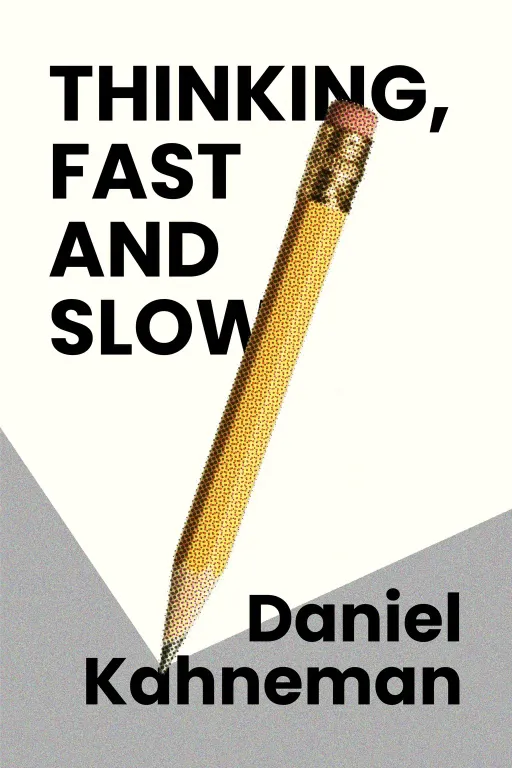
Nova: Exactly! Today, we're tearing into that very idea. We're drawing insights from some truly groundbreaking work. We're talking about Nobel laureate Daniel Kahneman, whose "Thinking, Fast and Slow" fundamentally reshaped our understanding of the mind, and then the incredibly practical, widely acclaimed strategies laid out by Chip and Dan Heath in their book "Decisive." These aren't just academic texts; they're manuals for mastering the art of choice, especially when time is a luxury you don't have.
Atlas: Manuals for mastering choice… I love that. Because let's be real, decision fatigue is a thing. And for anyone juggling high-stakes professional choices with, say, the chaos of new parenthood, the idea of making decisions, not just decisions, is incredibly appealing. So, where do these brilliant minds tell us we’re going wrong?
The Peril of the Gut: Unmasking Our Decision Blind Spots
SECTION
Nova: Well, let's start with the "blind spot" itself. Kahneman introduces us to two systems of thinking: System 1, which is fast, intuitive, emotional, and often unconscious. This is your "gut." And System 2, which is slow, deliberate, logical, and requires effort. Our problem? We lean on System 1 way too much, especially when we're stressed or busy.
Atlas: Okay, so System 1 is the snappy, reactive brain, and System 2 is the deep-thinking, deliberative one. I can see how the snappy one would take over when you're swamped. But what does that look like in real life? Give me an example where my snappy brain would totally lead me astray.
Nova: Think about confirmation bias. Imagine you’re hiring for a critical role at your AI ed-tech startup. You interview a candidate, and within the first five minutes, you get a "good feeling" about them – maybe they went to your alma mater, or they share a similar hobby. Your System 1 has already made its decision.
Atlas: Oh, I know that feeling! You're already mentally drafting their offer letter.
Nova: Exactly! And then, for the rest of the interview, your System 1 subtly steers you to ask questions that confirm your initial positive impression. You gloss over red flags, you interpret ambiguous answers in their favor. You're not objectively assessing; you're confirming. The "gut feeling" wasn’t about their qualifications; it was about a superficial connection that triggered a bias.
Atlas: Wow. That's actually really insidious. So, my gut isn't just making a quick decision; it's actively to support its quick decision. That sounds rough, because if I'm not even aware I'm doing it, how do I stop?
Nova: That's the deep question, isn't it? The blind spot is not recognizing our own cognitive biases. It's the conviction that our intuition is always right, even when it's built on a shaky foundation of these mental shortcuts. Another classic is anchoring bias. You're negotiating a deal, and the first number thrown out, even if it's ridiculously high or low, anchors all subsequent discussions. Your System 1 latches onto it.
Atlas: So, if someone says, "We expect to pay $500,000 for this project," even if I know it's only worth $200,000, that $500,000 just... sticks in my head?
Nova: Precisely. It becomes the mental reference point, making your $200,000 seem comparatively low, even if objectively it's the correct value. The entire negotiation shifts. This is why understanding these biases isn't just academic; it's a superpower for avoiding costly blunders in business and life.
The Strategic Shift: Engineering Better Decisions with Deliberate Thinking
SECTION
Nova: So, if our gut can't always be trusted, what's the alternative? How do we make better choices without getting bogged down in endless analysis? This is where Kahneman's System 2 thinking steps in, but the Heath brothers give us a phenomenal, actionable framework called WRAP.
Atlas: WRAP? Okay, I'm intrigued. Because honestly, the idea of slowing down for decision feels impossible for someone constantly putting out fires and building something from scratch. What does WRAP stand for?
Nova: WRAP is a four-step process designed to counteract these biases. W stands for. Our gut often presents us with a narrow choice: Should I do X or Y? But brilliant decisions often come from expanding possibilities. R is for. Don't just confirm your biases; actively seek out information that might your idea.
Atlas: Okay, so Widen your options, Reality-test your assumptions. That's already making me think about those "either/or" moments that feel so limiting. What about A and P?
Nova: A is for. Step back. Get perspective. This could mean waiting 24 hours, or imagining what advice you'd give a friend in the same situation. And P is for. Think about potential failures, create contingency plans. This isn't pessimism; it's strategic foresight.
Atlas: Prepare to be wrong! That's a huge shift from the "always be confident" mentality. But how does someone with limited time, like a new mom running a startup, actually implement a four-step process? It sounds like it could lead to analysis paralysis.
Nova: That's a great point. The beauty of WRAP isn't that you meticulously follow every step for every decision, but that you have these mental tools. For instance, to "Widen your options," you don't need to spend days brainstorming. You could simply ask: "Who else has solved a similar problem?" or "What's the opposite of what I'm considering?" For "Reality-test your assumptions," instead of just asking friends who agree with you, find one person who you know will challenge your idea. Even a five-minute conversation can introduce a critical counter-perspective.
Atlas: So, it's not about adding hours to the decision-making process, but adding to the critical junctures. Like, instead of just going with the first solution that pops into my head for a new feature, I quickly force myself to brainstorm two other, completely different approaches.
Nova: Exactly! Or, if you're about to make a big hiring decision, instead of just confirming your good feeling, you "Attain distance" by imagining you have to explain your choice to a critical board member who knows nothing about your initial impression. What evidence would you present? This forces System 2 to engage, even briefly. The Heath brothers are brilliant at making these complex ideas accessible, turning academic research into practical, everyday tools. Their work is a testament to how behavioral science can be applied to improve our lives.
Synthesis & Takeaways
SECTION
Nova: Ultimately, what Daniel Kahneman and the Heath brothers teach us is that better decisions aren't about eliminating intuition. It's about recognizing its strengths and weaknesses, and knowing when to engage more deliberate, structured processes. It's about moving from reactive responses to deliberate, well-considered choices, even when every second counts. This isn't just about avoiding mistakes; it's about actively engineering success, strategically.
Atlas: Right, it’s about upgrading your operating system for decision-making. It makes me think about that deep question from the book: "Think about a recent challenging decision." For our listeners, take a moment to consider one you made under pressure. Which cognitive bias might have influenced your initial instinct? And how could you have approached it differently, armed with these tools—even just one step from the WRAP framework? That’s going to resonate with anyone who feels the constant weight of high-stakes choices.
Nova: It truly is transformative. Once you start seeing these patterns, you can't unsee them. It empowers you to take control.
Atlas: Absolutely. And that's a powerful shift.
Nova: This is Aibrary. Congratulations on your growth!