The 'Data-Driven Intuition' Trap: Why Numbers Aren't Enough for True Impact
Golden Hook & Introduction
SECTION
Nova: Most of us believe that with enough data, with enough spreadsheets, with enough rigorous analysis, we can make perfectly rational decisions. What if I told you that belief is often our biggest blind spot?
Atlas: Hold on, Nova. Are you saying all those hours I spend poring over figures, looking for that undeniable truth, could actually be leading me astray? That sounds a bit out there.
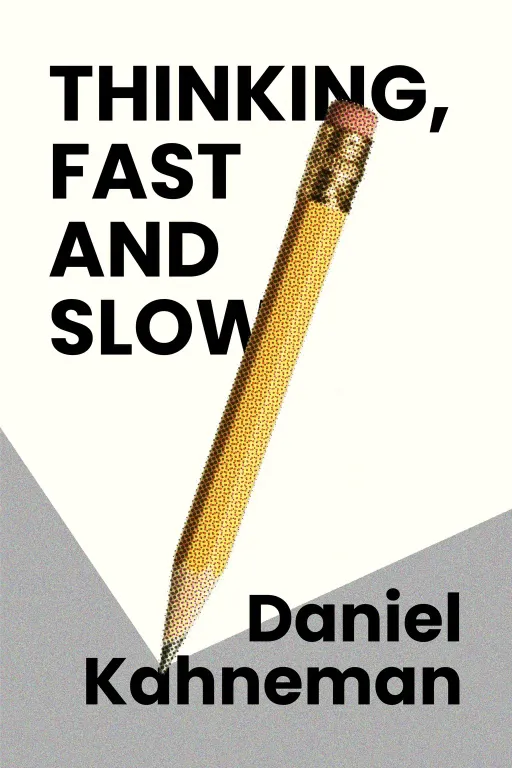
Nova: Not astray, Atlas, but potentially incomplete. We're talking about the subtle, often invisible forces that shape our choices, even when we think we're being purely logical. Today, we're diving into the groundbreaking work of two Nobel laureates: Daniel Kahneman, with his seminal work "Thinking, Fast and Slow," and Richard H. Thaler and Cass R. Sunstein's influential book, "Nudge."
Atlas: Kahneman, the psychologist who won a Nobel in Economics? That always fascinated me.
Nova: Exactly! His work fundamentally shifted how we understand decision-making, proving that psychology is inseparable from economics. And "Nudge" built on that, showing how understanding these human quirks can actually help us design better systems. The core of our podcast today is really an exploration of how to bridge the gap between rigorous data analysis and the unpredictable, often irrational, human element to make truly impactful decisions.
Atlas: That makes me wonder, how does this actually play out in real life for someone who relies on numbers?
The Blind Spot: Beyond the Numbers Game
SECTION
Nova: Well, let's start with Kahneman's revolutionary idea: the two systems of thought. He posits we have System 1, which is fast, intuitive, emotional, and largely unconscious. Think about recognizing a face or knowing 2+2=4. It's effortless.
Atlas: Oh, I know that feeling. Like when I instantly know a financial report is off, even before I dig into the details. That gut feeling.
Nova: Precisely. Then there's System 2: slow, analytical, effortful, and deliberate. This is what we engage when we're solving a complex math problem, comparing investment portfolios, or meticulously planning a project. We like to think System 2 is always in charge, especially in professional settings.
Atlas: Naturally! That's where the "strategic analyst" part of me kicks in. We're trained to be rational.
Nova: And that's where the trap lies. Kahneman shows us how System 1 often makes quick judgments that subtly, or not so subtly, influence our more rational System 2. It's like having a quick-thinking assistant who whispers suggestions to the meticulous planner, and often, the planner just goes along without fully scrutinizing the source.
Atlas: Can you give an example? Like how does that influence something concrete, like a financial report or a project plan?
Nova: Absolutely. Imagine a scenario: a project manager, let's call her Sarah, is reviewing a critical project plan. Her team has presented data suggesting a new, cutting-edge technology will drastically cut costs. Sarah, being a forward-thinking leader, is excited by innovation. Her System 1, seeing the shiny new tech and associating it with progress, quickly generates a positive feeling.
Atlas: I can see how that would be appealing. Who doesn't want to be innovative?
Nova: Exactly. Now, her System 2 kicks in to analyze the numbers. But because her System 1 has already primed her with excitement, she might unconsciously give more weight to the optimistic projections and less scrutiny to the potential risks or implementation challenges. She might suffer from what's called "confirmation bias," where she actively seeks out information that confirms her initial positive intuition about the technology.
Atlas: So, she's looking for data to support her gut feeling, rather than letting the data lead her? That sounds rough, but I can see it. For our listeners who are managing high-pressure teams, this concept might feel impossible to implement, because you're always trying to find a shortcut.
Nova: It's a common human tendency. Or consider "anchoring bias" in financial reporting. If a previous quarter's revenue target was set at, say, $10 million, and a new report comes in at $9.5 million, our System 1 might anchor to that $10 million target and view $9.5 million as a "miss," even if market conditions actually made $9.5 million an outstanding performance. The raw number is just a data point, but our initial anchor dictates our emotional reaction and subsequent "rational" analysis.
Atlas: Wow. So even with all the numbers, we're still processing them through this very human, very fallible lens. How does one even begin to acknowledge or mitigate these biases when they're so ingrained? It feels like trying to catch a fish with your bare hands.
Nudging Towards Impact: Designing for Human Behavior
SECTION
Nova: That's a great transition, Atlas, because acknowledging our biases is just the first step. The next is actively designing systems and environments that account for them. This is where "Nudge" by Thaler and Sunstein comes in. They argue that instead of trying to make people perfectly rational—which is often an impossible task—we can "nudge" them towards better decisions.
Atlas: Nudge. So you're saying subtle interventions? Like, not telling people what to do, but making it easier for them to do the right thing?
Nova: Precisely. A nudge is any aspect of the choice architecture that alters people's behavior in a predictable way without forbidding any options or significantly changing their economic incentives. It's about preserving freedom of choice while subtly guiding it.
Atlas: Can you give an example? Like how does that work in practice?
Nova: One of the most famous examples comes from organ donation. In many countries, you have to actively "opt-in" to be an organ donor. The default is "no." This requires System 2 effort—filling out a form, checking a box. But in countries like Austria, the default is "opt-out." You are automatically a donor unless you actively choose not to be. The decision is still yours, but the default changes everything.
Atlas: Oh man, that's incredible. The default option completely flips the script. So the 'nudge' is leveraging our System 1's tendency to stick with the path of least resistance.
Nova: Exactly! Or think about a company cafeteria. Instead of telling employees to eat healthier, a nudge might involve placing the healthier options at eye level or at the beginning of the food line, and less healthy options further away or less prominently displayed. People still have all the choices, but the subtle arrangement influences what they pick.
Atlas: That’s a perfect example. I can see how that would work in a corporate setting. But wait, isn't that manipulative? For someone building their own business, who values independence and ethical navigation, how do you ensure these nudges are used for good and not to trick people into something they don't really want?
Nova: That's a critical question, and Thaler and Sunstein are very clear on the ethical framework. They advocate for "libertarian paternalism," which sounds like a contradiction, but it means preserving choice while still trying to help people make better decisions for themselves. The key is transparency and ensuring the nudge aligns with the individual's long-term best interests, or societal well-being. It's not about coercion; it's about designing choices that make the desired outcome easier, or the undesired outcome harder.
Atlas: So basically you're saying, if I'm designing a new service or a financial product, instead of just presenting the options, I should think about the defaults, the framing, how I'm presenting the information, to guide people towards what's genuinely good for them? Without taking away their autonomy?
Nova: Precisely. For an entrepreneur, this means moving beyond just the features and benefits of your product or service. It means understanding the human journey your customers take, anticipating their biases, and designing the experience to gently guide them. It could be simplifying a sign-up process, pre-selecting a beneficial option, or framing information to highlight long-term gains over short-term pain. It’s about being a choice architect, not a dictator.
Synthesis & Takeaways
SECTION
Nova: So, by understanding Kahneman's work, we recognize the inherent biases in our data-driven intuition. Then, with the insights from "Nudge," we can proactively design systems and strategies that account for these biases, leading to more effective and ethical outcomes. It's about blending the analytical with the deeply human.
Atlas: That’s actually really inspiring. It means that as analysts and entrepreneurs, we're not just crunching numbers; we're also understanding human stories and designing for them. It adds a whole new layer of depth to what I thought was purely logical work.
Nova: Exactly! It transforms the way you approach analysis. It shows you how to account for the unpredictable human element in your structured processes. My challenge for our listeners this week is to identify just one area in their financial reporting or project plan where a 'purely rational' decision might be overlooking a crucial human factor or cognitive bias.
Atlas: And then, once you've identified it, think about how you might gently 'nudge' the situation or the decision-maker towards a more impactful outcome, simply by understanding how our brains actually work, not just how we wish they would. Trust your instincts, but ground them in this deeper understanding.
Nova: Absolutely. This is Aibrary. Congratulations on your growth!