The Blind Spot: Why Our Brains Play Tricks (and How to Spot Them).
Golden Hook & Introduction
SECTION
Nova: What if the smartest, most rational decision you made today was actually a trick your brain played on you?
Atlas: Come on, Nova. I mean, my decisions are decisions. Are you saying I'm just a puppet, and I don't even know it? That sounds a bit out there.
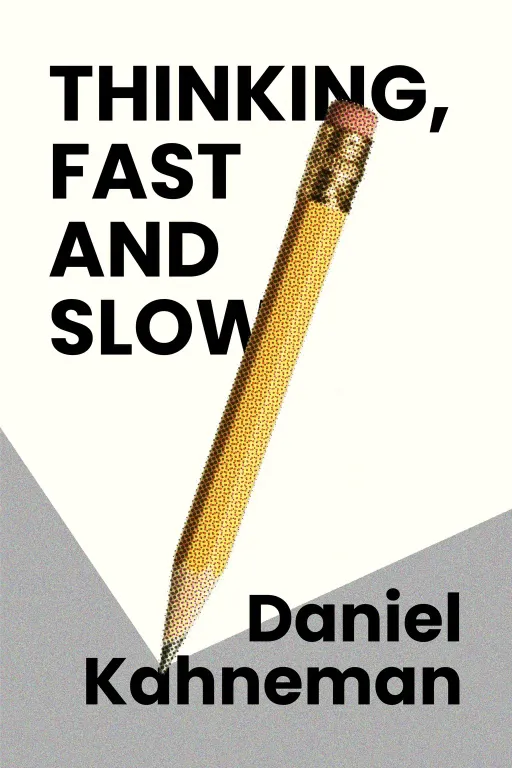
Nova: Not a puppet, Atlas, but perhaps an unwitting participant in a very sophisticated internal play, directed by forces you're barely aware of. Today, we're diving deep into 'The Blind Spot: Why Our Brains Play Tricks,' drawing heavily on the groundbreaking work of Daniel Kahneman.
Atlas: Kahneman. Right. The Nobel Prize winner. Isn’t he a psychologist who won the Nobel in economics? That’s always fascinated me—a psychologist fundamentally reshaping how economists think about human behavior.
Nova: Exactly! His work, especially in "Thinking, Fast and Slow," fundamentally changed our understanding of human rationality, or often, the lack thereof. It's about recognizing these cognitive traps, these blind spots, that's the first step toward making truly strategic choices and understanding others.
Atlas: So, it's not just about what we choose, but we choose, and what influences that process. I can definitely relate to feeling like there's more going on beneath the surface of my own decisions.
System 1 vs. System 2: Unmasking the Mind's Automatic Pilot
SECTION
Nova: Absolutely. Kahneman introduces us to two characters in our minds: System 1 and System 2. Think of System 1 as the flash of intuition, the gut feeling, the automatic response. It’s fast, effortless, and often emotional. It's what lets you recognize a friend's face or slam on the brakes without thinking.
Atlas: Oh, I get that. Like when you see a familiar street sign and instantly know where you are, without consciously reading every letter. That makes sense.
Nova: Precisely. Now, System 2 is the slow, deliberate, logical, and effortful thinking. It's what you engage when you're solving a complex math problem, carefully weighing pros and cons, or trying to understand a nuanced argument.
Atlas: So you’re saying my brain has a 'fast mode' and a 'slow mode,' and the fast mode is often running the show without my explicit awareness? That’s going to resonate with anyone who struggles with feeling overwhelmed by choices. But how does System 1 lead us astray? Can you give an example? Like how does this play out when I'm trying to decide on a new project, or even just what to buy online?
Nova: Let's consider a classic example Kahneman uses, often called the "Linda Problem." Imagine Linda. She's 31 years old, single, outspoken, and very bright. She majored in philosophy. As a student, she was deeply concerned with issues of discrimination and social justice, and she participated in anti-nuclear demonstrations.
Atlas: Okay, I have Linda in my mind. Sounds like a very engaged, intelligent person.
Nova: Now, which is more probable? Is Linda a bank teller, or is Linda a bank teller and active in the feminist movement?
Atlas: Hmm. My gut, my System 1, immediately screams: "Bank teller and active in the feminist movement!" It just fits her profile so well.
Nova: And that's where System 1 plays its trick. Logically, it's always more probable for condition to be true than for conditions to be true simultaneously. The set of "bank tellers" is larger and includes "bank tellers who are active in the feminist movement."
Atlas: Oh, I see! So, the probability of her being a bank teller is higher than her being a bank teller a feminist. My brain just jumped to the most coherent story, not the most probable one. That’s actually really powerful. I can see how that would be a blind spot for strategists. It feels almost counter-intuitive, even when you know the logic.
Nova: Exactly. System 1 loves a good story, even if it's less statistically likely. This 'representativeness heuristic'—judging probability by how well something matches a prototype—is just one of many ways System 1 can lead us to predictable errors. It's efficient, yes, but not always accurate.
Choice Architecture & Nudging: The Invisible Hand Shaping Our Decisions
SECTION
Nova: And if our own minds are playing these internal tricks, what happens when someone else is designing the game? That naturally leads us to the second key idea we need to talk about, which often acts as a counterpoint to what we just discussed. This comes from Richard Thaler and Cass Sunstein’s book, "Nudge," and it's all about 'choice architecture.'
Atlas: So you're saying someone is actively designing my environment to make me choose certain things? That sounds a bit insidious, or at least hugely powerful for innovators. I’m curious how that works in practice.
Nova: It's both. Choice architecture is simply the way choices are presented to us. The 'architect' can be anyone who organizes the context in which people make decisions. Think about a cafeteria. Where the food items are placed, the size of the plates, the default options—all of these are elements of choice architecture.
Atlas: Right, like putting the healthy options at eye level, or making smaller plates more accessible. It’s kind of like making the 'right' choice easier without forcing it.
Nova: Precisely. One classic example is from a school cafeteria. By simply rearranging the food items—putting fruits and vegetables at the beginning of the line and making them more accessible, while moving desserts to a less prominent spot—they dramatically increased the consumption of healthy foods without banning anything or telling anyone what to eat.
Atlas: Wow. So, no one said, "Eat your broccoli!" but suddenly more kids were eating broccoli. That's actually really inspiring. It feels like a subtle, almost invisible influence. That makes me wonder, how can we, as strategists and innovators, responsibly use this understanding? Where's the line between helping people make better choices and just manipulating them?
Nova: That’s the critical question, Atlas. Thaler and Sunstein call this 'libertarian paternalism.' The 'paternalism' part is the idea that choice architects can try to influence people's behavior to make them better off, as judged by themselves. The 'libertarian' part insists that people should remain free to choose otherwise. It's about defaults, framing, and making the beneficial choice the easiest one, not the only one.
Atlas: Okay, so it's about designing systems that default to good outcomes, but still allow for individual agency. That makes sense from a strategic leadership perspective – you're guiding, not dictating. I can see how understanding this would be crucial for anyone trying to build products, design policies, or even just lead a team effectively.
Synthesis & Takeaways
SECTION
Nova: So, bringing it all together, we have System 1 often leading us astray with its quick, intuitive shortcuts, and then we have choice architecture, which subtly influences those very shortcuts from the outside. Recognizing both internal biases and external nudges gives us a much more comprehensive view of decision-making.
Atlas: That’s a great way to put it. It’s like, our brains have their own internal 'blind spots,' and then the world around us is constantly 'nudging' us, sometimes without us even realizing. Thinking about all this, where in your daily decision-making, Nova, or for our listeners, might System 1 thinking be subtly steering you without your explicit awareness? And how might your environment be 'nudging' you right now?
Nova: That’s the deep question, isn't it? One powerful technique to catch these blind spots, especially for strategic decisions, is something called a 'pre-mortem.' Before a big project launch, imagine it has catastrophically failed. Then, work backward to identify all the reasons why. This forces System 2 to engage and anticipate System 1's potential pitfalls.
Atlas: That's a perfect example of practical application. It's not just about knowing the theory, but actively building systems and practices to counteract these inherent human tendencies. For our listeners who are aspiring innovators and strategists, this isn't just academic; it's about mastering your own mind and understanding the forces that shape everyone else's.
Nova: Absolutely. The goal isn't to eliminate System 1—it's incredibly efficient and often brilliant—but to understand its limitations and design environments and processes that support our better, more deliberate selves. The true mastery lies in recognizing the game, both internally and externally.
Atlas: This is huge. It really ties into that desire for mastery and contribution that we know our listeners have. It’s about making a meaningful difference by making more informed, less biased decisions.
Nova: Indeed. Understanding these blind spots is truly a superpower for anyone looking to navigate complexity and lead with greater wisdom.
Atlas: This is Aibrary. Congratulations on your growth!