The Blind Spot of Decision-Making: Why Your Brain Tricks You in Business.
Golden Hook & Introduction
SECTION
Nova: What if the very quick thinking that helps you navigate traffic or make snap judgments is actually sabotaging your biggest business decisions?
Atlas: Whoa, that's a bold claim, Nova. I mean, in business, speed often feels like the ultimate advantage. We're constantly told to be agile, to react fast. Are you saying our intuition is actually a liability?
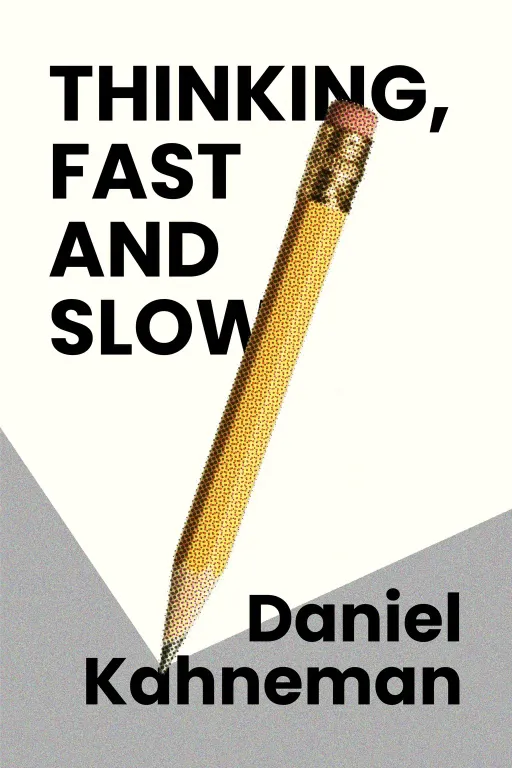
Nova: Not a liability, Atlas, but definitely a blind spot if we're not careful. Today, we're diving into the groundbreaking work of Daniel Kahneman, the Nobel laureate whose research fundamentally reshaped our understanding of human judgment and decision-making. His insights into how our brains actually work are absolutely crucial for anyone navigating the complexities of the business world.
Atlas: Right, Kahneman. I know his name is synonymous with this idea of how we think. So, what's his big revelation that's going to make me second-guess every 'gut feeling' I've ever had in a meeting?
The Blind Spot of Fast Thinking
SECTION
Nova: Well, Kahneman introduced us to two systems of thinking: System 1 and System 2. Think of System 1 as your brain on autopilot – fast, intuitive, emotional, and largely unconscious. It’s brilliant for everyday tasks, like recognizing a face or driving a familiar route. But in complex business scenarios, this fast thinking can be a minefield.
Atlas: Okay, so System 1 is my brain's 'express lane.' Efficient, but prone to speeding tickets, you’re saying?
Nova: Exactly! And one of its biggest pitfalls is something called. Imagine you're negotiating a budget for a new project. The first number mentioned, even if it's completely arbitrary, tends to 'anchor' the entire discussion. Let's say a vendor throws out an initial quote of $100,000 for a service. Even if you know it's high, that number sets a psychological benchmark. Your counter-offer will likely be influenced by it, rather than a purely objective assessment of the service's true value.
Atlas: Wait, are you saying a random number could actually sway a seasoned executive's decision? That sounds almost too simplistic for the high-stakes world of business.
Nova: It absolutely can, and often does. Think about a product launch. If the initial sales projection, perhaps an optimistic one from the marketing team, is presented early on, it can anchor the entire team's expectations. Subsequent discussions around resources, risk, and even success metrics become subtly skewed by that initial, potentially unrealistic, anchor. It's not a conscious manipulation; it's just how our System 1 latches onto the first piece of information it gets.
Atlas: That’s kind of alarming. So, our brains are just looking for the nearest lamppost to lean on, even if it’s wobbly. What other mental shortcuts are we unknowingly taking?
Nova: Another huge one, especially in business, is. This is our brain's tendency to seek out, interpret, and remember information in a way that confirms our existing beliefs or hypotheses, while downplaying or ignoring contradictory evidence.
Atlas: Oh, I’ve seen that in team meetings! It’s like everyone just hears what they want to hear, especially when a project is already underway. Tell me more, how does that play out in a real business context?
Nova: Picture a CEO who is deeply committed to a new market expansion strategy. They've invested a lot of personal capital into this idea. Now, when data comes in, they might unconsciously give more weight to reports that show positive early indicators, and dismiss or rationalize away any negative feedback about market saturation or competitive threats. They actively, though not intentionally, filter the world through the lens of their existing belief, missing crucial warning signs that could save the company from a costly mistake.
Atlas: That’s such a powerful point. It leads to those situations where everyone sees the iceberg, but the person at the helm is convinced it’s just a cloud. The cost of not recognizing these biases must be monumental, wouldn't it?
Nova: It can be. It leads to missed opportunities, poor investments, and ultimately, a lack of true innovation because you're constantly validating existing ideas rather than truly exploring new ones. It’s the blind spot that prevents us from seeing the full picture.
Shifting Gears: Engaging Deliberate Thought for Better Business Decisions
SECTION
Atlas: So, if our brains are wired this way, are we just doomed to make bad decisions? How do we actually fight back against these mental glitches and engage a more deliberate thought process?
Nova: That's the million-dollar question, Atlas, and it's where Kahneman's insights become incredibly empowering. The good news is, we're not doomed. The first step, as we've discussed, is recognizing these biases exist. The next is consciously engaging System 2—our slow, deliberate, logical thinking.
Atlas: What can a busy manager or executive do when they barely have time to think, let alone 'pause and reflect' and engage a whole other 'system'? It sounds like a luxury.
Nova: It's not a luxury; it's a necessity for robust decision-making. One powerful strategy is to build into your decision process. For example, before making a major investment, conduct a "pre-mortem." Gather your team and ask: "Imagine it's a year from now, and this project has failed spectacularly. What went wrong?" This forces everyone to actively seek out potential flaws and disconfirming evidence the decision is made. It’s like intentionally creating a devil's advocate role.
Atlas: That's a clever way to trick System 1 into letting System 2 do some work. So, you're basically saying, don't just ask "Why will this succeed?" but also "Why might this fail?"
Nova: Precisely. Another technique is to actively. Instead of just looking for data that supports your initial hypothesis, deliberately search for data that challenges it. If you're convinced a new product will be a hit, spend time researching why similar products failed, or interview customers who explicitly said they wouldn't buy it.
Atlas: But isn't it hard, even uncomfortable, to actively look for reasons why you might be wrong? Our egos definitely don't like that.
Nova: Absolutely, it goes against our natural wiring. But that's the muscle we need to build. Some organizations even employ "red teaming" – assigning a group to actively try to dismantle a proposed plan. It's about creating an environment where challenging assumptions is not just tolerated, but encouraged and even celebrated. It’s recognizing that a truly strong decision can withstand scrutiny.
Atlas: That makes sense. And I imagine bringing in is also crucial here. If everyone in the room thinks alike, they're probably all susceptible to the same biases.
Nova: Exactly! Homogenous teams are breeding grounds for groupthink and amplified biases. Diverse teams, with varied backgrounds, experiences, and thought processes, naturally bring different perspectives to the table. When you combine that with structured decision-making frameworks that ensure every voice is heard and every assumption is challenged, you significantly reduce the blind spots. It's about designing your process to be smarter than any single individual.
Synthesis & Takeaways
SECTION
Nova: So, what we've really been talking about today, Atlas, is that our brains are incredible machines, designed for efficiency. But that efficiency comes with inherent shortcuts that, especially in business, can lead us down the wrong path. The 'fast thinking' isn't inherently bad; it's just powerful and needs to be understood and managed.
Atlas: That’s a profound thought. It's not about eradicating our intuition, but about knowing when to trust it and when to hit the brakes and bring in that 'slow thinking.' It makes me think of the deep question from the book: "Think of a recent business decision you made. Can you identify any cognitive biases that might have influenced your thinking?"
Nova: That's the challenge for our listeners this week. Take a moment to reflect. Was there an initial number that anchored your expectations? Did you only seek out information that confirmed what you already believed? Just the act of asking those questions activates System 2 and makes you a more deliberate, and ultimately, a better decision-maker. It's about continuous improvement, not perfection.
Atlas: Absolutely. It's about becoming more self-aware, and using that awareness to make choices that genuinely serve our goals, rather than falling prey to our brain's clever but sometimes misleading shortcuts.
Nova: This is Aibrary. Congratulations on your growth!