The 'Black Swan' Immunity: Mastering Unpredictable Risk in Security
Golden Hook & Introduction
SECTION
Nova: Most risk assessments are a waste of time. There, I said it. We spend countless hours meticulously planning for entirely predictable threats, only to be blindsided by the one event nobody saw coming. But what if that very "blind spot" is actually where true mastery begins?
Atlas: Whoa, Nova, that’s a bold statement right out of the gate! Are you telling me all those hours spent on threat modeling and contingency planning are just… security theater? For a strategic guardian, that sounds like fighting a battle with the wrong map.
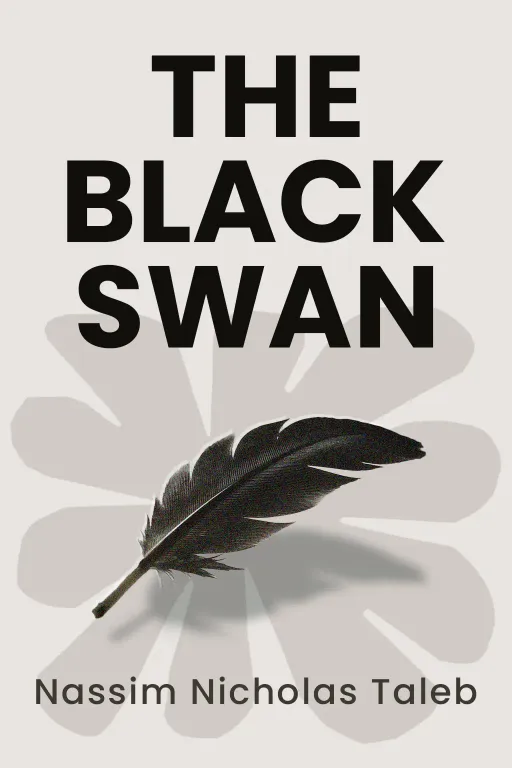
Nova: Not entirely security theater, Atlas, but often misdirected energy. We're talking about a fundamental shift in how we perceive and prepare for risk. Today, we're diving into what I call 'The Black Swan Immunity' – inspired heavily by two intellectual titans. First, the iconoclastic former options trader, Nassim Nicholas Taleb, and his groundbreaking work, "The Black Swan." Taleb, with his background in finance and statistics, brought a brutally pragmatic and often controversial perspective to randomness and risk that shook many established fields.
Atlas: And then there's the Nobel laureate Daniel Kahneman, whose book "Thinking, Fast and Slow" revealed the psychological architecture behind our decision-making. His work is essential for understanding we consistently misjudge probabilities and underestimate certain threats. It’s a powerful combination: the nature of the unpredictable event, and the human mind’s inherent flaws in recognizing it.
Nova: Exactly. Because it's not enough to know what a Black Swan is; we also need to understand the internal mechanisms that make us blind to its flapping wings.
The Unseen Threat: Embracing Black Swans in Security
SECTION
Atlas: Okay, so let's start there. What exactly a Black Swan, beyond just a really bad, unexpected surprise? Because for leaders navigating complex security landscapes, every day feels like a surprise party they didn't want to attend.
Nova: That’s a great way to put it, Atlas. But a Black Swan is far more than just a surprise. Taleb defines it by three key characteristics. First, it’s an outlier – it lies outside the realm of regular expectations, because nothing in the past can convincingly point to its possibility. Second, it carries an extreme impact, often catastrophic. And third, despite its outlier status, human nature makes us concoct explanations for its occurrence the fact, making it seem predictable in hindsight.
Atlas: So you're saying that even after a massive security breach, we’ll look back and say, "Oh, of course, that was inevitable," even though nobody saw it coming? That’s kind of chilling.
Nova: It is chilling, and it’s a powerful cognitive trap. Think about the rise of the internet, for example, especially in its early days. Before the late 90s, who truly predicted its transformative, all-encompassing impact on every single industry, from retail to communication to, yes, security? Experts in the 80s and early 90s predicted incremental technological advancements, maybe faster modems, but not a global, interconnected nervous system that would fundamentally alter human society and create entirely new categories of risk overnight.
Atlas: So, you're saying people were planning for, what, better mainframes? Faster fax machines?
Nova: Precisely! They were planning for linear, predictable growth within existing paradigms. The internet was an outlier; its impact was extreme – it created entirely new vulnerabilities, new attack surfaces, new forms of fraud that simply didn't exist before. And now, looking back, it seems so obvious, doesn't it? "Of course, the internet changed everything!" That's the retrospective predictability kicking in. Nobody was truly immune.
Atlas: That makes me wonder, then, for a strategic guardian trying to secure an organization today, how do you even begin to plan for something that's definitionally unpredictable? Isn't that just paralysis by analysis, trying to imagine every impossible scenario?
Nova: It's not about predicting the specific Black Swan, Atlas, but understanding its and building systems that are robust to its. Taleb often uses the example of an insurance company. They model for predictable events like car accidents or house fires. But they don't model for a meteor striking the Earth, because that's a Black Swan. Their strategy isn't to predict the meteor, but to ensure they have enough reserves, or a diversified portfolio, to survive unforeseen catastrophic event.
Atlas: So, for security, it’s not about predicting the next zero-day exploit, but building a resilient architecture that can withstand a completely novel attack vector? That shifts the focus from prediction to preparation for impact.
Nova: Exactly. It's about building 'anti-fragility,' a concept Taleb also explores. It’s about not just being robust, but actually from disorder and volatility.
Cognitive Traps: How Our Minds Blind Us to Unpredictable Risks
SECTION
Atlas: Anti-fragility. I like that. But here’s my next challenge: even if we conceptually understand Black Swans, our brains are hardwired, right? Kahneman’s work suggests we have these deeply ingrained cognitive biases. So how do our own minds actively work against us when it comes to seeing these unpredictable risks?
Nova: That's a brilliant segue, Atlas, because understanding Black Swans is only half the battle. The other half is understanding our own cognitive blind spots. Kahneman, along with Amos Tversky, showed us that our brains operate with two systems: System 1, which is fast, intuitive, and emotional; and System 2, which is slower, more deliberative, and logical. The problem is, System 1 often jumps to conclusions, especially when dealing with uncertainty.
Atlas: So, our gut reactions are often wrong when it comes to rare, high-impact events? That sounds rough for anyone who relies on quick decision-making in a crisis.
Nova: Absolutely. Take the availability heuristic, for instance. We tend to overestimate the probability of events that are easily recalled or vivid in our memory. So, if there was a major cyberattack that made headlines recently, we might over-allocate resources to that specific type of attack, while completely ignoring less dramatic but potentially more devastating, novel threats.
Atlas: So, we're essentially fighting the last war, but with our brains, not just our armies. We see what’s been visible, and we project that onto the future, even if it's statistically unlikely.
Nova: Precisely. Or consider confirmation bias. We actively seek out and interpret information that confirms our existing beliefs, and disregard anything that contradicts them. If a security team believes a certain type of threat is paramount, they might dismiss early warning signs of a completely different, unprecedented vulnerability because it doesn't fit their established mental model. This is particularly dangerous for resilient innovators who need to constantly question assumptions.
Atlas: That makes me think about the "Strategic Guardian" who’s trying to anticipate the next big thing. How do you even begin to fight against these ingrained mental traps when you’re under pressure, making decisions that could have catastrophic consequences? Isn't experience supposed to make us at this, not worse?
Nova: Experience can be a double-edged sword. While it provides valuable patterns for predictable risks, it can also reinforce biases, making us confident in our System 1 intuitions, even when they're leading us astray in novel situations. The key is not to eliminate System 1 – that's impossible – but to recognize its limitations and engage System 2 more deliberately for critical risk assessments. It means actively seeking out dissenting opinions, creating structured "pre-mortems" where you imagine a failure and work backward, and fostering a culture where challenging assumptions is rewarded, not punished.
Atlas: So, it's about building intellectual humility into the security process. Admitting we don't know what we don't know.
Nova: And then actively trying to find out what we don't know, or at least prepare for its rather than its specific manifestation.
Synthesis & Takeaways
SECTION
Nova: So, bringing it all together, Atlas, the external reality of Black Swans – those rare, high-impact, retrospectively predictable events – meets our internal cognitive blind spots, making us profoundly vulnerable. True security mastery isn't about having a crystal ball to predict the unpredictable.
Atlas: It sounds like it's about building a system, and a leadership mindset, that can not only absorb the shock of the unexpected but actually learn and adapt from it faster than your adversaries. For an ethical leader, that’s about cultivating resilience in both technology and people.
Nova: Absolutely. It's about shifting from prediction to preparedness, from fragility to anti-fragility. For security leaders, this means fostering diverse teams with varied perspectives to counter confirmation bias, actively seeking out and valuing dissent, and designing systems that are inherently flexible and adaptable, rather than rigidly optimized for known threats. It's about treating the truly unexpected not as a failure of foresight, but as an inevitable, albeit rare, part of the landscape that can, paradoxically, be a strategic advantage if you're prepared to learn from it.
Atlas: That's a profound thought. It’s about building a security posture that thrives on change, not just tolerates it. So, for our listeners, the strategic guardians and resilient innovators out there, what's one immediate takeaway? What's that one unconsidered, high-impact event that could fundamentally change security landscape, and what's one small step you can take today to build a little more resilience against it?
Nova: Start by questioning your assumptions, Atlas. Actively seek out the edge cases, the scenarios that everyone dismisses as 'impossible.' Because those are precisely the ones that often have the most profound impact.
Atlas: That’s a powerful call to action. It’s not about predicting the future, it’s about making ourselves ready for any future.
Nova: This is Aibrary. Congratulations on your growth!