The 'Black Swan' Blind Spot: Why Prediction Fails in Science and How to Adapt.
Opening
SECTION
Nova: Content` format. I will ensure a minimum of 2000 words.
Golden Hook & Introduction
SECTION
Nova: Here’s a thought that might make your meticulously planned research project—or even your morning coffee routine—feel a little less, well,: The most significant discoveries, the most catastrophic failures, the things that truly reshape our world, are almost never predicted. They blindside us.
Atlas: Whoa, Nova. That’s a bold claim. Aren't we constantly striving for better predictions in science, in business, in daily life? Prediction is the holy grail, right? What are you saying, that all our sophisticated models are just… a sophisticated illusion?
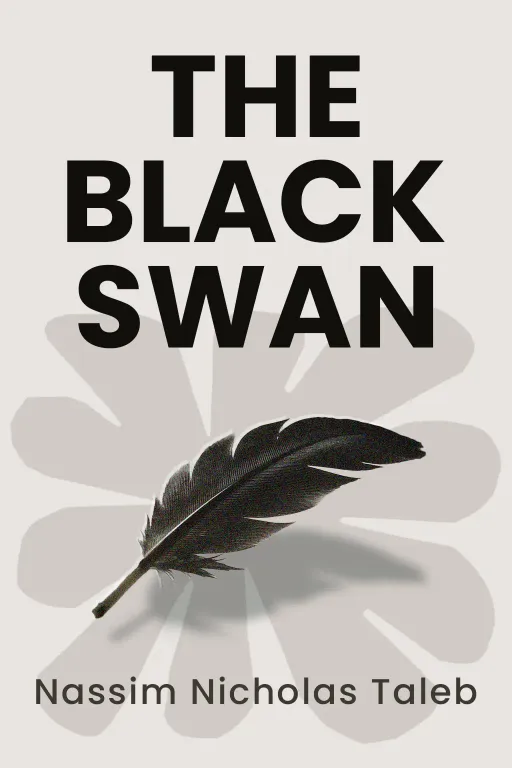
Nova: Precisely, Atlas. And that’s the central, provocative thesis of two intellectual titans we’re diving into today: Nassim Nicholas Taleb’s groundbreaking work, "The Black Swan: The Impact of the Highly Improbable," and Daniel Kahneman’s Nobel Prize-winning masterpiece, "Thinking, Fast and Slow." Taleb, a former options trader, brought a street-smart, philosophical rigor to understanding randomness, while Kahneman, a psychologist, earned his Nobel by showing us the profound psychological biases that warp our judgment. Both books have not only shifted academic fields but sparked intense debate across culture about our fundamental understanding of risk and decision-making.
Atlas: That’s fascinating. I imagine a lot of our listeners, especially those who love exploring new knowledge areas, are already feeling that pull. It's like these books are tapping into a deep-seated suspicion we all have: that the world isn’t as orderly as we pretend. So, what exactly is this "blind spot" they're talking about?
Nova: The blind spot, Atlas, is our collective inability to account for what Taleb famously dubbed 'Black Swans.' These aren't just rare events; they’re events that are rare, have an extreme impact, and crucially, are only retrospectively rationalized. After they happen, we look back and say, "Oh, of course that was going to happen." But beforehand? Utterly unforeseen.
Deep Dive into The Unpredictable Power of Black Swans
SECTION
Atlas: So, a Black Swan isn't just, say, a stock market crash everyone saw coming but ignored. It's something truly out of left field? Can you give us an example that really hammers that home? I'm curious about how this plays out in, say, scientific discovery.
Nova: Absolutely. Consider the invention of the internet. If you asked experts in the 1960s or 70s to predict the biggest technological breakthroughs of the next half-century, very few, if any, would have envisioned a global, interconnected network that fundamentally transforms communication, commerce, and culture. There were certainly foundational technologies being developed, but the and of the internet? Unforeseeable.
Atlas: That’s a great example. Because now, it feels so… inevitable. Like it was always going to happen.
Nova: Exactly! That’s the narrative fallacy at play. Once the internet became ubiquitous, we started constructing a neat, linear story of its development: ARPANET led to TCP/IP, which led to the World Wide Web, and so on. We retroactively impose predictability. But the true Black Swan isn't just the technology itself, it's the and that no one could have modeled or predicted at the outset. Think about how the internet gave rise to social media, or online activism, or even entire new industries. None of that was on anyone's radar.
Atlas: That’s actually really powerful. It makes me wonder about all the seemingly 'logical' paths we pursue in research today. What if the next big scientific breakthrough, the one that truly changes everything, isn't even on our radar because our models are too focused on incremental improvements within existing paradigms?
Nova: That’s precisely the Black Swan blind spot in science. Our scientific models, our research funding, our entire predictive infrastructure, is largely built on what we and what we can within a normal distribution. We operate under the assumption that the future will mostly resemble the past, just with slightly different numbers. This makes us incredibly vulnerable to the rare, high-impact outlier that doesn't fit our statistical bell curves.
Atlas: So basically, we're building elaborate sandcastles based on predictable tides, but a rogue tsunami is what actually flattens the city, and we never saw it coming. And then we say, "Oh, obviously, there was a tsunami."
Nova: A perfect analogy, Atlas! And the problem is, those "tsunamis" – those Black Swans – are often where the truly revolutionary science happens. Penicillin, X-rays, even the theory of relativity to some extent – many significant discoveries were either stumbled upon, or their profound implications were missed until much later. They weren't the result of a linear, predicted path.
Deep Dive into The Cognitive Traps of Prediction: System 1 vs. System 2
SECTION
Nova: But why are we so prone to this blind spot? Why do we keep building those sandcastles if we know tsunamis exist? This is where Daniel Kahneman's work on cognitive biases becomes absolutely critical.
Atlas: Okay, so this isn't just external unpredictability, it's something internal to us. How does our own brain work against us here?
Nova: Kahneman brilliantly dissects our minds into two operating systems: System 1 and System 2. System 1 is fast, intuitive, emotional, and largely unconscious. It's what allows you to instantly recognize a face or slam on the brakes. System 2 is slow, deliberate, logical, and requires effort. It's what you use to solve a complex math problem or plan a strategy.
Atlas: So, System 1 is the gut reaction, and System 2 is the deep thought. I can see how System 1 might get us into trouble.
Nova: It's System 1's love for coherence and simple narratives that often leads us astray. It constantly tries to make sense of the world, even when there isn't enough information. It abhors uncertainty and ambiguity. When a Black Swan event occurs, System 1 quickly constructs a plausible story to explain it, making it predictable in hindsight. This is the "hindsight bias."
Atlas: But wait, are you saying even highly trained scientists, who are supposed to be using their System 2 for rigorous analysis, fall for these quick, intuitive traps? I mean, they're all about data and evidence, right?
Nova: Absolutely. Even the most brilliant minds are susceptible. System 1 is always running in the background, influencing our perceptions and judgments. A scientist might, for example, be so deeply invested in a particular hypothesis that they inadvertently give more weight to data that confirms it and discount evidence that contradicts it. This is confirmation bias. Or they might underestimate the probability of a rare experimental failure because System 1 struggles with true randomness.
Atlas: That makes me wonder. For our listeners who are designing experiments or research questions, how does this affect their work? It sounds like our very brains are wired to make us overconfident in our predictions, making us less likely to question our assumptions about what's possible or impossible.
Nova: Exactly. System 1 thrives on what's available and familiar. It prefers to extrapolate from existing data rather than imagine truly novel scenarios. So, if a researcher's model is based on years of incremental data, System 1 will make it incredibly difficult to conceive of a radical, outside-the-box discovery that completely upends those assumptions. It makes us less likely to pursue truly novel pathways because they don't fit our established narratives.
Deep Dive into Building Resilience: Embracing Uncertainty in Science and Beyond
SECTION
Nova: So, if Black Swans are inevitable and our brains are wired to ignore them, what hope do we have? The good news is that acknowledging this doesn't mean giving up. It means building resilience. It means shifting from trying to the unpredictable to becoming in its presence.
Atlas: Anti-fragile? That sounds intriguing. Most things are either fragile, meaning they break under stress, or robust, meaning they resist stress. What does it mean to be anti-fragile, especially in a scientific context? Does it mean just embracing chaos?
Nova: Not chaos, but rather designing systems that from volatility, disorder, and stressors. A fragile system breaks. A robust system withstands. An anti-fragile system. Think of the human immune system: exposure to pathogens makes it more resilient. In science, this means creating research environments and methodologies that aren't just robust against unexpected findings, but which can actually them for new discoveries.
Atlas: That’s a fascinating concept. So, what does that translate to in practice? If I'm a researcher, how do I go from trying to predict to trying to benefit from the unpredicted? Does it mean I shouldn't bother with hypotheses anymore?
Nova: Not at all. It means diversifying your approach. Instead of putting all your resources into one highly specific, predicted pathway, you might invest in multiple, smaller, and more varied exploratory projects. It means fostering a culture of experimentation where 'failed' experiments aren't seen as dead ends, but as sources of information that reveal the boundaries of what you you knew. It's about having what Taleb calls "convexity" in your decision-making — having many small upside bets with limited downside, rather than one huge, fragile bet.
Atlas: So, it's about intellectual humility, really. Admitting we don't know everything, and then designing our work around that truth. That's a profound shift in mindset for a field that often values certainty so highly.
Nova: Absolutely. It’s about cultivating a scientific approach that embraces serendipity, encourages interdisciplinary exploration, and actively seeks out disconfirming evidence rather than shying away from it. It's about asking: "How can I design this experiment, this research question, this entire program, so that even if the unexpected happens, I can learn from it and potentially thrive?" It’s a move from fragile prediction to robust adaptability.
Synthesis & Takeaways
SECTION
Nova: What both Taleb and Kahneman ultimately reveal is that our relentless pursuit of certainty often blinds us to the very forces that shape our world and our understanding of it. The truly significant events, the Black Swans, defy our models, and our own minds often conspire to make us believe we saw them coming all along.
Atlas: It’s a powerful realization, that the future isn't just unknown, it's often in its most impactful dimensions. It challenges us to rethink not just what we study, but we study it, and how we interact with the world around us. It's about designing for the unknown, rather than living in the illusion of perfect foresight.
Nova: Precisely. And the profound insight here is that embracing this uncertainty isn't a weakness, it's a profound strength. It’s the path to building systems, scientific or otherwise, that are more resilient, more adaptable, and ultimately, more innovative. It's about learning to dance with randomness, rather than trying to tame it.
Atlas: That’s such a hopeful way to look at it. It transforms a blind spot into an opportunity. So, for everyone listening, especially those who enjoy deep thinking and learning: How might acknowledging the unpredictable nature of discovery change your next research question or experimental design? How might it shift your personal approach to planning and navigating life’s big unknowns? We’d love to hear your thoughts on this, and how these ideas resonate with you.
Nova: It's a question that can truly unlock new ways of thinking. Thank you for joining us on this journey into the unpredictable.
Atlas: This is Aibrary. Congratulations on your growth!