The Behavioral Trap: Why Your Decisions Aren't Pure Logic
Golden Hook & Introduction
SECTION
Nova: What if I told you that the smartest decision you made this week, the one you meticulously planned, was probably hijacked by a part of your brain you didn't even know existed?
Atlas: Oh, I like that. That's a bold claim, Nova. Especially for our listeners who pride themselves on being analytical, on mastering their domains. Are you saying our internal spreadsheets have a secret, unruly co-pilot?
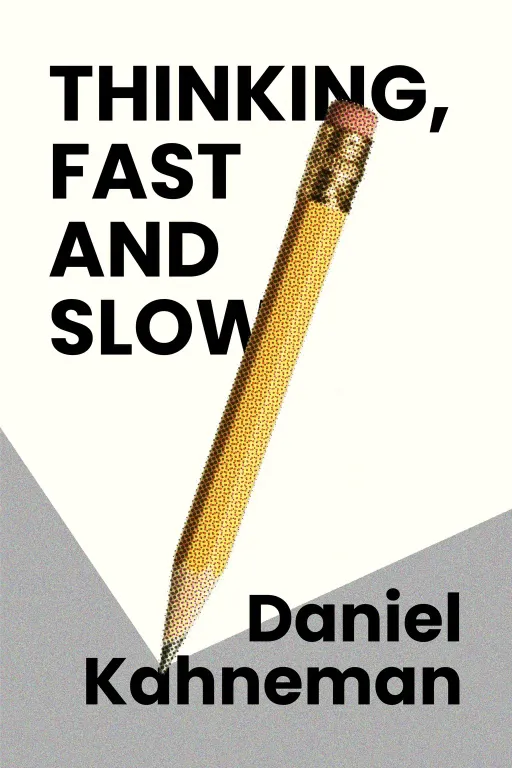
Nova: Precisely, Atlas. And it’s a co-pilot that often operates completely outside our conscious awareness. Today, we're dissecting 'The Behavioral Trap: Why Your Decisions Aren't Pure Logic,' drawing heavily from two groundbreaking books: Daniel Kahneman's 'Thinking, Fast and Slow' and Richard H. Thaler and Cass R. Sunstein's 'Nudge.' It’s genuinely fascinating because Kahneman, a psychologist, actually won a Nobel Prize in Economics for showing us just how irrational we truly are.
Atlas: A psychologist winning an economics Nobel? That alone tells you how fundamentally they shifted our understanding of decision-making, especially in markets and personal finance. It's not just about numbers; it's about people.
Nova: Exactly. And it makes you wonder: where in your daily financial decisions might that intuitive, fast-thinking part of your brain be subtly steering you off course?
The Two Architects of Your Mind: System 1 vs. System 2
SECTION
Atlas: Okay, so you’ve piqued my interest. This 'unruly co-pilot' – what exactly are we talking about here?
Nova: Well, Kahneman introduced us to two distinct modes of thought: System 1 and System 2. Think of System 1 as your intuition. It's fast, automatic, emotional, and always on. It's what allows you to recognize a face, understand a simple sentence, or react to a sudden noise without really 'thinking' about it. It’s incredibly efficient, but it's also prone to systematic errors, or biases.
Atlas: So, it's the gut feeling, the snap judgment. And System 2?
Nova: System 2 is your deliberative, logical, slow-thinking self. It's what you use for complex calculations, learning a new skill, or carefully weighing pros and cons before making a major decision. It requires effort and focus. The problem is, System 1 often jumps to conclusions and then System 2, instead of correcting it, often just rationalizes System 1's initial, biased judgment.
Atlas: Wow, that’s kind of heartbreaking. So, even when we think we're being super analytical, our System 1 might have already laid the groundwork for a flawed decision?
Nova: Absolutely. Take something like in investing. Let's say you're looking at a stock that used to trade at $100 a share. It's now at $50. Your System 1 sees that $100 anchor and immediately thinks, "It's undervalued! It be at $100."
Atlas: Right, like that initial, higher number sets an artificial benchmark in your mind.
Nova: Exactly. Then your System 2, instead of doing a completely fresh, objective analysis of the company's current financials, market conditions, and future prospects, spends its energy trying to rationalize why that $50 stock is a 'bargain' compared to its former $100 glory. You might hold onto a losing investment far longer than you should, or overpay, because that initial anchor has skewed your perception of its true value.
Atlas: I can definitely relate to that, especially when looking at a company you've followed for years. It's like you're stuck in the past. What about? How does that play out financially?
Nova: Availability bias is when you overestimate the likelihood of events that are easily recalled or vivid in your mind. Think of the investor who makes decisions based on dramatic news stories. A recent market crash, or the meteoric rise of a single tech stock, is very 'available' in their memory.
Atlas: So, they might pull all their money out of the market after a big downturn because the news was so sensational, even if history suggests recovery. Or they might chase the latest 'hot' stock, ignoring all the data.
Nova: Precisely. System 1 processes those dramatic stories with emotional intensity, and then System 2, instead of doing the hard work of comprehensive data analysis, just goes along with the emotional narrative. It leads to herd mentality, panic selling, or chasing bubbles, all because easily available, dramatic information overrides deeper, more nuanced understanding.
Atlas: So, it's not just lazy thinking; it's our brain's natural shortcuts leading us astray. For someone building a diversified future, that's incredibly dangerous because it can derail even the most strategic plans.
Nudging Towards Better Decisions: Designing for Human Irrationality
SECTION
Atlas: So, if our brains are wired for these traps, Nova, are we just doomed to make bad decisions, especially with our money or in complex strategic environments? It sounds like a pretty bleak outlook for the 'rational actor.'
Nova: Not at all, Atlas! And that’s where Richard Thaler and Cass Sunstein come in with their brilliant work on. Once we understand these behavioral traps, we can actually design our environments to 'nudge' ourselves and others towards better decisions. It's not about coercion; it's about crafting 'choice architecture.'
Atlas: Choice architecture? So, it’s about making the right choice the easy choice, or even the default choice?
Nova: Exactly. Think about in retirement savings plans. If companies require employees to to a 401, participation rates are often low. But if they automatically enroll employees, making them consciously if they don't want to participate, participation skyrockets.
Atlas: That’s a huge difference! It leverages our System 1's tendency to go with the path of least resistance, but for a positive, long-term impact. For a growth architect looking at employee financial well-being, that's a powerful tool.
Nova: It absolutely is. And you can apply this to your own personal finance. Setting up automatic transfers from your checking to your savings account the day you get paid is a form of self-nudge. You're designing your financial environment so that saving is the default, bypassing that System 1 impulse to spend.
Atlas: That’s a great example of a 'self-nudge.' So, how does a 'Strategic Integrator,' someone who's constantly making complex financial plans, use this beyond simple defaults? Isn't there a risk of just creating an echo chamber of our own biases?
Nova: That’s a crucial question. It’s about building awareness into your decision-making processes. For instance, when evaluating an investment, explicitly ask yourself: 'What's the anchor here? What initial number is influencing me, and is it truly relevant?' Or, 'Am I making this decision based on easily available, dramatic headlines, or have I done the deeper System 2 analysis?'
Atlas: So, it's about adding friction, in a good way, to System 1's automatic responses.
Nova: Precisely. You can also design 'pre-commitment strategies.' For example, if you know you're prone to impulse buying, you can set up a cooling-off period before making large purchases. You're nudging your future self towards more rational behavior. For organizational leaders, it means designing meeting agendas that prioritize data-driven discussions over charismatic arguments, or creating frameworks for project evaluation that systematically counter common biases like optimism bias.
Atlas: I love that. It shifts the focus from simply about biases to actively around them. It’s about building systems that support better decisions, not just hoping we'll be perfectly rational.
Synthesis & Takeaways
SECTION
Nova: So, what we're really seeing here is that understanding these behavioral traps isn't about blaming ourselves for being irrational. It's about empowering awareness and proactive design.
Atlas: It's a fundamental shift. We move from a purely logical model of decision-making to one that deeply accounts for the psychological influences that are always at play. It’s mastering the human element of finance and strategy.
Nova: Exactly. True mastery in finance and strategic planning comes not from pretending our System 1 doesn't exist, but from understanding how it works, acknowledging its powerful influence, and then actively designing systems and environments—whether personal or organizational—that work our psychological wiring, not against it. It's about architecting better choices.
Atlas: That’s powerful. It means the 'unseen biases' aren't just personal flaws; they're systemic patterns that, once understood, can be leveraged for growth and long-term impact.
Nova: Absolutely. It’s the ultimate form of strategic integration: integrating human psychology into every decision-making framework.
Atlas: So, for our listeners, the deep question from the book still stands: where in your daily financial decisions might System 1 thinking be subtly steering you off course? Now, perhaps, you have some tools to not just identify it, but to gently nudge it back on track.
Nova: And that, my friends, is how you truly master your decisions, by understanding the behavioral traps.
Atlas: This is Aibrary. Congratulations on your growth!