The Behavioral Trap: Why Logic Alone Won't Win Your Investments.
Golden Hook & Introduction
SECTION
Nova: Alright Atlas, quick game. I'll throw out a word, you give me the first thing that comes to mind, no filter. Ready?
Atlas: Always. Fire away.
Nova: Investments.
Atlas: Growth. Future. Stress. Maybe a little regret, if I'm honest.
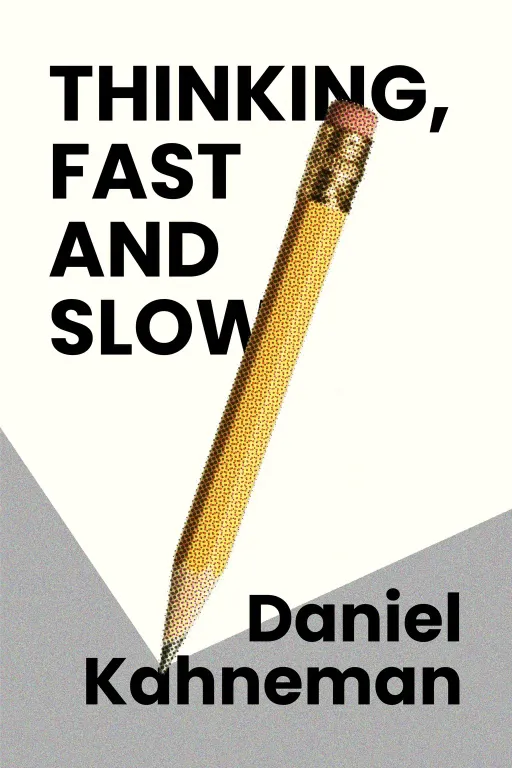
Nova: Regret? Interesting. What if I told you that regret, and all those other emotions, are actually running more of your financial life than you think? Because today, we're diving into the brilliant minds behind two seminal works: Daniel Kahneman's "Thinking, Fast and Slow" and Richard Thaler and Cass Sunstein's "Nudge." Kahneman, a Nobel laureate in Economic Sciences, completely reshaped our understanding of human decision-making, proving that psychology is not just a soft science, but a foundational element of how markets and individuals behave.
Atlas: So we're talking about the science of why we do dumb things with our money, even when we know better?
The Illusion of Rationality: Unmasking Your Investment Blind Spots
SECTION
Nova: Exactly! It’s all about what Kahneman calls our two systems of thought. System 1 is fast, emotional, and intuitive. It’s what helps you recognize a friend’s face instantly or slam on the brakes without thinking. System 2 is slow, logical, and deliberative. That’s for solving a complex math problem or carefully planning your next career move.
Atlas: Okay, but how does this apply to my portfolio? So when I'm looking at a stock chart, is my gut feeling System 1 trying to take over?
Nova: Absolutely. And usually not for the better in the long run. System 1 is brilliant for survival, but terrible for nuanced financial decisions. It gives us things like "loss aversion," where the pain of losing a dollar feels twice as strong as the pleasure of gaining a dollar. So you hold onto a losing stock far longer than you should, hoping it will just break even, completely ignoring the logical choice to cut your losses.
Atlas: Wow, that feels uncomfortably familiar. But for someone who prides themselves on being analytical, on building strategic plans for their wealth, how do you even begin to spot these "blind spots" at play? I mean, we're taught to trust our instincts in business.
Nova: That’s the behavioral trap! We assume our decisions are purely rational, especially with money. Consider the dot-com bubble of the late 90s. Investors, from seasoned pros to individual traders, poured money into internet companies with little to no revenue, driven by a fear of missing out – pure System 1 emotional contagion. Logic screamed "unsustainable," but the intuitive urge to join the gold rush was overwhelming. People saw their neighbors getting rich and felt that primal fear of being left behind. The outcome, as we all know, was a spectacular bust, wiping out fortunes and proving that even smart money can be swayed by collective irrationality. The cause? A potent mix of herd mentality and overconfidence, both classic System 1 biases.
Atlas: So it's not just about having the right data, it's about how our brains process that data, and those primal urges that kick in. That's a huge blind spot, especially for those of us trying to be strategic builders of our wealth.
Strategic Nudges: Harnessing Behavioral Economics for Smarter Financial Moves
SECTION
Nova: Exactly, Atlas. And that naturally leads us to the second key idea: if our brains are wired for these traps, can we re-wire the environment to help us? This is where Richard Thaler and Cass Sunstein’s concept of 'nudges' comes in. A nudge is any subtle intervention that guides people towards better decisions without limiting their freedom of choice. Think of it like this: you want to eat healthier, so you put the fruit bowl on the counter and hide the cookies. You're still free to eat cookies, but the "nudge" makes the healthier choice easier.
Atlas: Okay, so how does this 'nudge' idea translate into actual, actionable financial strategies for someone trying to build real wealth? Are we talking about clever apps, or something deeper?
Nova: It’s both, and it’s powerful. One of the most effective nudges in finance is automatic enrollment in retirement plans. Instead of forcing people to opt-in, making them actively choose to save, companies automatically enroll them, and they have to actively opt-out. This simple change has dramatically increased retirement savings rates globally. The default option becomes the wise choice. Another nudge is how choices are framed. Instead of asking "Do you want to save more?", which can feel like a sacrifice, frame it as "How much of your next raise do you want to automatically invest?" It shifts the perception.
Atlas: For those building complex financial models, how can they 'nudge' themselves or their teams away from groupthink or overconfidence in their projections? I imagine in high-stakes environments, the pressure to conform or to be overly optimistic can be immense.
Nova: That's a crucial application. One strategic nudge is to implement "pre-commitment strategies." Before you even look at the market, or before a major investment decision, you set clear, objective rules: "If this stock drops 10%, I sell, no questions asked." Or, "I will only invest X percent of my portfolio in any single asset class." By making these decisions in a calm, System 2 state, you create a nudge that prevents your emotional System 1 from taking over when the market gets volatile. It's about designing your decision-making process to be anti-fragile.
Atlas: So, first we acknowledge the internal chaos, then we build a better decision-making architecture around it. It’s about being proactive, not just reactive, to our own psychology. That's a powerful shift in perspective for anyone serious about financial independence.
Synthesis & Takeaways
SECTION
Nova: Exactly. The core insight from Kahneman and Thaler is that true financial mastery isn't just about having the sharpest spreadsheets or the best market data. It's fundamentally about understanding the human operating system – our own psychology – and then designing our financial world to work with it, not against it. It's about recognizing that our brains come with factory-installed biases that, left unchecked, will sabotage our best intentions.
Atlas: So the real takeaway here is that logic alone is never enough. We need to be psychologists of our own portfolios, understanding that our pursuit of financial independence is as much a psychological game as it is a mathematical one.
Nova: Absolutely. And it's an empowering realization because it means we have agency. We can identify these behavioral traps, and we can implement those clever 'nudges' to steer ourselves toward better outcomes. So, for all our listeners seeking to build a secure and prosperous future, I want to leave you with this question: Where in your own financial planning or business strategy might unconscious biases be subtly influencing your outcomes right now? What's one small 'nudge' you could implement this week to create a better default for your future?
Atlas: It’s about building a future where your best intentions actually have a fighting chance.
Nova: This is Aibrary. Congratulations on your growth!