The Behavioral Blind Spot: Why Logic Alone Fails in Marketing
Golden Hook & Introduction
SECTION
Nova: Most people believe they make rational decisions. That when they click 'add to cart' or sign up for a newsletter, it's because they've weighed all the pros and cons, analyzed the data, and logically arrived at the best choice.
Atlas: Oh, I know that feeling. I imagine a lot of our listeners, especially those deep in digital marketing analytics, are nodding along, thinking, "Of course, that's what we aim for: rational consumers!"
Nova: Well, let me tell you, that belief is actually one of the biggest behavioral blind spots in marketing today. It's a fundamental misunderstanding of how human beings actually operate, and it's costing businesses dearly.
Atlas: Wait, are you saying our entire premise of logical consumer behavior is... flawed? That sounds like a pretty big claim, especially for people who pride themselves on analytical insight.
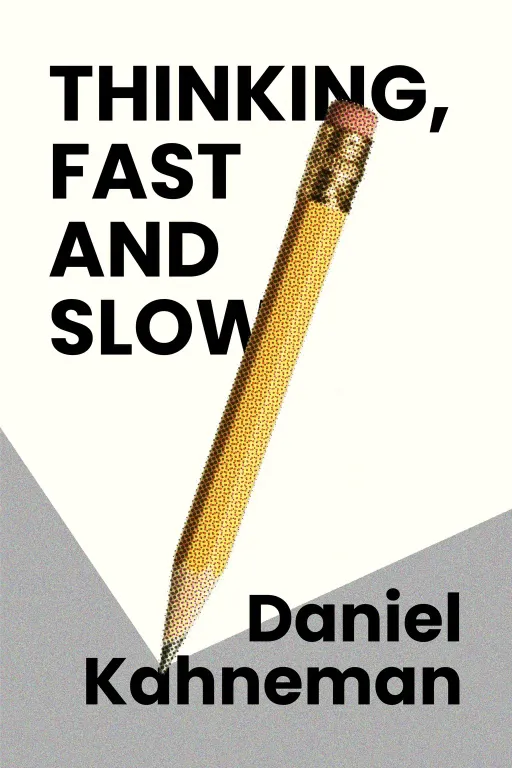
Nova: Absolutely. And it's a claim backed by decades of groundbreaking research outlined in two iconic books we're diving into today: Daniel Kahneman's seminal work, "Thinking, Fast and Slow," and "Nudge" by Richard H. Thaler and Cass R. Sunstein. What’s fascinating is that both Kahneman and Thaler were awarded the Nobel Memorial Prize in Economic Sciences, despite being psychologists, for their revolutionary work on prospect theory and behavioral economics. It’s truly interdisciplinary and fundamentally changed our understanding of decision-making.
Atlas: Okay, so these aren't just pop psychology books, these are Nobel-level insights telling us we're all a bit more irrational than we think. That definitely piques my interest, especially for anyone striving to truly understand their audience.
Nova: Exactly. And the core of our podcast today is really an exploration of why our gut feelings often win out over our logic, and how understanding this fundamental human truth is the secret weapon for truly impactful marketing. Today we'll dive deep into this from two perspectives. First, we'll explore why our unconscious minds are the real decision-makers in marketing, then we'll discuss how we can ethically design campaigns to 'nudge' those unconscious drivers for better engagement and loyalty.
The Unseen Architects of Choice: Why System 1 Dominates Marketing
SECTION
Nova: So, let's start with Kahneman. He reveals we have two systems of thought. System 1 is fast, intuitive, emotional, and largely unconscious. It's what lets you recognize a friend's face, drive a car on an empty road, or instantly react to a sudden noise. It’s effortless.
Atlas: Right, like when you see a really compelling ad and you just like you need that product, even if you can't articulate exactly why. There's just an immediate pull.
Nova: Precisely. Then there's System 2: the slow, deliberate, logical, and effortful thinking. This is what you use to solve a complex math problem, fill out your tax forms, or meticulously compare product specifications. It's the voice of reason that we often is in charge.
Atlas: I can see how that would be. So, in marketing, the traditional approach has always been to appeal to System 2, right? Give people all the features, all the benefits, all the logical reasons to choose us.
Nova: And that's the behavioral blind spot! Most consumer decisions, especially in the fast-paced, noisy digital world, are driven by System 1. People are scrolling quickly, multitasking, and bombarded with information. They don't have the time or mental energy to engage System 2 for every single choice. Their intuition, their emotions, their quick heuristics—those are the real decision-makers.
Atlas: But wait, if it's so dominant, why do so many marketing campaigns still feel like they're trying to give us a calculus lesson? Why do we still inundate people with specs and data sheets? It's like we're speaking the wrong language.
Nova: It's because we we're rational beings, so we design for that ideal. But think about it: imagine you're trying to decide between two identical-looking coffee mugs online. One has a single five-star review that says "Best mug ever!" and the other has no reviews. Which one are you more likely to buy?
Atlas: The one with the review, obviously! Even if I don't know the reviewer, that social proof, that quick positive signal, would definitely sway me. I wouldn't stop to think, "Is this review statistically significant?"
Nova: Exactly! That's System 1 at work. Another classic example is the "decoy effect." Researchers offered subscriptions: web-only for $59, print-only for $125, or web-and-print for $125. Most people chose web-only. But when they removed the "print-only" option, suddenly the web-and-print option became far more popular. The presence of the less attractive, but similarly priced, decoy made the premium option look like a fantastic deal by comparison. It wasn't about the intrinsic value; it was about the immediate, intuitive comparison that System 1 made.
Atlas: That's incredible. So, for someone trying to master data's story and really understand human behavior, how do we even begin to 'measure' something as fleeting as System 1? It feels so intangible compared to click-through rates or conversion numbers.
Nova: You're right, you can't measure System 1 directly in the same way. But you can certainly measure its. It's about recognizing the cognitive biases that System 1 relies on—things like scarcity, social proof, anchoring, framing—and then designing your digital experiences to leverage those. If you're seeing high bounce rates on a page with too much text, that's System 1 saying, "Too much effort, I'm out." If a product with fewer features but a clearer value proposition outperforms one with more, that's System 1 choosing simplicity.
Designing for Intuition: How to 'Nudge' Behavior Beyond Logic
SECTION
Nova: And that naturally leads us to the second key idea we need to talk about, which takes Kahneman's insights and turns them into actionable strategies: the concept of "Nudge," pioneered by Thaler and Sunstein. They show how subtle changes in what they call "choice architecture" can guide people towards better decisions without restricting their freedom.
Atlas: That makes me wonder, isn't there a fine line here between 'guiding' and, well, outright manipulation? For leaders who want to inspire and guide teams, the ethical dimension of influencing behavior is crucial.
Nova: That's a critical question, and Thaler and Sunstein are very clear on this. A true "nudge" is freedom-preserving. It makes a desired action easier or more appealing, but you can always opt out. It's about designing the environment, not coercing the individual. Think about the classic example of organ donation. In countries where you have to to be an organ donor, rates are very low. In countries where you are automatically an organ donor unless you, rates are incredibly high. The default choice is a powerful nudge.
Atlas: So it's like making the healthy choice the easy choice, or the preferred choice the default. That's a great way to put it. Can you give us an example of how this plays out in digital marketing specifically?
Nova: Absolutely. Consider online forms. If you want people to subscribe to your email list, having a pre-checked box that says "Yes, I want to receive updates" is a powerful nudge. People are more likely to stick with the default than to actively uncheck it. Or think about pricing pages. Presenting your most desired plan as the "most popular" or "recommended" option, even if it's the middle tier, is a nudge. You're leveraging social proof and anchoring to guide System 1.
Atlas: That's a fantastic example. It’s not a hard sell; it's just making the path of least resistance align with the desired outcome. For leaders trying to innovate and make a significant mark, how do you even begin to implement these 'nudges' in a complex digital campaign without it feeling like a massive overhaul?
Nova: You start small and you test. Look at your user journeys. Where are the friction points? Where are people dropping off? Could a subtle change in wording, a different default setting, a visual cue, or a simplified choice make a difference? It's about designing for the human brain, knowing it's often operating on autopilot. A/B testing these small changes can yield huge results. It's about understanding that every interaction, every button, every piece of text, is part of your choice architecture.
Synthesis & Takeaways
SECTION
Nova: So, what we've really explored today is the profound truth that logic alone fails in marketing. Our unconscious drivers, our System 1 thinking, are the unseen architects of our choices. And the secret weapon for any marketer, any innovator, any leader, is to understand these drivers and design environments that ethically 'nudge' people towards better outcomes.
Atlas: It's almost like we're not just selling products or services, but understanding the very fabric of human decision-making and then weaving our offerings into that fabric. It’s a shift from convincing to truly understanding and facilitating.
Nova: It’s about moving beyond mere clicks to genuine engagement and loyalty. It's about recognizing that with so much noise competing for attention, the campaigns that resonate deeply are the ones that speak to our intuition, not just our intellect. So, we want to leave our listeners with this deep question: How might you reframe your current marketing campaigns to speak to System 1 thinking rather than just System 2 logic?
Atlas: That’s a powerful question, and I imagine it’s going to spark a lot of reflection for anyone looking to future-proof their strategies. We’d love to hear your thoughts, your experiences, or even examples of System 1 marketing you’ve encountered. Join the conversation and share your insights with the Aibrary community.
Nova: This is Aibrary. Congratulations on your growth!