

The Behavioral Blind Spot: Why Logic Alone Fails in Marketing
Golden Hook & Introduction
SECTION
Nova: What if I told you that most of your marketing efforts are missing the mark because you're fundamentally misunderstanding your audience? That the very logic you rely on is actually your biggest blind spot?
Atlas: Whoa, hold on. Are you saying all our carefully crafted rational arguments, our data-backed feature lists, our meticulously optimized funnels are just... noise? For anyone trying to make a mark in this industry, that feels like a pretty bold claim.
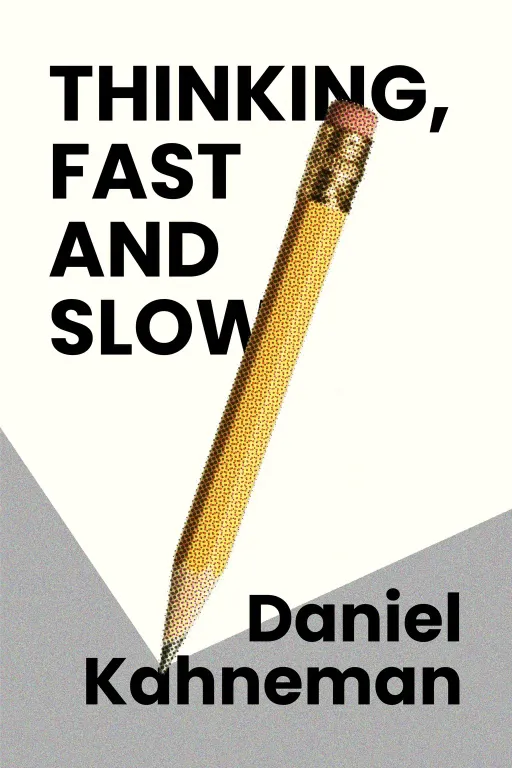
Nova: It is a bold claim, Atlas, but it's one backed by decades of groundbreaking research from minds like Daniel Kahneman, the Nobel laureate behind "Thinking, Fast and Slow," and Richard Thaler and Cass Sunstein, authors of "Nudge." Today, we’re diving deep into what we call 'The Behavioral Blind Spot' – why logic alone fails in marketing, and how understanding human psychology is your secret weapon.
Atlas: Okay, so you’re telling me that the very foundation many of us build our campaigns on – the idea that people make rational choices – is flawed? That’s going to resonate with anyone who’s ever seen a perfectly logical campaign fall flat.
Nova: Exactly. We often assume consumers are these perfectly rational economic agents, weighing pros and cons, reading every spec sheet. But the truth is far more fascinating, and far more intuitive.
Deep Dive into System 1 vs. System 2 (Kahneman) & Compelling Case Study
SECTION
Nova: And that brings us directly to Daniel Kahneman's monumental work on our two systems of thought: System 1 and System 2. Think of System 1 as your intuition – fast, automatic, emotional, often unconscious. It’s the snap judgment, the gut feeling.
Atlas: So, like when I see a flashy headline and click it without really thinking, or when I grab that candy bar at the checkout line even though I swore I’d eat healthy?
Nova: Precisely! And System 2 is the slow, deliberate, logical part. That's when you're solving a complex math problem, carefully comparing different insurance policies, or analyzing a spreadsheet. The critical insight here is that System 1 is our default. It’s always on, always running in the background, making most of our decisions. System 2 only kicks in when System 1 encounters something it can't handle, or when we consciously force ourselves to engage it.
Atlas: So, you're telling me that all those hours spent crafting bullet points about our product's features, the meticulous comparisons, the detailed specs... they're largely speaking to a system that’s often overridden or simply not engaged? For a strategic analyst, that feels incredibly inefficient.
Nova: It can be, if that's you're speaking to. Imagine it like this: System 1 is the elephant, and System 2 is the rider. The rider thinks they're in charge, but the elephant has its own powerful instincts and habits, and it's far bigger and stronger. If the elephant wants to go one way, the rider has a tough time steering it in another. In marketing, we're often yelling instructions at the rider, hoping they'll control the elephant, when we should be appealing directly to the elephant's instincts and desires.
Atlas: That’s a great analogy. So, how does this play out in a concrete digital marketing scenario? Give me an example where the elephant clearly wins.
Nova: Think about a website selling, say, environmentally friendly products. A System 2 approach would be a long page of text detailing carbon footprints, supply chain transparency, and certifications. Very logical, very thorough. But a System 1 approach might be a captivating image of a pristine forest, a simple, powerful message like "Protect Our Planet," and an easy-to-find 'Shop Now' button, perhaps with a visual cue showing a percentage of sales going to conservation. The emotional appeal, the immediate visual impact, the ease of action – that's the elephant saying "Yes!" before the rider has even finished reading the first paragraph.
Atlas: That makes perfect sense. The immediate emotional connection bypasses the logical friction. So, if we’re consistently speaking to the rider, we’re missing the vast majority of decisions being made by the elephant.
Deep Dive into Nudges & Choice Architecture (Thaler & Sunstein) & Illuminating Case Study
SECTION
Nova: Exactly. And once we understand System 1, the next step is to gently guide it. That's where Richard Thaler and Cass Sunstein's work on 'nudges' comes in. Nudges are subtle changes in the environment or the 'choice architecture' that influence behavior without restricting freedom of choice. They're about designing situations that make desired actions easier or more appealing.
Atlas: "Choice architecture." I like that. So it's not about forcing people, but about making the path of least resistance lead to the best outcome. But isn't that manipulative? How do we ensure these nudges lead to outcomes, especially for a brand trying to build genuine engagement and loyalty? That sounds a bit like dark patterns if not done right.
Nova: That’s a crucial distinction, and a valid concern. Thaler and Sunstein are very clear that nudges should be transparent and easily avoidable. They're not about deception. Think of it less as manipulation and more as helpful guidance. A classic example is the default option for organ donation. In some countries, you're automatically an organ donor unless you opt out. In others, you have to opt in. The opt-out system, a 'nudge,' significantly increases donation rates, not because people suddenly want to donate more, but because the default makes the desired action effortless.
Atlas: So the default is a powerful nudge. That’s a subtle shift with massive impact. If I'm a strategic analyst designing a landing page or an onboarding flow, what’s my 'nudge' equivalent? How do I apply that principle in digital marketing?
Nova: Consider an e-commerce site. Instead of asking users to pick a shipping option from a long list, you might have 'Standard Shipping ' pre-selected as the default, with an option to upgrade. Or on a subscription service, the 'Annual Plan ' could be the default, making it the path of least resistance, while still allowing monthly billing. It's about reducing cognitive load and friction. Another example: social proof. Showing "10,000 people have already signed up" isn't a logical argument, it’s a powerful System 1 nudge that says, "This is what others are doing, it must be good."
Atlas: That’s fascinating. It’s about understanding human laziness, frankly, and designing for it in a way that benefits both the user and the business. So, instead of trying to convince them with facts, you're gently steering them with context. That’s a significant shift in strategy.
Synthesis & Takeaways
SECTION
Nova: It absolutely is. The behavioral blind spot teaches us that the greatest impact comes from understanding the intuitive, emotional drivers of human behavior. It's about moving beyond mere clicks to genuine engagement and loyalty by designing for that System 1 thinking.
Atlas: So, the deep question for our listeners, and for me as a strategic analyst, as an impact driver, as someone who wants to future-proof their innovation, is: how do we actually reframe our current marketing campaigns to speak to System 1 thinking, rather than just System 2 logic? Where do we even begin?
Nova: You begin by observing. Look at your current campaigns through the lens of System 1. Where are you asking people to think too hard? Where could you simplify, evoke an emotion, or make the 'right' choice the 'easy' choice? It’s about empathy, designing for the human at their most impulsive, not just their most rational. It's about making the desired action feel natural, almost inevitable.
Atlas: That’s actually really inspiring. It’s not about being less strategic; it’s about being strategically, by understanding the human element at a far deeper level.
Nova: Exactly. It's about recognizing that the shortest distance between two points in marketing is often not a straight logical line, but a gentle nudge.
Atlas: That gives me chills. A very profound way to rethink how we connect with people.
Nova: This is Aibrary. Congratulations on your growth!









