The Behavioral Blind Spot: Why Logic Alone Fails in Financial Planning
Golden Hook & Introduction
SECTION
Nova: What if I told you that your brain, the very organ you rely on for every financial decision, is fundamentally bad at money? Not occasionally, but by design.
Atlas: Whoa, that's a bold claim, Nova! Bad at money by design? I mean, I thought our brains were these super-computers, especially when it comes to something as critical as finances. Most people, especially those trying to build something lasting, really pride themselves on making logical, strategic financial choices.
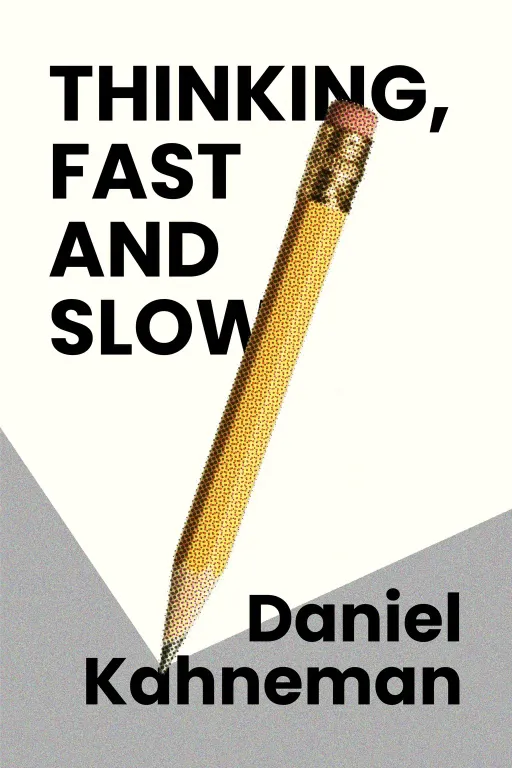
Nova: Exactly! And that's where the behavioral blind spot comes in. We assume rationality, we plan for it, but the reality inside our heads is far more complex. Today, we're diving into the groundbreaking work that completely reshaped our understanding of financial decision-making. We're talking about "Thinking, Fast and Slow" by the Nobel laureate Daniel Kahneman, whose collaboration with Amos Tversky revolutionized cognitive psychology, and then building on that, "Nudge" by another Nobel Prize winner, Richard H. Thaler, along with Cass R. Sunstein.
Atlas: So you're saying that the very foundation of how we approach money might be built on a faulty assumption about human behavior? That's a huge shift for anyone who sees themselves as an architect of their financial future, or a steward of others' wealth.
Nova: Absolutely. It’s about moving beyond just balance sheets and spreadsheets to truly understand the human element. Today we'll explore the fascinating world of our "two brains" and how they influence our financial decisions, then we'll discuss how we can use subtle "nudges" to design better financial choices, both for ourselves and for those we advise.
The Dual Systems of Thought: Understanding Our Financial Brains
SECTION
Nova: So, let's start with Kahneman's core insight in "Thinking, Fast and Slow." He introduced us to two systems of thinking: System 1 and System 2. Think of System 1 as your intuition. It's fast, automatic, emotional, and often unconscious. It’s what tells you to slam on the brakes when a car suddenly stops in front of you.
Atlas: Right, like that gut feeling. It’s powerful, but can it really be that influential when we're talking about something as deliberate as, say, investing in a retirement fund or planning an estate? I imagine people put a lot more System 2 thought into that.
Nova: You'd think so, wouldn't you? But System 1 is incredibly influential. System 2, on the other hand, is slow, effortful, logical, and deliberate. It’s what you use to solve a complex math problem or fill out your tax returns. The problem is, System 1 often jumps in first, and System 2 is sometimes too lazy or too busy to correct it.
Atlas: So, our quick, emotional brain is making big financial calls without our slow, logical brain even getting a chance to weigh in? That sounds like a recipe for disaster.
Nova: It can be. Take loss aversion, for example. It's a classic System 1 bias. People feel the pain of a loss about twice as intensely as the pleasure of an equivalent gain. Imagine a client who bought a stock, and it's now down 20%. Logically, if the company's fundamentals have changed, or there's a better investment opportunity, they should sell. But System 1 kicks in with the intense pain of realizing that loss.
Atlas: Oh, I've seen that. Or heard about it. That visceral feeling of not wanting to crystallize a loss, even when every logical indicator says to cut your losses and move on. It’s like holding onto a car that’s constantly breaking down because you remember how much you paid for it.
Nova: Exactly. Or look at framing effects. How you present information can dramatically alter a decision, even if the underlying facts are the same. Tell someone there's a "90% chance of success," and they're far more likely to take a risk than if you say there's a "10% chance of failure," even though it's the exact same probability.
Atlas: That’s fascinating. So, for a financial advisor, it's not just about presenting the facts, but those facts are presented. That's a huge insight for anyone communicating complex strategies. How do advisors even begin to identify these System 1 biases in their clients without directly saying, "Hey, your brain is tricking you"?
Nova: It starts with awareness. Understanding that these biases exist in, including themselves. Then, it's about asking probing questions, observing patterns in past decisions, and creating environments where System 2 has a better chance to engage. It's about designing conversations, not just delivering data.
The Power of Nudges: Designing Better Financial Choices
SECTION
Nova: And once we understand these inherent biases, we can start to design around them. This is where "Nudge" by Thaler and Sunstein comes in. It's brilliant because it moves from identifying the problem to offering elegant solutions. They show how subtle interventions, or 'nudges,' can guide people towards better choices without restricting their freedom.
Atlas: So you're saying we can gently guide clients without dictating? That sounds a lot less like fighting human nature and more like working with it. For someone who aims to be a steward of wealth, helping people make better choices without them feeling forced is a powerful concept.
Nova: It truly is. A classic example of a nudge is automatic enrollment in retirement savings plans. Historically, people had to to their 401 or pension plan. Participation rates were often low. But when companies switched to, where employees are enrolled by default but can, participation rates soared, often by 30-40 percentage points or more.
Atlas: That's incredible. So, simply changing the default option, without taking away anyone's choice, led to millions more people saving for retirement. It's like setting the GPS to the healthiest route, but still allowing you to take a detour if you really want to.
Nova: Precisely. It leverages our System 1 tendencies, like inertia and the preference for the path of least resistance, to our long-term benefit. This is what Thaler and Sunstein call "libertarian paternalism"—the idea that it's possible for institutions to influence behavior while respecting freedom of choice.
Atlas: That's a very elegant solution, but it also raises an interesting point for financial advisors. If you're designing these choices, are you not, in a way, taking on a paternalistic role? How does one balance that with empowering clients who want to be deeply involved in their strategic financial decisions and build intergenerational wealth with wisdom?
Nova: It's about transparency and education, Atlas. A good choice architect isn't hiding options; they're thoughtfully structuring choices to make the best path the easiest path. For someone building a legacy, a nudge might be setting up automatic transfers to a trust, or establishing clear default allocations for heirs that they can later adjust. It’s about creating a framework that supports long-term goals, acknowledging that life gets busy and System 1 can get distracted. It’s about using the art of finance to influence positive outcomes.
Synthesis & Takeaways
SECTION
Nova: So, what we've really explored today is this fundamental shift in financial planning. It's moving beyond the purely logical, economic models that assume perfect rationality, and embracing the messy, beautiful, and often irrational reality of human behavior. Understanding Kahneman's dual systems helps us diagnose the behavioral blind spots, and Thaler and Sunstein's nudges give us the tools to gently guide clients towards their long-term goals, acknowledging their human tendencies rather than fighting them.
Atlas: It's powerful to realize that true strategic financial planning isn't just about the numbers; it's deeply rooted in understanding psychology and empathy. It’s a blend of artistry and finance, knowing how to connect your message and design choices that genuinely uplift others for generations. It really brings home that deep question: how can we design our financial guidance to gently 'nudge' clients toward their long-term goals, acknowledging their human tendencies rather than fighting them?
Nova: Exactly. It's about creating a financial environment where the easiest choice is often the best choice for them. It’s about leveraging insights from behavioral economics to build stronger, more resilient financial futures. It’s a profound way to ensure that the big picture, the legacy, can truly take shape.
Atlas: That’s a truly illuminating thought. It makes me wonder where else in our lives we could apply this understanding of nudges and our own System 1 and System 2 thinking. What small, subtle changes could we make today to gently steer ourselves towards our bigger, long-term goals?
Nova: A fantastic question to ponder.
Nova: This is Aibrary. Congratulations on your growth!