The 'Beginner's Mind' Advantage: Why Naivete Fuels Breakthroughs.
Golden Hook & Introduction
SECTION
Nova: What if your most valuable asset—your hard-won expertise, your years of experience—is actually sabotaging your next big breakthrough? What if the secret to true innovation isn't knowing more, but knowing less?
Atlas: Whoa, hold on. That sounds a bit out there. Are you seriously suggesting that my experience, which I’ve spent years meticulously building, could be a? I mean, for anyone trying to navigate complex challenges, experience is usually the bedrock.
Nova: Absolutely, Atlas. It's a fascinating paradox, and it’s at the heart of our discussion today, inspired by the profound insights found in a book like "Zen Mind, Beginner's Mind" by Shunryu Suzuki. What’s particularly compelling about Suzuki’s work is that it wasn't a formally written treatise. It was compiled from informal talks and lectures he gave, yet it became a foundational text for introducing Zen to the West, revered for its direct, simple, and utterly profound articulation of complex ideas. It’s almost as if the book itself embodied the very concept it espoused: a fresh, unburdened approach leading to monumental clarity.
Atlas: That’s actually a great point. The book’s own origin story speaks volumes. So, you're saying this "blind spot" you mentioned, it's not just a theoretical idea, it’s something that even shapes how profound ideas come into being? How does this blind spot actually manifest in the real world, especially for those of us constantly trying to strategize and innovate?
Deep Dive into Core Topic 1: The Blind Spot of Expertise & System 1 Thinking
SECTION
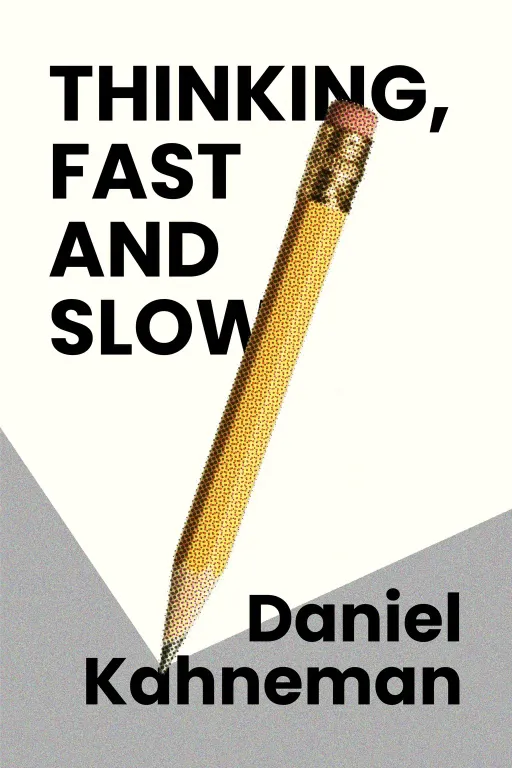
Nova: It manifests as a subtle, often unconscious bias. Think about how Daniel Kahneman explains our thinking in "Thinking, Fast and Slow." He talks about System 1, which is our fast, intuitive, almost automatic thinking, and System 2, our slow, deliberate, and effortful thinking. Our expertise, our experience, often gets hardwired into System 1. It becomes our default filter.
Atlas: So basically, our brain gets really good at taking shortcuts based on what it already knows.
Nova: Exactly. And while those shortcuts are incredibly efficient for routine tasks, they can become a blind spot when you need genuinely novel solutions. Imagine an architect tasked with designing a building that can withstand unprecedented seismic activity. Their System 1 immediately pulls up every known structural engineering principle, every past solution, every industry best practice.
Atlas: And that’s a good thing, right? You want that experience.
Nova: You do, up to a point. But what if the truly revolutionary solution lies in a material or a design philosophy completely outside their established domain? Their System 1 might unconsciously dismiss it because it doesn’t fit the established patterns. It's like having a mental filter that's so good at recognizing what it expects, it actively filters out what it doesn't. You approach the problem with a fixed mindset, pre-determining the solution space based on past successes, missing elegant answers that a fresh perspective might reveal.
Atlas: Okay, I can see that. But in high-stakes environments, where decisions need to be made quickly, isn't relying on that intuition and experience crucial? How do you balance the need for speed and efficiency with avoiding this blind spot, especially when you’re under pressure to deliver?
Nova: That's the tension, isn't it? The problem isn't the experience itself, it's the on it. If you're always letting System 1 dictate the approach, you're essentially solving new problems with old answers. For innovators and strategists, this fixed mindset can be a mental prison. It prevents you from seeing truly disruptive opportunities because your brain is too busy confirming what it already believes to be true. It's the difference between iterating on an existing solution and creating an entirely new paradigm. The expertise, which should be a launchpad, becomes an anchor.
Deep Dive into Core Topic 2: Cultivating the 'Beginner's Mind' (Shoshin) & Unlocking New Angles
SECTION
Nova: So, if expertise can be a trap, how do we escape it without losing all the hard-won knowledge we’ve accumulated? This is where Shunryu Suzuki’s concept of 'Shoshin,' or the beginner's mind, becomes incredibly powerful.
Atlas: Shoshin? Sounds like a mental trick. How does one actively cultivate a beginner's mind when you’ve spent years building a specific skill set, without feeling like you're discarding everything you've learned?
Nova: It’s not about discarding knowledge, Atlas, it's about consciously choosing you engage with it. Shoshin encourages you to approach every situation with openness, eagerness, and a lack of preconceptions, as if seeing it for the very first time. Think of it like this: an expert looks at a problem and immediately connects it to a mental file cabinet of similar problems and solutions. Someone with a beginner's mind looks at the same problem and asks, "What this, really? What are its fundamental properties? Why does it exist this way?" They're not burdened by the weight of past solutions.
Atlas: Can you give an example of that in practice? Because it sounds great in theory, but I still picture someone just, you know, being naive.
Nova: It's anything but naive in a detrimental way. Consider a design team struggling with a complex user interface for a new piece of software. They've iterated endlessly, relying on established UX principles and their own deep understanding of the product. They're hitting a wall. Then, they bring in someone completely new to the team, perhaps even new to the industry. This person, with a beginner's mind, asks seemingly "naive" questions: "Why do users have to click three times for that? Why is this button here instead of there? What if we just… didn't have this feature at all?"
Atlas: And those questions, because they're not filtered through years of "how things are done," expose something fundamental.
Nova: Precisely. Those fresh questions, unburdened by preconceptions, often expose fundamental flaws or reveal incredibly simple, elegant solutions that the experts had overlooked because their System 1 had already categorized and dismissed them. This combination of deliberate thought—our System 2—with an open, Shoshin mind allows you to see problems from entirely new angles, leading to innovative solutions. It’s about being curious enough to question everything, even your own deeply held assumptions.
Atlas: So, it's not just about "thinking outside the box," it’s about occasionally forgetting the box ever existed in the first place, right? For our listeners who are constantly strategizing and innovating, this is about consciously creating mental space for genuinely new ideas to emerge, even if they feel uncomfortable at first because they challenge our established ways of working.
Nova: Absolutely. It’s about actively seeking out those "naive" questions, whether from yourself or from others who lack your specific expertise. It's about questioning the "why" behind every "how" and "what." That's how breakthroughs truly happen, by combining the rigor of experience with the boundless curiosity of a beginner.
Synthesis & Takeaways
SECTION
Nova: Ultimately, the 'beginner's mind' isn't about abandoning your hard-won expertise; it’s about mastering it to such a degree that you can consciously set it aside when necessary. It’s about leveraging your System 2 thinking to override the biases of System 1, allowing you to continually learn, adapt, and innovate.
Atlas: That’s a powerful reframing. It means that true mastery isn’t just about accumulating knowledge, it’s about cultivating the wisdom to know when to use that knowledge, and when to temporarily shed it to see possibilities others can’t. For anyone driven by impact and creating solutions, especially in rapidly evolving fields, embracing the unknown isn't a luxury; it's a strategic imperative.
Nova: Exactly. Which recent challenge have you approached with a fixed mindset? How would actively adopting a 'beginner's mind' change your strategy and open up entirely new pathways? To practice this, we encourage you to dedicate time each week to exploring a completely new, non-engineering field. Dive into something utterly unfamiliar. It's a fantastic way to train your brain to embrace the unknown and cultivate that crucial openness.
Atlas: It’s a powerful thought to end on – the idea that what we don’t know can actually be our greatest strength.
Nova: It truly can. Thank you for joining us today.
Atlas: We love hearing your insights! Share your thoughts on how a beginner's mind has helped you.
Nova: This is Aibrary. Congratulations on your growth!