The Architecture of Thought: Mastering Your Own Cognition
Golden Hook & Introduction
SECTION
Nova: Atlas, imagine for a second that your brain isn't just one supercomputer, but two entirely different operating systems running simultaneously, often at odds with each other. One's a lightning-fast intuition machine, the other a slow, deliberate analyst.
Atlas: Whoa, that's a bit out there! Are you telling me my internal monologue has a secret twin that's constantly messing with my calculations? Because honestly, that explains a lot of my Monday mornings.
Nova: Precisely! And that's just the tip of the iceberg when we talk about mastering our own cognition. Today, we're diving into the brilliant insights from "The Architecture of Thought: Mastering Your Own Cognition," a compilation of profound ideas from giants like Daniel Kahneman, Carol S. Dweck, and Josh Waitzkin. What's fascinating about Kahneman, for instance, is that he's a psychologist who won the Nobel Memorial Prize in Economic Sciences, which tells you how deeply his work on human judgment and decision-making cuts across disciplines.
Atlas: That makes me wonder, if even Nobel laureates are dissecting the quirks of our thinking, what hope do the rest of us have? But I'm curious, how do these "two operating systems" actually manifest in our daily lives, especially for those of us who pride ourselves on strategic thinking and deep dives?
The Dual Operating Systems of the Mind: System 1 vs. System 2
SECTION
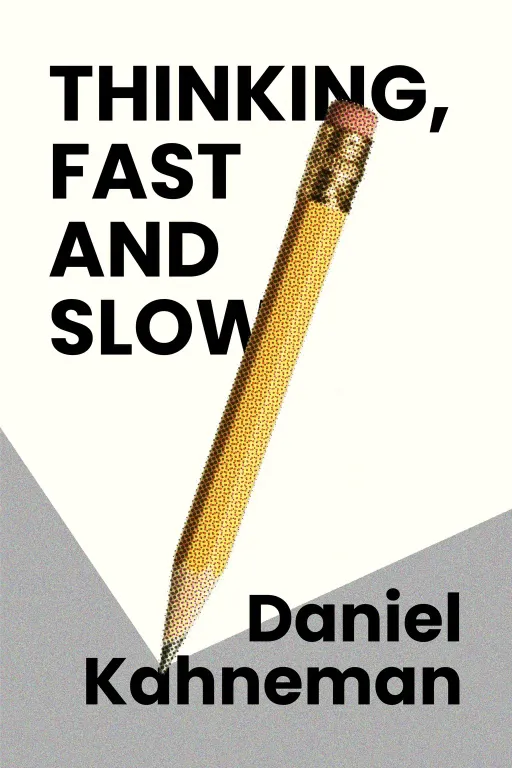
Nova: That's a fantastic question, and it's where Daniel Kahneman's seminal work, "Thinking, Fast and Slow," truly shines. He introduces us to System 1, which is our fast, intuitive, emotional, and largely unconscious mode of thinking. It's what allows you to instantly recognize a face, understand a simple sentence, or slam on the brakes when a car swerves. It operates automatically and with little effort.
Atlas: Oh, I see. So System 1 is like the auto-pilot for my brain. It's efficient, but I'm guessing it can also lead me astray if I'm not careful.
Nova: Exactly. And then there's System 2, which is our slow, deliberate, logical, and effortful mode of thinking. This is what you engage when you're solving a complex math problem, trying to understand a nuanced scientific paper, or carefully weighing the pros and cons of a major strategic decision. It requires attention and is often associated with the subjective experience of agency and choice.
Atlas: Okay, so System 2 is the deep diver, the strategist. But if System 1 is so fast, I imagine it often jumps the gun, right?
Nova: Absolutely. The interplay between these two systems is where most of our cognitive biases originate. System 1 is constantly generating suggestions for System 2: impressions, intuitions, intentions, and feelings. If System 2 endorses these suggestions, impressions turn into beliefs and impulses turn into voluntary actions.
Atlas: So you’re saying System 2 is essentially the editor, but it can be lazy?
Nova: Precisely. System 2 is often quite lazy. It prefers to conserve energy, and it will often accept the plausible suggestions of System 1 without much scrutiny. This is where biases like the availability heuristic come into play. If something is easy to recall or vivid in your mind, System 1 makes you think it's more likely or important, and System 2 often doesn't bother to correct it.
Atlas: That makes sense. For someone who's always analyzing complex systems, I can see how relying too much on the 'easy answer' from System 1 could lead to significant blind spots in problem-solving. Like if a specific type of error happened recently, my System 1 might overemphasize its probability in future risk assessments, even if the data doesn't support it.
Nova: A perfect example. Or consider the confirmation bias, where System 1 subtly steers us towards information that confirms our existing beliefs, and System 2 is too comfortable to challenge it. For a strategist, this can be catastrophic, leading to tunnel vision and missed opportunities. Kahneman's work really underscores that understanding these internal mechanisms isn't just academic; it's a practical toolkit for better decision-making and sharper intellectual output.
Atlas: Wow, that’s actually really insightful. It's not about being 'smart' or 'not smart,' but about understanding how our innate cognitive machinery can sometimes work against us, even when we have powerful intellects. This suggests that even the most rigorous scientific minds need to be vigilant about their own internal processes.
The Transformative Power of Mindset: Fixed vs. Growth
SECTION
Nova: And that vigilance, that continuous self-awareness, naturally leads us to our second profound insight from Carol S. Dweck's "Mindset: The New Psychology of Success." While Kahneman explores we think, Dweck delves into.
Atlas: I've been thinking about this a lot, especially in the context of continuous learning. So, what's the core distinction Dweck makes?
Nova: Dweck identifies two fundamental mindsets: the fixed mindset and the growth mindset. Someone with a fixed mindset believes their intelligence, talents, and abilities are static traits—they're born with a certain amount, and that's it. Challenges are seen as threats, mistakes are failures, and effort is futile because it implies a lack of inherent talent.
Atlas: That sounds like a fast track to stagnation, especially for someone who aims for mastery. If you believe your intellect is a fixed quantity, why would you bother diving deep into complex new fields that require significant effort and might expose weaknesses?
Nova: Exactly! And that's where the growth mindset comes in. People with a growth mindset believe their abilities can be developed through dedication and hard work. They see challenges as opportunities to grow, mistakes as valuable feedback, and effort as the path to mastery. This perspective is absolutely crucial for the deep diver and the strategist.
Atlas: That’s actually really inspiring. I can definitely relate to how a growth mindset transforms the approach to problem-solving. When you're tackling a complex scientific problem, a fixed mindset would make you feel defeated by initial roadblocks. But with a growth mindset, those roadblocks become puzzles to solve, opportunities to learn a new technique or rethink your approach.
Nova: It’s a complete paradigm shift. Dweck's research shows that this isn't just about positive thinking; it profoundly impacts neural pathways and learning strategies. People with a growth mindset are more likely to embrace difficult tasks, persist longer in the face of setbacks, and ultimately achieve higher levels of accomplishment because they're constantly seeking to expand their intellectual capacities.
Atlas: So, for a strategist building systems, a growth mindset would be essential for iterating, adapting, and continuously optimizing those systems, rather than sticking to a rigid, 'perfect' initial design. It's about being comfortable with evolution.
Nova: Absolutely. It's about understanding that your intellectual prowess isn't a static measure, but a muscle that gets stronger with every challenge you embrace. Dweck, who has spent decades researching motivation, personality, and development, argues that this simple belief system can profoundly alter your entire trajectory. It's about cultivating a love of learning and resilience that fuels continuous intellectual output, which is paramount for anyone seeking profound understanding and mastery.
Atlas: I love that. It turns every complex problem into a personal training session for your brain. It makes me wonder what kind of training regimen the real masters use.
Principles of Accelerated Learning and Optimal Performance
SECTION
Nova: And that's our perfect segue into Josh Waitzkin's "The Art of Learning: An Inner Journey to Optimal Performance." Waitzkin is a fascinating figure—a chess prodigy who became an international master and then a world champion in Tai Chi Chuan. His book isn't just about chess or martial arts; it's about the universal principles of accelerated learning and peak performance that apply to any domain, including mastering complex cognitive tasks.
Atlas: So you’re saying he's essentially cracked the code on how to learn anything, deeply and effectively?
Nova: In many ways, yes. One of his core principles is "making smaller circles." He advocates for diving deep into the fundamentals, understanding them intimately, and then gradually expanding your knowledge. It’s about quality over quantity, depth over breadth, especially in the early stages of learning.
Atlas: That resonates with the deep diver in me. It’s like building a strong foundation for a complex system. You don’t just slap on features; you ensure the core architecture is sound.
Nova: Exactly. He also emphasizes the importance of "investing in loss"—deliberately putting yourself in situations where you might fail, but where you learn the most. This ties beautifully into Dweck's growth mindset, seeing setbacks as crucial data points for improvement. Waitzkin would often train against stronger opponents, knowing he'd lose, but focusing intensely on what he could glean from the experience.
Atlas: That sounds rough, but I can see the strategic value. It’s counter-intuitive for someone driven by a desire for mastery, where every second counts, to intentionally seek out failure. But it's about optimizing for long-term growth, not short-term wins.
Nova: Precisely. Another powerful concept from Waitzkin is "the soft zones." This is about learning to relax under pressure, to find a state of calm focus amidst chaos. Whether you're in a high-stakes chess match or trying to debug a critical system under a deadline, the ability to maintain composure and clarity of thought is paramount.
Atlas: That’s a great way to put it. For someone dealing with intricate challenges, the pressure can be immense. Being able to access that 'soft zone' means you're not just reacting, but truly thinking and performing at your best, even when the stakes are high. It's about optimizing your internal environment, not just your external tools.
Nova: And it’s about recognizing the psychological aspect of performance. It's not just about raw intellect, but about how you manage your mental and emotional state to allow that intellect to shine. Waitzkin's journey from chess to martial arts underscores a crucial point: these principles of learning and mastery are transferable. They’re meta-skills.
Atlas: So, whether you're building a complex algorithm or trying to understand quantum physics, these strategies from Waitzkin can help you accelerate your learning and ensure you're making every second count, not just putting in hours. It's about working smarter, not just harder, to achieve true mastery.
Synthesis & Takeaways
SECTION
Nova: When we bring these three powerful perspectives together—Kahneman's dual systems, Dweck's mindsets, and Waitzkin's learning principles—we get this incredible blueprint for mastering our own cognition. It’s about understanding the biases that can derail us, cultivating the belief that we can always grow, and employing strategies that accelerate our journey towards mastery.
Atlas: Absolutely. It’s like a three-pronged attack on intellectual stagnation. First, you understand the hidden flaws in your brain's operating system. Then, you rewire your fundamental beliefs about your own capacity. And finally, you adopt the proven strategies of elite learners to truly optimize your intellectual output.
Nova: For anyone who seeks profound understanding, who dives deep into scientific research, and who values strategic insight, this isn't just theory. This is the ultimate meta-skill. It’s about transforming yourself into a more effective learner, a sharper thinker, and ultimately, a more impactful strategist. It helps you build systems not just in the external world, but within your own mind.
Atlas: That’s actually really inspiring. It feels like these books empower us to become the architects of our own intellectual destiny, ensuring that every challenge is truly a stepping stone. It's about approaching every problem, every complex system, not as a static entity, but as an opportunity for continuous evolution, both of the system and of ourselves.
Nova: Exactly. It reminds us that the pursuit of mastery is an ongoing journey, fueled by self-awareness and a relentless commitment to growth. So, what's one immediate bias from Kahneman's work you might consciously try to mitigate in your next big decision, Atlas?
Atlas: Oh, man, I'm going straight for the anchoring bias. I catch myself letting initial data points disproportionately influence my subsequent analysis all the time. I'm going to actively challenge my first impressions.
Nova: Outstanding. That’s the work. This is Aibrary. Congratulations on your growth!