The 'AI in Marketing' Trap: Why Tools Aren't Enough, and What Is.
Golden Hook & Introduction
SECTION
Nova: Everyone's talking about AI in marketing, right? It's the shiny new toy, the ultimate efficiency hack. But what if the biggest trap isn't the tech itself, but our completely wrong assumption about the on the other side of the screen?
Atlas: Oh, I love this. Because for anyone trying to build a truly cutting-edge marketing strategy, the temptation is always to just chase the next big tool. You're saying we might be missing something fundamental?
Nova: Exactly, Atlas. We're so focused on the 'AI' part, we forget the 'marketing' part is fundamentally about influencing human minds. And those minds, as brilliant as they are, are also wonderfully, predictably illogical.
Atlas: Predictably illogical. That's a phrase that resonates with my Monday mornings, actually. So, what are we diving into today to untangle this?
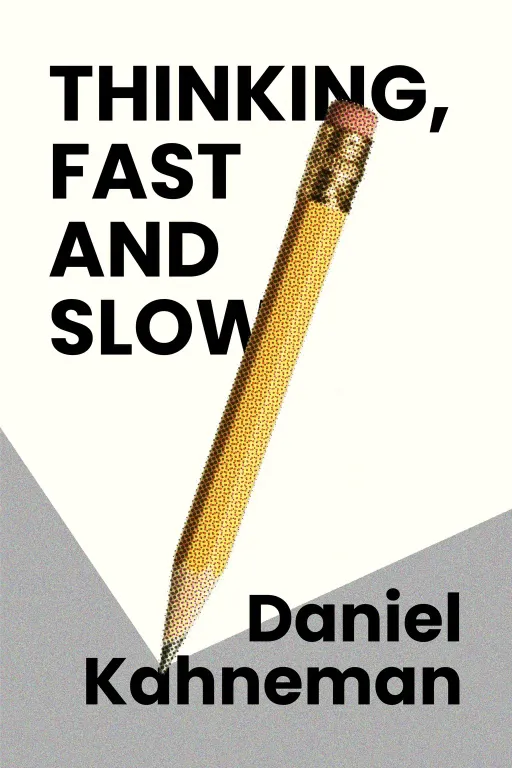
Nova: Today, we're cracking open two foundational texts that completely changed how we understand human decision-making: Daniel Kahneman's Nobel Prize-winning "Thinking, Fast and Slow" and Dan Ariely's wildly popular "Predictably Irrational."
Atlas: These aren't just academic reads; they're essentially user manuals for the human mind, which, let's be honest, AI often tries to market to without reading the instructions. So, what's the core insight here for our listeners, the strategic seekers and practical innovators who are trying to stay ahead in AI marketing?
Nova: The core insight is that the most advanced AI in marketing still falls flat without a deep understanding of the wonderfully messy, often irrational human mind it's trying to reach. It's about leveraging human psychology for smarter AI.
Deep Dive into Core Topic 1: System 1 & System 2 in Marketing (Kahneman)
SECTION
Nova: And that brings us to our first major idea, straight from Kahneman's iconic work. He reveals that our minds operate with two distinct systems. Imagine System 1 as your fast, intuitive, emotional, almost automatic pilot. It's what makes you instantly swerve to avoid an obstacle or feel a pang of fear.
Atlas: Right, like when you see a really compelling ad and just like you need that product, even if you can't logically explain why.
Nova: Exactly! Then there's System 2. That's your slow, logical, effortful co-pilot. It's what kicks in when you're solving a complex math problem, analyzing a spreadsheet, or meticulously comparing product specifications. It requires conscious effort.
Atlas: So, for our listeners, who are constantly analyzing market trends and strategic reports, that's their System 2 working overtime. But how does this play into the AI marketing trap?
Nova: Many AI marketing strategies, especially those focused purely on data points and logical segmentation, primarily aim for System 2. They present features, benefits, and rational arguments. But the vast majority of human decisions, especially consumer decisions, are heavily influenced by System 1.
Atlas: Oh, I see. So, an AI that's just crunching numbers and presenting a logical case might be completely missing the emotional triggers, the heuristics, the shortcuts that System 1 thrives on?
Nova: Precisely. Let's take a common scenario. Imagine an AI campaign for a luxury car. If that AI is trained purely on demographic data and logical feature comparisons—"This car has X horsepower and Y safety ratings"—it's speaking to System 2. But buying a luxury car is rarely a purely logical decision. It's about status, aspiration, emotion, the of driving it.
Atlas: That makes sense. For anyone in high-stakes marketing, you know that emotional connection is paramount. So, how does an AI, which is inherently logical, tap into System 1?
Nova: It’s about training the AI to System 1 cues. Instead of just analyzing logical data, an AI can be fed data on visual aesthetics, emotional language in ad copy, the perceived social proof, or even the subtle psychological priming in a user experience. For instance, A/B testing emotional headlines versus purely factual ones, or analyzing which visual elements evoke specific feelings, allows the AI to learn what resonates with System 1.
Atlas: So, you're saying our AI isn't wasting its time trying to convince System 2, but rather it needs to be to understand and anticipate System 1 responses. But doesn't that feel a bit like... manipulation? Where's the line?
Nova: That's a crucial question. The line is in the intent and the transparency. Understanding System 1 isn't about tricking people; it's about communicating effectively and meeting them where their minds naturally operate. It’s about making desirable choices feel intuitive, not forcing unwanted ones. The goal is to align the emotional appeal with genuine value.
Deep Dive into Core Topic 2: Predictable Irrationality & AI Design (Ariely)
SECTION
Atlas: That's actually really inspiring, that we can train AI to be more human-centric. It makes me wonder, if our intuition is so powerful, does that mean our decisions are just random?
Nova: That's a great segue, Atlas, because that's where Dan Ariely steps in with "Predictably Irrational." He shows that while our decisions might deviate from pure logic, they're not random. They're irrational. Our biases and cognitive quirks are systematic.
Atlas: So, instead of being chaotic, our irrationality has a pattern. That's a powerful idea for marketers.
Nova: Absolutely. Take the classic "decoy effect," which Ariely explores. Imagine you're offering a subscription:
Nova: Online access for $59.
Atlas: Huh. My System 1 is immediately drawn to Option C. It feels like a much better deal than Option B, which is the same price for less. And suddenly, Option A looks less appealing too.
Nova: Exactly! Option B, the print-only option at $125, is the "decoy." It's designed to make Option C look like an incredible value, even if Option A might have been sufficient for your needs. This isn't about logic; it's about how our brains make relative comparisons.
Atlas: So, for someone trying to build a cutting-edge AI marketing strategy, how do they even start with this 'irrationality'? How do you train an AI to understand the decoy effect or anchoring?
Nova: It's about designing the choice architecture, not just presenting options. An AI, armed with knowledge of predictable irrationality, could optimize a pricing page or a product recommendation engine. For example, an AI could test different decoy options for various customer segments, identifying which "irrational" presentation nudges users towards a higher-value package.
Atlas: So, AI isn't just about finding existing patterns; it's about the patterns for humans to fall into by intelligently structuring choices. Like an AI that detects specific customer behavior and then dynamically presents pricing tiers that include a decoy to guide them towards a premium.
Nova: Precisely. It shifts the focus from simply customers what's available to. It's about understanding that human decision-making is rarely an isolated, logical calculation. Context, comparison, and framing are everything.
Atlas: That gives me chills, in a good way. It's like AI becomes a super-powered behavioral psychologist. But what about the ethical implications again? If we know people are predictably irrational, isn't there a risk of exploiting that?
Nova: That's why the 'trap' is so important to acknowledge. The power of these insights demands responsibility. The goal isn't to trick people into buying things they don't want or need. It's about making it easier for them to choose products and services that genuinely benefit them, by understanding their natural decision-making processes. It's about creating a more intuitive, less friction-filled journey, not a manipulative one. It's about aligning your offerings with human psychology, rather than fighting against it.
Synthesis & Takeaways
SECTION
Nova: So, bringing it all together, the 'AI in Marketing' trap isn't that AI is bad, or ineffective. It's that we often deploy it with a fundamental misunderstanding of the target audience: humans.
Atlas: We over-index on the logical, data-driven side of AI, and we completely underestimate the power of System 1 and our predictably irrational behaviors.
Nova: Exactly. The real cutting edge in AI marketing isn't just faster algorithms or bigger data sets. It's combining that analytical power with deep psychological understanding. It's about training AI to understand not just people do, but they do it, even when the 'why' seems illogical.
Atlas: That's a profound shift. So, for our listeners—the strategic seekers, the future-focused leaders—what's one concrete step they can take to avoid this trap and start leveraging human psychology with their AI?
Nova: I'd say, start by auditing your current AI marketing strategies. Don't just look at the efficiency metrics or the logical segmentation. Ask yourself: in what areas might we be overestimating the logical thought processes of our customers? Where could we be better leveraging predictable human irrationality, not to trick, but to genuinely resonate and guide? Identify one area where your AI strategy could better account for System 1 thinking and those systematic biases.
Atlas: That's a fantastic, actionable challenge. It's about looking beyond the tool and back at the human.
Nova: Always. The tech amplifies, but human insight directs.
Atlas: Powerful stuff. This is Aibrary. Congratulations on your growth!