Stop Surface Reading, Start Deep Understanding: The Guide to Analytical Mastery.
Golden Hook & Introduction
SECTION
Nova: Okay, Atlas, the guide we're unraveling today is titled "Stop Surface Reading, Start Deep Understanding: The Guide to Analytical Mastery." Give me your five-word review, go!
Atlas: Phew. "Unlocks critical thought, truly empowering."
Nova: Nice. Mine: "Beyond headlines, uncover real meaning." I think that pretty much sums up the thrust of what we're getting into today.
Atlas: Oh, I like that. "Uncover real meaning." It's something I think a lot of us we're doing, but maybe aren't quite hitting the mark.
Nova: Exactly. Today we’re dissecting a fascinating guide that really challenges how we consume information. It's not a single book, but a powerful synthesis of ideas, drawing heavily from intellectual giants like Daniel Kahneman and Hans Rosling. What's particularly striking is how this guide pulls together disparate threads of cognitive science and data literacy into a cohesive framework for everyday intellectual growth.
Atlas: I can see how that would be incredibly valuable. Because, honestly, the "cold fact" that this guide opens with really hit home for me: "Many of us read widely but struggle to truly analyze. We skim the surface, missing the deeper connections and critical insights." Why do you think that is, Nova? Why are we so prone to surface reading?
The Two Systems of Thought: Fast vs. Slow Thinking
SECTION
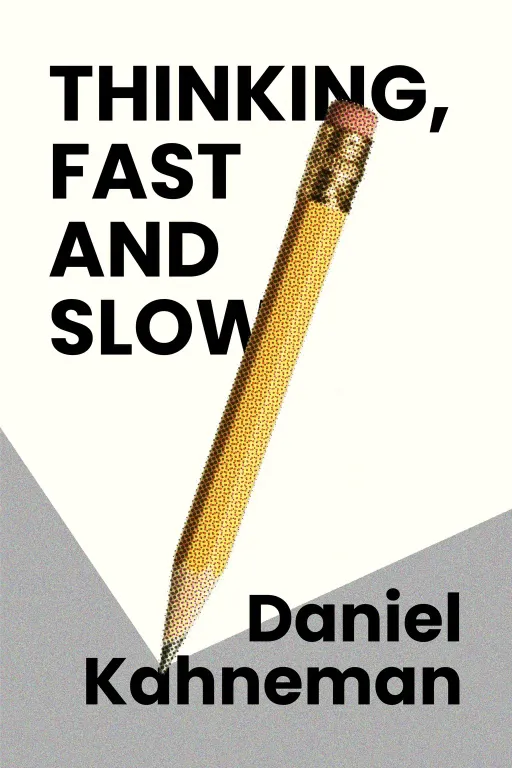
Nova: That's the million-dollar question, isn't it? And it leads us directly into the work of Daniel Kahneman, particularly his groundbreaking book, "Thinking, Fast and Slow." He essentially reveals that we have two systems of thought. Imagine you're driving on a familiar road, maybe your daily commute. You're not consciously thinking about every turn, every gear shift, every pedestrian. You're just... driving. That's System 1.
Atlas: Oh, I know that feeling. It's almost like autopilot.
Nova: Absolutely. System 1 is fast, intuitive, emotional, and largely unconscious. It's brilliant for quick decisions and pattern recognition. It's what tells you to duck when something flies at your head, or solves "2+2" instantly. But then there's System 2. This is your slow, deliberate, analytical, and effortful thinking. It's what you engage when you're trying to solve a complex math problem, fill out a tax form, or, crucially, deeply analyze a book.
Atlas: So, our brains are basically lazy by default, preferring the easy System 1, which often means skimming instead of understanding?
Nova: That's a great way to put it, yes! System 1 is efficient, but it's also prone to biases and shortcuts. Let me give you an example. It's called the "anchoring effect." Imagine you're in a negotiation. If the first number mentioned, even if it's outrageous, is very high, subsequent offers tend to stay higher than they would have otherwise. Your System 1 latches onto that initial anchor, biasing your entire perception of value, even if your System 2 it's too high.
Atlas: That’s a perfect example. I’ve definitely felt that pull. So, how do we even when we're in System 1? Because it sounds like it's often working behind the scenes, without us realizing it. For our listeners who are aspiring analysts, who really want to dig deeper, how do they become aware of this internal machinery?
Nova: That's the trick, isn't it? The first step is awareness. Kahneman's work helps us recognize the of System 1 in action: snap judgments, strong emotional reactions, jumping to conclusions. The guide encourages us to pause. To actively question our initial gut reactions. If something feels too easy, too obvious, or too perfectly aligned with what we already believe, that's often System 1 at play. We need to consciously engage System 2 by asking, "What evidence supports this? What are alternative perspectives? Am I missing something?"
Atlas: So you're saying that deep understanding isn't just about reading more, it's about deliberately slowing down our processes to allow System 2 to do its job? That's going to resonate with anyone who struggles with information overload and feels like they're constantly just reacting.
Battling Misconceptions with Data: The Factfulness Approach
SECTION
Nova: Precisely. Once we know how our own minds work, the next step is applying that lens to the world around us, especially when we're consuming external information. This is where Hans Rosling's "Factfulness" comes in. Rosling was a physician, statistician, and public speaker who dedicated his life to battling what he called "ignorance-based errors" about the world.
Atlas: I’ve heard of Rosling! He had those incredible TED Talks where he'd animate data.
Nova: He was brilliant. Rosling showed how our System 1 biases, combined with outdated information or media sensationalism, often create a dramatically distorted view of global realities. He identified ten "instincts" that prevent us from seeing the world factfully – things like the "gap instinct," where we perceive a huge divide between "developed" and "developing" nations that often no longer exists, or the "negativity instinct," which makes us believe things are constantly getting worse.
Atlas: Wow, that’s kind of heartbreaking, because it means we're often walking around with an alarmist, inaccurate view of the world. So, when we see those alarming headlines, our System 1 is basically shouting "confirm your bias!" and Rosling is saying, "Hold on, let's look at the actual numbers."
Nova: Exactly! He would present data, often animated in truly captivating ways, that showed, for example, that extreme poverty has drastically decreased, child mortality rates have plummeted, and more girls are going to school than ever before. These are facts that often surprise people, because our System 1, fed by media narratives, tells us a different story. The guide emphasizes Rosling's approach: always look for the data. Question your assumptions. Don't rely on anecdotes or gut feelings when concrete evidence is available.
Atlas: That makes me wonder, how does this actually play out in real life? Like, if I'm trying to understand a current event, how do I apply both Kahneman's System 2 awareness and Rosling's factfulness?
Nova: It’s a powerful combination. First, you engage System 2: pause before forming an opinion. Ask yourself, "What are my immediate assumptions here? Are they based on emotion or evidence?" Then, you apply Rosling's lens: "What data points can I find to verify or challenge this? Am I falling prey to a negativity bias, or focusing only on extremes?" It's about building a habit of intellectual humility and curiosity, rather than seeking confirmation. It’s about not just reading happened, but and.
Synthesis & Takeaways
SECTION
Nova: So, bringing it all together, what this guide, inspired by Kahneman and Rosling, really tells us is that surface reading isn't about intelligence; it's about method. It's about understanding that our brains have these default settings, these System 1 shortcuts, that are incredibly useful but also prone to error. And to truly understand, to move beyond simple absorption to active processing, we need to consciously engage our analytical System 2.
Atlas: That’s actually really inspiring. Because it means we train our minds. It's not some innate ability some people have and others don't. It's a skill. And the ultimate benefit of this analytical mastery, then, isn't just about reading books better, is it?
Nova: Oh, absolutely not. It's about seeing the world more clearly, making better decisions, and expressing yourself with greater clarity and confidence. It's about becoming, as our user profile describes, a true "aspiring analyst" and an "articulate advocate" – someone who can dissect complex information and communicate profound insights. It’s about fostering genuine intelligence. The guide's "Tiny Step" is so simple yet so powerful: when reading, pause after each chapter. Summarize the main argument in your own words. Look for the author's underlying assumptions. That builds the analytical habit.
Atlas: That's a practical step anyone can take right now. And it ties back to that System 2 engagement. What's one assumption you've held about the world that you're now curious to fact-check using these tools? I imagine a lot of our listeners suddenly have something in mind. We'd love to hear your insights and discoveries. Share them with the Aibrary community!
Nova: This is Aibrary. Congratulations on your growth!