Stop Overwhelm, Start Clarity: The Guide to Cognitive Load Management
Golden Hook & Introduction
SECTION
Nova: Atlas, if I told you we were going to talk about "Stop Overwhelm, Start Clarity: The Guide to Cognitive Load Management," what's the first thing that springs to mind?
Atlas: Oh, Nova, that sounds like the title of my brain's autobiography. I'm pretty sure my cognitive load is currently hosting a rave and I'm not invited. So, "Stop Overwhelm" sounds like a dream, and "Start Clarity" sounds like a miracle.
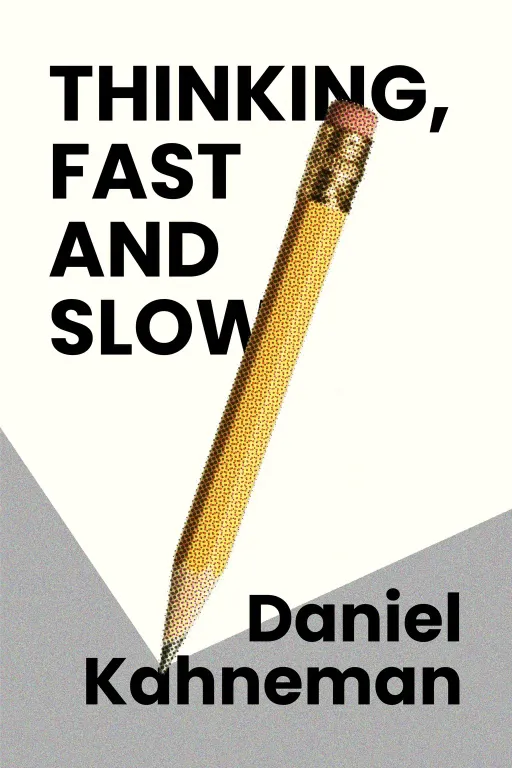
Nova: Exactly! And today, we’re unpacking the science behind that miracle, drawing insights from two absolute titans. We’re diving into the brilliant work of Daniel Kahneman, the Nobel laureate in Economic Sciences whose groundbreaking book "Thinking, Fast and Slow" reshaped our understanding of the mind, and Daniel J. Levitin, the renowned neuroscientist and author of "The Organized Mind."
Atlas: Nobel laureate? Renowned neuroscientist? That’s not just self-help platitudes; that's serious brainpower discussing how brainpower works. I guess that makes sense, because I know for a lot of our listeners, myself included, we're constantly processing vast information, trying to distill complexity, and seeking optimized outcomes. This isn't just about feeling better; it's about performing better.
Nova: Absolutely. And today, we're going to explore this from two angles: first, we'll uncover the often-overlooked reality of our cognitive limits and the two distinct systems our brains use to think. Then, we'll shift to tactical, science-backed strategies to actively manage that cognitive load, moving from understanding the problem to implementing solutions for true clarity and focused, impactful execution.
The Hidden Limits of Your Brain: Inside Cognitive Load
SECTION
Nova: So, let's kick things off with a cold, hard truth that Kahneman lays bare: your brain, for all its incredible power, has limits. Pushing past these limits doesn't make you smarter or more productive; it leads to overwhelm, errors, and ultimately, burnout. It's like trying to run a supercomputer with a dial-up modem.
Atlas: Whoa, that's a bit of a reality check. I always thought if I just, I could process more. But you’re saying there’s a hard ceiling?
Nova: There is. And Kahneman helps us understand by introducing us to two fundamental systems of thinking: System 1 and System 2. Think of System 1 as your brain's autopilot. It's fast, intuitive, emotional, and largely unconscious. It's what allows you to recognize a friend's face instantly, or slam on the brakes without thinking.
Atlas: Oh, I like that. So, System 1 is like my gut reaction, my instinct?
Nova: Precisely. It’s incredibly efficient for routine tasks. But then there’s System 2. This is your deliberate, effortful, logical, and conscious thinking. It's what you engage when you're solving a complex math problem, trying to understand a nuanced argument, or consciously choosing a healthy meal over a quick snack. It requires mental effort, and that effort is a finite resource.
Atlas: Okay, so that’s interesting. I'm curious, how does this play out when we're making decisions, especially in a high-stakes environment where we're supposed to be "on" all the time? Can you give an example of System 1 leading us astray?
Nova: Certainly. Imagine you're a hiring manager, and you're reviewing résumés. System 1 might quickly scan a name you recognize, or a university you're familiar with, and instantly form a positive impression, even before you've thoroughly read their qualifications. It's that quick, associative judgment. Or, conversely, a slightly unusual name might trigger a subtle, unconscious bias.
Atlas: That makes me wonder, how do we even which system is at play when we're in the thick of it? For our listeners who are managing complex projects or distilling vast amounts of data, it must feel like they're in System 2.
Nova: That’s the critical insight! We often we're applying System 2, but System 1 is constantly trying to jump in and take over because it's less effortful. The tell-tale signs of System 1 at play when System 2 is needed are overconfidence, snap judgments, and a feeling of ease even when the problem is complex. When you're processing vast information, if you're feeling overwhelmed, it's often because you're trying to force System 1 to do System 2's heavy lifting, or you're pushing System 2 past its endurance limit.
Atlas: So you're saying that feeling of "overwhelm" isn't a sign of weakness, but a signal that our cognitive resources are being stretched too thin, or misapplied? That's actually really inspiring, because it means it's not a personal failing, but a system problem.
Nova: Exactly! It's a system problem that can be understood and managed. The key is recognizing when you need to slow down, engage System 2, and protect its precious resources. And this understanding of cognitive limits is precisely what leads us to our next crucial topic: how to actively manage that load.
Designing for Clarity: Tactical Strategies to Conquer Overwhelm
SECTION
Nova: Building on Kahneman's insights, Daniel J. Levitin, in "The Organized Mind," gives us practical tools to combat this cognitive overload. He argues that our brains are fantastic at pattern recognition and creativity, but surprisingly poor at rote memorization and detailed recall, especially under pressure. So, his solution? Externalize everything you can.
Atlas: In other words, get it out of your head? I can see that. My brain often feels like it's juggling a hundred tasks, and half of them just fall on the floor.
Nova: It's precisely like that! Levitin emphasizes that our brains have limited attentional bandwidth. Every piece of information we try to hold in our working memory—a to-do item, a meeting time, a grocery list—takes up precious mental "RAM." By externalizing these tasks through note-taking, detailed scheduling, or even just clear checklists, you free up that RAM for higher-level thinking, for the creative, problem-solving work that System 2 excels at.
Atlas: So, for someone who's already meticulously organized, what's beyond just "writing things down"? How do we truly to minimize cognitive load, not just move it around? I mean, I have calendars and to-do apps, but sometimes I still feel like I'm drowning in information.
Nova: That’s a critical distinction, Atlas. It's not just about a system; it's about designing a system that. Nova's Take, which builds on Levitin, highlights this: "By recognizing cognitive limits, you can design your workflow to reduce friction and improve decision quality." This means creating environments and processes where you don't have to constantly re-evaluate or remember basic operational details.
Atlas: Can you give an example of designing for clarity beyond just a to-do list?
Nova: Think about decision architecture. If you frequently make certain types of decisions, standardize the inputs. For example, if you're evaluating new software, create a consistent rubric. If you have recurring meetings, establish a fixed agenda template. The moment you automate or systematize the of information gathering and decision-making, you reduce the cognitive energy required each time. It’s about creating a "default state" of clarity.
Atlas: That’s a great way to put it. It's like building guardrails for your brain. So, it's not just about offloading the content, but about offloading the of how you deal with the content. That gives me chills. It's really about intentional design, isn't it?
Nova: Exactly. It's about being strategic with your brain's resources, understanding its inherent architecture, and then building external systems that complement, rather than overburden, its natural capabilities. This is how you shift from merely coping with overwhelm to proactively achieving sustained peak performance and clarity.
Synthesis & Takeaways
SECTION
Nova: So, what we've really explored today is this profound interplay: understanding your brain's finite capacity, both its fast, intuitive side and its slow, deliberate side, and then actively designing your world to respect those limits. It's about moving from a reactive state of constant overwhelm to a proactive stance of intentional clarity.
Atlas: Yeah, I can definitely relate. It's a powerful idea that our brains aren't just processors, but also have these distinct modes, and we can actually for them. It’s not about working harder, but about understanding the mechanics and working smarter.
Nova: Absolutely. And to bring this home with a tiny step, a practical action for our listeners: identify one recurring decision you make daily. For just one week, consciously apply System 2 thinking to it. Don't let your System 1 autopilot take over. What does that look like for you, Atlas?
Atlas: That makes me wonder, for me, it’s probably my morning routine. System 1 often just shuffles me into the same old patterns. So, for a week, I'll consciously think about each step: "Is this the most efficient way to get ready? Is this the healthiest breakfast choice right now?" Instead of just doing it.
Nova: Perfect. And for our listeners, try that with one decision – big or small. Observe the difference. See how much clearer your mind feels when you intentionally manage your cognitive load, rather than just enduring it. It’s a journey of refinement, not just revolution, and every tiny step towards clarity is a step towards mastery.
Atlas: That's a great practical insight. It makes it feel achievable.
Nova: This is Aibrary. Congratulations on your growth!