Stop Guessing, Start Predicting: The Guide to Market Foresight
Golden Hook & Introduction
SECTION
Nova: What if I told you that the biggest obstacle to predicting the future isn't a lack of data, or even the complexity of the world, but something far closer to home? Something inside your own head, actively working against your best analytical intentions?
Atlas: Oh, I like that. Something in my head? Sounds a bit like a sci-fi thriller, but I'm listening. That’s a bold claim, Nova. Are we talking about self-sabotage, or something more... insidious?
Nova: More insidious, Atlas. We're diving into the world of market foresight today, moving beyond mere guessing, into actual prediction. Our guide, in spirit, is the book "Stop Guessing, Start Predicting: The Guide to Market Foresight." It’s all about building a solid predictive foundation.
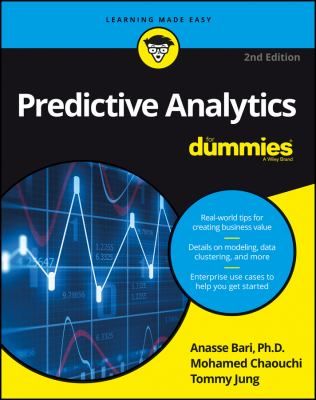
Atlas: So we're learning to see around corners, not just squint at the horizon. I imagine a lot of our listeners, the ones who are shaping industries and making big decisions, are craving that kind of clarity. And to get there, we’re looking at some powerful tools, right? Like "Predictive Analytics For Dummies" by Anasse Bari, Mohamed Chaouchi, and Tommy Jung, which sounds like it’ll demystify a lot of the technical stuff.
Nova: Absolutely. That book is a masterclass in breaking down complex models. But the real game-changer, the one that tackles the 'insidious' part you mentioned, is Daniel Kahneman's seminal work, "Thinking, Fast and Slow." Kahneman, a psychologist, shattered conventional economic thought by winning the Nobel Prize in Economic Sciences. His work fundamentally reshaped how we understand decision-making, showing that even the most rational among us are prone to predictable irrationality.
Atlas: A psychologist winning an economics Nobel? That's incredible. It immediately tells me this isn't just about spreadsheets and algorithms; it’s about understanding the messy human element.
Nova: Precisely. And that naturally leads us to our first core idea: the actual mechanics of how we can start predicting, not just hoping.
The Art and Science of Predictive Analytics: Unpacking the 'How'
SECTION
Nova: So, let's peel back the curtain. Prediction isn't about gazing into a crystal ball. It’s about understanding patterns and probabilities. The "Predictive Analytics For Dummies" approach is all about identifying key variables and building models that forecast trends.
Atlas: Okay, so, how do you even to identify those 'key variables'? For someone like our listeners, who are trying to foresee market shifts in, say, a fast-moving tech sector or a volatile consumer goods market, where do they even look? It feels like there's an ocean of data out there.
Nova: You're right, Atlas, the data ocean can be overwhelming. But it’s not about drowning in it; it's about fishing for the right catch. Think about predicting housing prices in a specific city. You wouldn't just look at how many houses sold last month. You'd identify key variables: interest rates, local employment growth, population changes, average income, perhaps even school district ratings. Each of these is a variable that, when put together in a model, can tell you a lot about future price movements.
Atlas: I see. So it’s like being a detective, looking for clues that actually. But isn't it just about having data? Like, if I just collect everything, every tweet, every news article, every economic indicator, the patterns will eventually emerge, right?
Nova: That’s a common misconception. More data isn’t always better if it’s not relevant or structured. Imagine a company that decided to predict customer churn simply by collecting every single interaction a customer had – every call, every click, every email. They ended up with a massive data lake, but no clear way to identify people were leaving. They focused on volume over insight.
Atlas: So they had all the ingredients, but no recipe.
Nova: Exactly! The book shows you how to build that recipe. It’s about transforming raw data into actionable intelligence. You identify what variables have historically correlated with the outcome you want to predict, then you build a statistical or machine learning model that learns from those historical patterns. It's about finding the signal in the noise.
Atlas: That makes sense. So we've got the tools, we've got a clearer idea of how to find the right data and build the models. But what about that 'something in our head' you mentioned earlier, Nova? What's the biggest internal sabotaging force that can derail even the best predictive models?
The Human Factor: Cognitive Biases in Prediction and Decision-Making
SECTION
Nova: Ah, the human factor, the ultimate wildcard! This is where Kahneman’s "Thinking, Fast and Slow" becomes indispensable. He introduces us to System 1 and System 2 thinking. Think of System 1 as your fast, intuitive, almost automatic brain. It’s what helps you recognize a friend’s face or slam on the brakes. System 2 is your slow, deliberate, logical brain—the one you use to solve a complex math problem or plan a strategic move.
Atlas: So you're saying our gut feelings, those quick insights that feel so right, can actually lead us astray when we're trying to predict something complex, like a market shift or a competitor's next move? Because my gut tells me a lot of things, especially on a Monday morning.
Nova: Your gut is powerful, Atlas, but it's also prone to biases. Let me give you a compelling example. Imagine a large tech company launching a new product. Their internal teams, deeply invested and excited, predict massive sales. They look at early positive feedback and see it as confirmation, ignoring any negative signals. This is confirmation bias and optimism bias at play, both System 1 shortcuts. They anchor their expectations to their initial, optimistic forecast.
Atlas: So they’re wearing rose-tinted glasses, even when the data might be screaming otherwise. That’s a powerful narrative. What happened to them?
Nova: They overcommitted resources, underestimated market resistance, and ultimately, the product underperformed dramatically. The financial consequences were significant, not because their predictive were necessarily flawed on paper, but because the interpreting and acting on those models were biased. Their System 1 thinking led them to ignore crucial disconfirming evidence.
Atlas: Wow, that’s kind of heartbreaking, seeing smart people make those mistakes, especially when the stakes are so high. So, how do we for these biases? How do we get our System 2 to step in before System 1 makes a mess, especially when we're under pressure to make quick decisions?
Nova: It starts with awareness, Atlas. Recognizing when System 1 is taking over. Kahneman suggests techniques like a 'pre-mortem' analysis. Before a big decision or prediction is finalized, imagine it’s a year later and the project has completely failed. Then, ask everyone involved to write down the for that failure.
Atlas: That’s brilliant. It forces you to actively seek out potential flaws and disconfirming evidence, instead of just celebrating how great your idea is. It’s like stress-testing your future.
Nova: Exactly. It engages System 2, forcing a more deliberate, critical look. Another technique is to actively seek out diverse perspectives, especially those that challenge your initial hypothesis. Don't just surround yourself with 'yes' people. These structured approaches help you recognize and correct for those biases, leading to far more accurate forecasts and better decisions.
Synthesis & Takeaways
SECTION
Nova: So, what we’ve learned today is that true market foresight isn't just about crunching numbers or deploying sophisticated algorithms. It's a powerful combination of robust analytical tools and a profound awareness of our own human cognitive limits. It’s about making prediction a structured, disciplined process, not a magical intuition.
Atlas: That’s a really profound insight. For our listeners who are deeply analytical and driven by impact, it sounds like the real power comes from not just understanding the 'market software,' but from understanding the 'human software' running those numbers, both in the market and in themselves. It’s about building better models building better human decision-makers.
Nova: Precisely, Atlas. And here’s your tiny step for today: pick one market trend you're curious about right now. Then, identify three key variables that could predict its next move. And here’s the critical part: consider one cognitive bias that might be influencing your own interpretation of those variables. Are you seeing what you to see, or what the data is truly telling you?
Atlas: And perhaps, ask yourself, 'Am I genuinely seeking the truth, or just confirming what I already believe?' That's a powerful way to put it. Because ultimately, foresight isn't just about seeing the future, it's about seeing ourselves more clearly.
Nova: And that clarity is where real strategic advantage is found.
Nova: This is Aibrary. Congratulations on your growth!