

Stop Guessing, Start Measuring: The Guide to Data-Driven Campaigns.
Golden Hook & Introduction
SECTION
Nova: What if I told you that "trusting your gut" in marketing isn't a superpower, but a supervillain in disguise, actively sabotaging your campaigns and costing you a fortune?
Atlas: Whoa, Nova, that's a bold claim! I mean, isn't intuition half the battle for a lot of savvy marketers out there? I imagine many of our listeners rely on that instinct.
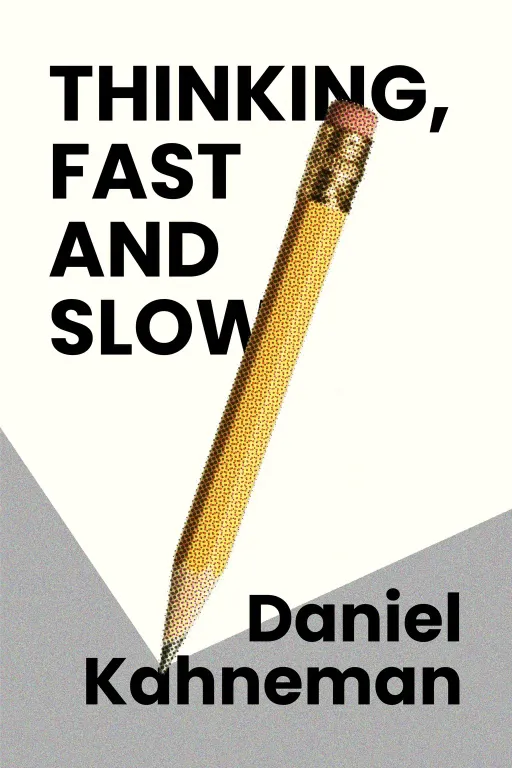
Nova: It feels that way, doesn't it? That deep-seated feeling, that flash of insight. But today, we're diving into the essence of, and drawing heavily from the groundbreaking work of Daniel Kahneman's and John Doerr's. Kahneman, a Nobel laureate, completely redefined how we understand human decision-making, and his insights are crucial for anyone trying to achieve tangible ROI.
Atlas: A Nobel Prize winner telling us our gut is wrong? Now you've really got my attention. So, what exactly is happening in our heads that makes our "instincts" so unreliable in the wild world of marketing?
The Cognitive Trap: Why Our Gut Feelings Fail in Marketing
SECTION
Nova: You've hit on the core problem, Atlas. Kahneman introduces us to two systems of thinking: System 1, which is fast, intuitive, and emotional, and System 2, which is slower, more deliberate, and logical. Think of System 1 as your brain's autopilot. It's fantastic for recognizing a familiar face or dodging a sudden obstacle. It's efficient.
Atlas: Right, like when you know a marketing campaign just "feels" right because it aligns with a past success.
Nova: Exactly! But that's where the danger lies. In complex scenarios, like designing a multi-channel campaign, System 1 thinking is prone to cognitive biases. It jumps to conclusions, relies on mental shortcuts, and often ignores contradictory evidence.
Atlas: Oh, I see. So, when we say "trust your gut," we're often just giving System 1 free rein, even when it's not equipped for the job.
Nova: Precisely. Let me give you an example. Imagine a marketing team launching a new product. They've done a few focus groups, and the feedback was overwhelmingly positive. The team about it, so they poured all their resources into a massive launch campaign, convinced it would be a hit. This is System 1 in action: emotional buy-in, quick decisions based on limited, feel-good data.
Atlas: And I can already guess what happened next.
Nova: The product flopped. Spectacularly. Because while the focus group positive, the team overlooked crucial market research data that showed a declining trend in that product category, or perhaps ignored an A/B test showing poor click-through rates on their initial ad concepts. Their intuition, fueled by confirmation bias – seeking out information that confirms their existing beliefs – led them astray.
Atlas: That's actually really inspiring. I imagine a lot of our listeners, especially those in fast-paced strategic roles, feel the pressure to make quick calls. You're saying that "fast" often means "flawed" when the stakes are high, right? How does this System 2 approach actually help us those hidden traps?
Nova: It forces deliberate analysis. System 2 thinking demands that we slow down, question our assumptions, and actively seek out data that might our initial hypotheses. It's about designing experiments, meticulously analyzing results, and being willing to change course even if it feels uncomfortable. It's not about eliminating intuition entirely, but about subjecting it to rigorous, logical scrutiny.
Atlas: So it's like we need to build in speed bumps for our brains, to force ourselves to think slower and more critically? But doesn't that slow down innovation? I mean, in a competitive landscape, agility is key.
Nova: That's a common concern. But think of it this way: strategic slowness in analysis often leads to much faster, more effective execution. You're not slowing down your, you're slowing down your to ensure it's robust. An hour spent rigorously planning and testing an ad copy can save weeks of wasted ad spend on ineffective messaging. It's about being effective, not just busy.
Measuring What Truly Matters: The Power of OKRs for Tangible ROI
SECTION
Nova: And that naturally leads us to the second key idea we need to talk about, because once you've acknowledged the pitfalls of intuition, the next question is: how do you systematically what truly matters? And that's where John Doerr's work on Objectives and Key Results, or OKRs, becomes indispensable.
Atlas: OKRs. I've heard that buzzword tossed around in various strategic meetings. But what does it actually mean for a marketing campaign? How does it help us move from "I hope this works" to "I know this is working"?
Nova: It provides a crystal-clear framework. Objectives are you want to achieve – they're ambitious, qualitative, and inspiring. Key Results are you'll measure whether you've achieved that objective – they're specific, measurable, achievable, relevant, and time-bound. It's the ultimate System 2 tool for goal setting.
Atlas: Can you give us an example? Because "increase brand awareness" sounds like a pretty good objective to me on the surface.
Nova: It sounds good, but it's vague. It leaves too much to System 1's interpretation. Now, imagine a marketing team decides their Objective is: "Become the go-to resource for B2B analytics in our industry." That's inspiring. Then come the Key Results, which make it measurable: "Increase organic website traffic by 50% by Q4," "Achieve a 20% conversion rate on whitepaper downloads by end of year," and "Secure 10 industry mentions in top-tier publications."
Atlas: Wow, that’s such a hopeful way to look at it. It's like going from navigating with a gut feeling to having a GPS with real-time traffic updates. That makes me wonder, for someone driven by impact, is it just about hitting numbers, or do OKRs also help align marketing with broader ethical goals and sustainable practices?
Nova: Absolutely, Atlas. When designed thoughtfully, OKRs can be powerful tools for ethical leadership. For instance, an objective could be "Enhance customer trust and data transparency," with Key Results like "Reduce data privacy complaint tickets by 30% by year-end" or "Achieve a 90% positive sentiment score on social media regarding data usage." It's not just about profit; it's about defining what "success" truly means for your organization, including its ethical footprint.
Atlas: That makes me wonder, then, for our listeners who are ready to stop guessing this week and start measuring, what's one tiny, actionable step they can take to start applying this immediately?
Nova: The "Tiny Step" is this: identify one current marketing assumption you're making. Maybe it's "our audience prefers email newsletters over blog posts," or "this headline will definitely perform better." Then, design a small A/B test to validate or invalidate that assumption with data this week. It doesn't have to be complex. Just pick one thing, test it, and see what the numbers tell you.
Synthesis & Takeaways
SECTION
Nova: What emerges from both Kahneman and Doerr's work is this profound insight: true strategic innovation isn't about eliminating intuition, but about augmenting it with rigorous, measurable data. It's about moving from "I think this will work" to "I know this works because we tested it and measured it." The stakes for wasted resources and missed opportunities are too high for guesswork.
Atlas: That's a great way to put it. So, it's not about becoming emotionless robots, but about ensuring our decisions are built on a bedrock of evidence, freeing up our creativity for to test, not it will work. For anyone listening, if you're looking to prove tangible ROI and leverage cutting-edge tools, starting with just one small A/B test this week could completely redefine your marketing approach. It brings a level of certainty that pure intuition just can’t touch.
Nova: Exactly. It's about building a system where your insights are valuable because they're validated, and your impact is clear because it's measured. So, go forth and measure!
Atlas: Absolutely. And we'd love to hear about your first A/B test. Share your experiences with us on social media and let us know what you discovered.
Nova: This is Aibrary. Congratulations on your growth!









