Stop Guessing, Start Leading: The Guide to Impactful Influence.
Golden Hook & Introduction
SECTION
Nova: You've got a brilliant idea. A game-changing insight. You've researched it, you've perfected it. But it just… goes nowhere. It gathers dust. Why? Because the biggest barrier to deep, lasting impact isn't a lack of intelligence; it's a lack of effective, ethical influence.
Atlas: Oh, I like that. That’s going to resonate with anyone who’s ever poured their soul into a project only to have it meet with… crickets. So, we're talking about the secret sauce to making those brilliant ideas actually land and make a difference?
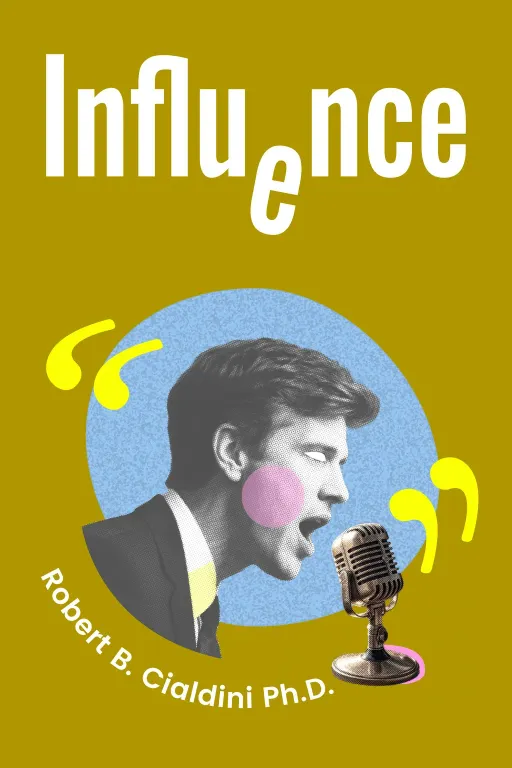
Nova: Absolutely. Today, we're tackling that exact challenge by pulling wisdom from two titans: Robert Cialdini's seminal work,, which he famously researched by going undercover in various sales and marketing roles to truly understand persuasion in the wild. And then, Daniel Kahneman's Nobel Prize-winning masterpiece,, which fundamentally changed how we understand human decision-making.
Atlas: Wow, Kahneman won a Nobel for this? That's serious. So, we're essentially looking at a dual-pronged approach to unlock deeper insights into how to communicate effectively, and ultimately, to lead with more impact? It’s for anyone who wants their well-researched ideas to actually resonate and move people to action, not just impress them with data.
Nova: Precisely. It’s about leveraging psychology, not to manipulate, but to truly connect and guide.
The Six Pillars of Ethical Persuasion: Decoding Cialdini's Influence
SECTION
Nova: And that connection often starts with understanding the hidden levers of human behavior. Cialdini’s isn't a book about trickery; it's a profound exploration of six universal principles that guide our decisions. Think of it as a toolkit for ethical persuasion.
Atlas: Ethical being the keyword there, I hope. Because when I hear "psychology of persuasion," my System 1 immediately thinks of snake oil salesmen.
Nova: A totally valid System 1 reaction! But Cialdini insists on the ethical application, building genuine consensus. Let's look at one of his most powerful principles: reciprocity. Imagine you're at a restaurant. The waiter brings the check, and along with it, a single small mint. It’s a tiny gesture, right?
Atlas: Yeah, a nice touch. I usually appreciate it.
Nova: Exactly. That tiny, unexpected gift triggers a powerful, often subconscious, urge within us to reciprocate. Studies show that a single mint can increase tips by around 3%, but if the waiter gives two mints, tips jump by 14%. And if they give one mint, start to walk away, then turn back and say, "For you nice people, here's an extra mint," tips skyrocket by 23%.
Atlas: Whoa. That's incredible. So the cause is a small, unexpected gift, the process is this feeling of indebtedness, and the outcome is a significantly higher tip. But it’s not really about the mint, is it? It’s about the perceived generosity.
Nova: You got it. It's about the feeling of being given something freely, which generates a sense of obligation. Now, apply that to getting your ideas heard. It’s not about bribing people, but about genuinely offering value upfront, being helpful, sharing resources, or even just listening deeply and making them feel heard. That builds a reservoir of goodwill, making them more receptive to your ideas later.
Atlas: So if I'm trying to get buy-in on a complex project, instead of just presenting the problem, maybe I offer some preliminary solutions or resources first, even if it's not strictly 'my job'? A little upfront generosity. That makes sense. What about social proof? That one sounds potentially manipulative.
Nova: Not if used ethically. Social proof is simply the idea that we tend to look to others to determine appropriate behavior, especially when we're uncertain. Think about it: why do we trust Amazon reviews, or why does a restaurant with a long line seem more appealing than an empty one?
Atlas: Because if everyone else is doing it, it must be good, or safe, or correct. It’s a shortcut for our brains.
Nova: Precisely. The cause is seeing others' actions, the process is a cognitive shortcut that assumes collective wisdom, and the outcome is conformity to that perceived norm. Ethically, this means highlighting genuine support for your idea. If three departments have already signed on to your new proposal, mentioning that isn't manipulation; it's presenting a verifiable fact that leverages social proof.
Atlas: Okay, so if I have a complex idea, I can't just say, "Trust me, it's good." I need to say, "Look, these other respected people or groups are already on board." But how do you do that without just it? That's the line, isn't it?
Nova: Absolutely. The line is authenticity. Cialdini's work isn't about fabricating evidence; it's about intelligently showcasing evidence. When you have genuine support, or a track record of success, you highlight it. You don't invent it. It's about presenting your well-researched ideas in a way that respects how human beings actually make decisions, not how we wish they would.
Navigating the Mind's Two Systems: Kahneman's Thinking, Fast and Slow
SECTION
Nova: Understanding Cialdini helps us frame our message, but Kahneman takes us inside the listener's head to understand how they that message. Kahneman's groundbreaking work, for which he received the Nobel Memorial Prize in Economic Sciences, introduced us to two distinct systems of thought: System 1 and System 2.
Atlas: Okay, so this is about how our brains actually work when we're trying to make sense of something? I imagine a lot of our listeners, especially those with analytical minds, often assume everyone processes information logically.
Nova: That's a common misconception. System 1 is fast, intuitive, emotional, and automatic. It's what allows you to understand a simple sentence, or recognize a familiar face, or react quickly to a sudden noise. It operates effortlessly. System 2, on the other hand, is slow, deliberate, logical, and effortful. It's what you use to solve a complex math problem, or analyze a dense report, or consciously choose what to say next.
Atlas: So, if I'm presenting a data-heavy report to a room full of busy executives, am I appealing to System 1 or System 2? How do I even know which one to target, or which one is dominant?
Nova: That's the million-dollar question, and the answer is usually. If you dump all the data directly onto System 2, it gets overwhelmed. System 2 is lazy; it prefers to conserve energy. It will often defer to System 1 if given the chance. This is why framing matters so much. Think about a health message: if you say "This treatment has a 90% success rate," that appeals to System 1's positive association. If you say "This treatment has a 10% failure rate," even though it's the same data, System 1 reacts negatively.
Atlas: Wow, that’s kind of heartbreaking, that our logical minds can be so easily swayed by how something is phrased. So, if my idea is complex, I can't just dump all the facts on System 2 and expect it to work? I need to tell a story for System 1 to open the door, and then provide the data for System 2 to confirm?
Nova: Exactly. You engage System 1 first. You tell a compelling story, use a vivid analogy, or create an emotional connection. That gets their attention, makes them receptive, and primes their intuitive mind. Once System 1 is on board, it's much easier for System 2 to engage with the logical arguments and data you present. It's like System 1 opens the door to the house, and then System 2 comes in to inspect the blueprints.
Atlas: That’s a great analogy. So, for a curious analyst who's used to leading with data, this is a fundamental shift. It’s about understanding that even the most brilliant insights need a human-centric delivery to truly land.
Nova: Absolutely. It’s about recognizing that people don't just process information; they it. And to be an impactful leader, you need to master that experience.
Synthesis & Takeaways
SECTION
Nova: Ultimately, Cialdini and Kahneman aren't separate tools; they're two sides of the same incredibly valuable coin. Cialdini gives us the 'what' of influence – the principles that trigger human response. Kahneman gives us the 'how' the brain receives and processes those triggers.
Atlas: So it's about being strategically human, not manipulative. It's about designing your communication to align with how people are wired, rather than fighting against it. For anyone trying to get their brilliant-but-complex idea heard next week, what's one tiny, actionable step they can take based on all this?
Nova: Here’s your tiny step: identify one upcoming conversation where you need to influence someone. Before that conversation, plan how you can subtly apply either the principle of reciprocity or social proof. For reciprocity, think: what genuine value can I offer upfront? For social proof: what existing, authentic support for my idea can I highlight?
Atlas: That’s a practical, real-world application. It’s about recognizing that the human mind isn't a purely logical machine. It's a tapestry of emotions, shortcuts, and social connections.
Nova: To lead effectively, to truly make an impact, we must speak to that whole person, not just their analytical side. The world isn't changed by ideas alone; it's changed by ideas that move people.
Atlas: That makes me wonder, how many brilliant ideas have we all missed out on, simply because they weren't presented with this kind of understanding? A powerful question to ponder.
Nova: Indeed.
Nova: This is Aibrary. Congratulations on your growth!