Stop Guessing, Start Influencing: The Guide to Consumer Psychology.
Golden Hook & Introduction
SECTION
Nova: What if I told you that most of your choices aren't actually choices? That a hidden system in your brain is making decisions for you, often without your conscious consent?
Atlas: Whoa, really? That sounds a bit out there. Are we talking about subliminal messaging or something even more insidious?
Nova: Not insidious, Atlas, just incredibly efficient. And today, we're diving into how understanding these hidden forces can transform creative innovation from mere guessing to strategic influencing. We're pulling insights from the brilliant minds behind "Stop Guessing, Start Influencing: The Guide to Consumer Psychology," drawing heavily from the Nobel Prize-winning work of Daniel Kahneman and Richard H. Thaler. These aren't just academics; their research fundamentally shifted how we understand human decision-making, showing us that even the most rational-seeming choices are often driven by something far more automatic.
Atlas: That's a great way to put it. I imagine a lot of our listeners, especially those who are always looking to invent solutions and build lasting careers, are grappling with this. How do you design for how minds work, not how we they should?
Nova: Exactly. And that's where our journey begins. Forget the idea that consumers are always rational actors carefully weighing pros and cons. The cold, hard fact is, many decisions are made automatically, intuitively.
Deep Dive into Core Topic 1: System 1 vs. System 2 Thinking
SECTION
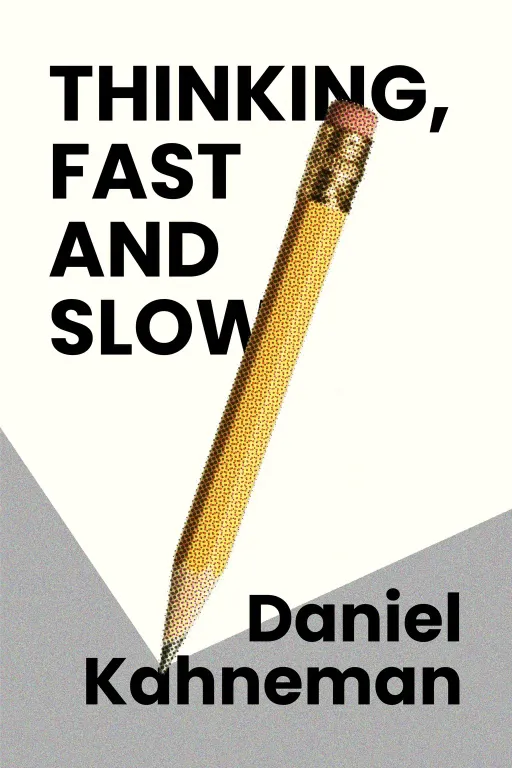
Nova: Daniel Kahneman, in his groundbreaking work, introduced us to something he called System 1 and System 2 thinking. Think of System 1 as the fast, intuitive, emotional, almost instinctual part of your brain. It's what helps you recognize a face in a crowd, read a billboard, or react quickly to a sudden noise. It operates automatically and with little effort.
Atlas: So, it's like our brain's autopilot? The part that doesn't need to consciously think through every single step?
Nova: Precisely. And then there's System 2: the slow, deliberate, logical, and effortful part. This is what you use when you're solving a complex math problem, trying to park in a tight spot, or consciously deciding which new software to invest in for your team. It requires attention and focus.
Atlas: I see. So, when we're talking about consumer choices, I'm guessing we we're using System 2, but we're often actually on autopilot with System 1?
Nova: You've hit the nail on the head. Most consumer choices, especially the everyday ones, are driven by System 1. It's influenced by heuristics – mental shortcuts – and biases, not pure reason. Let me give you a classic example: the anchoring effect. Imagine you're in a store, and you see a high-end designer watch initially priced at $1,000, but it's now 'on sale' for $500.
Atlas: Oh, I've been there. My System 1 is already thinking, "What a steal!"
Nova: Exactly! Your System 1 latches onto that initial $1,000 as an 'anchor.' Even if $500 is still quite expensive for a watch, it like a bargain compared to the original price. Your System 2 might kick in later to rationalize the purchase, but the initial pull was System 1's work.
Atlas: That's incredible. So, the initial perception, that first number, anchors our entire decision process, even if it's completely arbitrary? For someone trying to innovate and create marketing messages, that's a powerful tool. But how do you, as a creative innovator, actually design for that? How do you speak to System 1 without feeling manipulative?
Nova: That's the crucial part. It's about understanding how these systems work together. System 1 generates impressions, feelings, and intuitions, and System 2 often endorses them. When designing a campaign, you're not trying to trick System 1, but rather to create an experience that naturally aligns with its intuitive preferences. Think about product packaging: bright colors, clear fonts, simple messaging – these are all designed to be processed easily by System 1. If it's too complex, System 1 gets overwhelmed, and System 2 has to work harder, which people generally try to avoid.
Atlas: Honestly, that sounds like my Monday mornings. I still struggle with that myself. So, the goal for creative innovators isn't to bypass System 2, but to make System 1's job easier and more pleasant, so System 2 doesn't have to put in extra effort?
Nova: Precisely. It’s about crafting messages and experiences that resonate deeply, guiding consumers toward mutually beneficial outcomes by understanding these dual processes. And that naturally leads us to the second key idea we need to talk about, which often acts as a counterpoint to what we just discussed: the concept of 'nudges.'
Deep Dive into Core Topic 2: Nudge Theory & Choice Architecture
SECTION
Atlas: Okay, so we know System 1 is making a lot of our decisions. But what if we want to gently steer those decisions in a certain direction, especially for the greater good, or to help consumers make better choices for themselves? How do you do that without being, well, overtly manipulative?
Nova: That's where Richard Thaler and Cass Sunstein's concept of 'Nudge' comes in. They show how small changes in what they call 'choice architecture' can significantly influence behavior without restricting options. A nudge is any aspect of the choice architecture that alters people's behavior in a predictable way without forbidding any options or significantly changing their economic incentives.
Atlas: So, it's not about forcing a choice, but making a preferred choice easier or more obvious? Like, if you want people to drink more water, you put the water bottles at eye level in the fridge instead of hidden in the back?
Nova: That’s a perfect example! Think of the famous cafeteria study. When healthy foods were simply placed at the beginning of the food line and at eye level, people chose them more often. No one was forced to eat salad; the unhealthy options were still available. It was just a subtle rearrangement of the environment.
Atlas: That's actually really inspiring. For our listeners who are managing high-pressure teams or designing user experiences, this concept might feel like a revelation. It’s about designing the environment, not just the product. But what about the ethics here? As creative innovators, we want to build trust. Where's the line between a helpful nudge and manipulative trickery?
Nova: That's a critical question, and Thaler and Sunstein are very clear about it. An ethical nudge is transparent and easy to avoid. It aims to improve people's lives by guiding them towards choices they would likely make if they had unlimited time, information, and willpower. For instance, making organ donation an opt-out rather than an opt-in system in many countries dramatically increases donor rates. People are still free to opt out, but the default option nudges them towards a socially beneficial choice.
Atlas: So basically, you're saying it's about designing for human nature, not against it. It’s about making the path of least resistance the most beneficial path, both for the consumer and, ideally, for the business.
Nova: Exactly. It's about designing for how minds work. By understanding these dual processes, you can craft messages and experiences that resonate deeply, guiding consumers toward mutually beneficial outcomes. It's not about tricking people; it's about making the best option the easiest option.
Synthesis & Takeaways
SECTION
Nova: What we've explored today shows that the world of consumer psychology isn't about guesswork. It's about deeply understanding the two systems that drive our decisions—the fast, intuitive System 1 and the slow, deliberate System 2—and then ethically applying that knowledge to design better choices. It’s about recognizing that a vast majority of our decisions are made by our autopilot, and if you can design the environment, the 'choice architecture,' to work with that autopilot, you can create profoundly impactful and mutually beneficial outcomes.
Atlas: That gives me chills, in a good way. It’s not about convincing people to do something they don’t want to do, but helping them do what’s often best for them, or what they’d choose if they weren’t so busy or distracted. For creative innovators, this is a call to elevate your craft. It means moving beyond superficial appeals to deeply understand and ethically guide human behavior.
Nova: Absolutely. It’s about leveraging profound insights to create genuinely accessible explanations and captivating experiences. So, for our listeners, here’s a tiny step: identify one recent marketing message or campaign you encountered. Analyze which system, System 1 or System 2, it primarily targets. Then, think about how you could subtly 'nudge' System 1 to make that message even more effective, or more ethically aligned.
Atlas: I love that. It’s practical, it’s immediate, and it makes you look at every ad, every product placement, in a completely new light. It’s about moving from being a passive recipient to an active analyst and, ultimately, a more impactful creator.
Nova: This is Aibrary. Congratulations on your growth!