Stop Guessing, Start Influencing: The Guide to Amplified Impact
Golden Hook & Introduction
SECTION
Nova: Most people think influence is about clever tactics, a silver tongue, or maybe just having the loudest voice in the room. But Atlas, what if the most powerful way to sway decisions, to truly amplify your impact, has absolutely nothing to do with manipulation, and everything to do with deeply understanding what makes us fundamentally human?
Atlas: Whoa, that's kind of a mic drop moment, Nova. Because honestly, for a lot of our listeners—the strategic seekers, the practical innovators—influence often feels like this nebulous, slightly uncomfortable thing you either have or you don't. Or worse, it’s about those slick, manipulative salespeople. So, you’re telling me there's a different path, one that doesn't require a used car salesman persona?
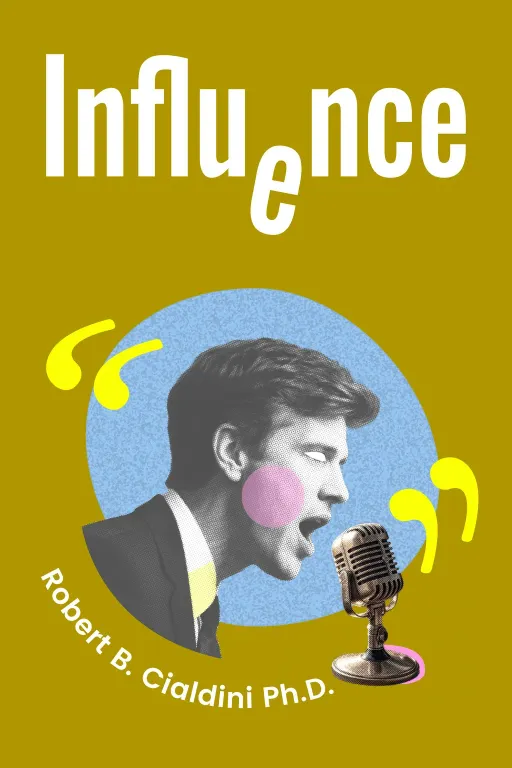
Nova: Precisely! We are talking about genuine, ethical influence. And today, we're diving into a guide that helps us stop guessing and start influencing with amplified impact. We’re going to dissect some foundational psychological principles, primarily from two titans in the field: Robert Cialdini's groundbreaking work, "Influence: The Psychology of Persuasion," and Daniel Kahneman's Nobel-winning insights from "Thinking, Fast and Slow." These aren't just academic texts; they're blueprints for understanding the human operating system.
Atlas: Okay, but for someone who's driven by purpose and wants to make a real difference, how do we ensure this isn't just a masterclass in getting people to do what want, but rather guiding them towards better, more informed decisions? Because that's the ethical tightrope, isn't it? The difference between a leader and a manipulator.
Nova: Absolutely, Atlas. The distinction is crucial. True influence, the kind that creates lasting, positive impact, is about understanding human psychology to decisions ethically. It's about presenting your ideas in a way that resonates with how people naturally think and decide, allowing your good intentions to translate into real-world change. It's not about forcing; it's about facilitating.
The Six Pillars of Ethical Influence: Cialdini's Persuasion Principles
SECTION
Nova: And that brings us perfectly to our first deep dive: Robert Cialdini's six universal principles of influence. His work, which has been widely acclaimed and is considered foundational in understanding human behavior, isn’t about trickery. It’s about recognizing the shortcuts our brains naturally take.
Atlas: Shortcuts? Like, the brain's equivalent of a GPS avoiding rush hour?
Nova: Exactly! Cialdini spent years infiltrating various persuasion professions—from car sales to fundraising—not to learn how to manipulate, but to observe and codify people say yes. He found these six principles, almost like universal psychological levers. Let's start with Reciprocity.
Atlas: Reciprocity. That sounds like a fancy word for "I scratch your back, you scratch mine."
Nova: It is, but it's deeper than just quid pro quo. It’s a deeply ingrained social norm. Imagine this: you're working on a complex project, and a colleague, completely unprompted, shares a crucial piece of research they stumbled upon that perfectly addresses a roadblock you've been facing. They don't ask for anything in return.
Atlas: Oh, I know that feeling. Instant gratitude. Instant "how can I help them?"
Nova: Precisely. Later, when that same colleague needs assistance with a tight deadline, you're far more likely to go above and beyond, even if it's inconvenient. It's not a direct trade; it's a subconscious obligation. They gave first, unconditionally, and now you feel compelled to give back. It’s incredibly powerful in building collaborative environments.
Atlas: That makes sense. For strategic seekers, offering genuine value upfront, without immediate expectation, could build incredible goodwill. But how do you ensure it doesn't feel like you're setting a trap?
Nova: The key is authenticity. The gift or favor must be genuine, unexpected, and valuable to the recipient. It's about adding value to their world, not just strategically positioning yourself. And then there's Social Proof.
Atlas: Social Proof. Is that just following the crowd? Like, if everyone else is doing it, it must be right?
Nova: Essentially, yes, but with a powerful twist. We humans are wired to look to others for cues on how to think, feel, and act, especially when we're uncertain. Think about a new software implementation in a company. If the leadership simply mandates it, you get resistance.
Atlas: Definitely. "Another new system? Here we go again."
Nova: But what if you highlight that 80% of a highly respected peer team has already successfully adopted it and is seeing significant efficiency gains? Or that three other industry-leading companies are raving about its impact?
Atlas: Oh, I see. It's not just the mandate; it's seeing people, or, succeeding with it. That shifts the internal narrative from "this is being forced on me" to "maybe this is actually what I should be doing."
Nova: Exactly. It leverages our innate desire to belong and to make correct decisions. And last for this segment, let’s talk about Authority. This isn't just about hierarchical power, Atlas.
Atlas: Okay, but isn't that what we usually think of? The CEO tells you to do something, so you do it.
Nova: That's one aspect, but Cialdini shows it's often more subtle. It’s about expertise and credibility. Imagine a team trying to decide on a new marketing strategy. One person suggests a bold, unconventional approach. If they're just "Joe from accounting," it might be dismissed.
Atlas: Right, because what does Joe know about marketing?
Nova: But what if that person, Joe, prefaced his idea by saying, "After extensive research into emerging market trends and reviewing case studies from leading innovators in our sector, I've identified a strategy that aligns perfectly with our Q3 goals, similar to what X and Y companies successfully implemented?" He's not the marketing director, but he’s signaling through demonstrated expertise and research.
Atlas: Wow, that’s a game-changer. It's not just the title; it's the of knowledge and preparation. For our strategic seekers, that means showing your work, citing credible sources, and positioning yourself as a knowledgeable guide, even if you don't have the corner office.
Nova: Precisely. It’s about building and displaying legitimate expertise, not just relying on a position. These principles are like the elemental forces of human interaction.
Navigating the Mind's Dual Tracks: Kahneman's Systems of Thinking
SECTION
Nova: Now, understanding influences us, through Cialdini's lens, is one thing. But Kahneman's revolutionary work, "Thinking, Fast and Slow," helps us grasp our minds actually process those influences, through two distinct systems of thought. It’s a profound dive into the architecture of our own decision-making.
Atlas: So, you're saying our brains have two modes? Like a car with economy and sport settings?
Nova: That’s a fantastic analogy! Kahneman, a Nobel laureate, unveiled System 1 and System 2 thinking. System 1 is our "economy mode"—fast, automatic, intuitive, emotional. It makes snap judgments, often without conscious effort. It's what tells you 2+2=4 or that a sudden loud noise means danger.
Atlas: The gut reaction. The instinct. That makes me wonder, how much of our day is actually run by this System 1?
Nova: Far more than we realize! It’s constantly at work, quickly interpreting the world around us. Now, System 2 is our "sport mode"—slow, deliberate, analytical, effortful. It kicks in when you're solving a complex math problem, trying to understand a nuanced argument, or making a major life decision. It requires focus and energy.
Atlas: So, Cialdini’s principles, like Social Proof or Reciprocity, are often appealing to that fast, intuitive System 1, aren't they? If everyone else is doing it, my System 1 quickly thinks, "safe bet."
Nova: Absolutely! Many of Cialdini's principles are System 1 triggers. They bypass the exhaustive analytical process and tap into our primal, automatic responses. But here's the brilliance: for true amplified impact, especially for strategic seekers, you can't just rely on System 1. You need to engage System 2 as well.
Atlas: So, if I'm trying to influence a team to adopt a new, complex strategy, simply showing them that other teams are doing it might get their attention, but it won't seal the deal without the data.
Nova: Exactly! An effective influencer will first appeal to System 1—perhaps by showing a compelling visual of the positive outcomes achieved by others, or by starting with a small, unexpected gesture of support for their current efforts. This creates initial buy-in, makes them receptive, and lowers their cognitive guard.
Atlas: And then you hit them with the System 2 stuff? The logical justification?
Nova: Precisely. Once System 1 is engaged, you provide the System 2 justification: the detailed analytics, the cost-benefit analysis, the strategic alignment, the long-term projections. This allows their slower, more rational brain to process and validate what their intuitive brain already felt good about. It’s like getting someone excited about a new car and then showing them the incredible fuel efficiency and safety ratings.
Atlas: That's actually really inspiring. Because it’s not about tricking people; it's about understanding how they naturally process information and then communicating in a way that respects both their intuition and their intellect. For our listeners who are trying to lead change, this is crucial. You can't just present the facts and expect immediate adoption if you haven't engaged their gut.
Nova: You've hit the nail on the head. Ineffective communication often fails because it either only appeals to System 1, leading to impulsive decisions that lack foundational support, or it only appeals to System 2, overwhelming people with data without first getting them emotionally onboard. The true art, and the ethical responsibility, is to speak to both.
Synthesis & Takeaways
SECTION
Nova: So, bringing Cialdini and Kahneman together, what we see is a powerful synergy. Cialdini gives us the —the specific triggers that move people. Kahneman gives us the —the cognitive machinery that processes those triggers. When you understand both, you're no longer guessing. You're intentionally and ethically guiding decisions, turning good intentions into real-world change.
Atlas: That gives me chills, Nova. It transforms influence from a murky art into a precise, ethical science. For our listeners, the strategic seekers, the purposeful achievers, it means their ideas gain traction, their projects get approved, and their vision actually becomes reality. It’s about building bridges between intention and impact.
Nova: Absolutely. It's about empowering your message, making it resonate on multiple levels. And the beautiful thing is, once you start seeing these principles and systems at play, you can't unsee them. You'll observe them in marketing, in political discourse, and in your own daily interactions.
Atlas: And that observation is the first step towards mastery. So, for our tiny step this week, I'd challenge everyone listening: think about one recent decision you made, or one you observed someone else make. Reflect on which of Cialdini's six principles might have been at play. Was it Reciprocity? Social Proof? And then, consider how Kahneman's System 1 or System 2 thinking was engaged. Did your gut react first, and then your logic kicked in to justify it? Or vice versa?
Nova: That's a perfect exercise in applied psychology. It brings these powerful, abstract concepts down to the everyday, making them tangible tools for amplified impact.
Atlas: Because understanding your own psychology is the first step to influencing anything else.
Nova: Exactly. This is Aibrary. Congratulations on your growth!