

Stop Guessing, Start Healing: The Guide to Evidence-Based Patient Care
Golden Hook & Introduction
SECTION
Nova: Atlas, five words. How would you review the idea of relying solely on your gut in healthcare?
Atlas: Oh, that's a good one. Hmm. Intuition: Sometimes brilliant, often deadly.
Nova: "Often deadly." That's quite the punch, but honestly, it perfectly encapsulates the core tension we're diving into today. We often celebrate intuition, that gut feeling, especially in fast-paced clinical environments. But what if our brains are subtly sabotaging our best intentions?
Atlas: That's a thought-provoking premise. I'm already hooked. Tell me more, Nova.
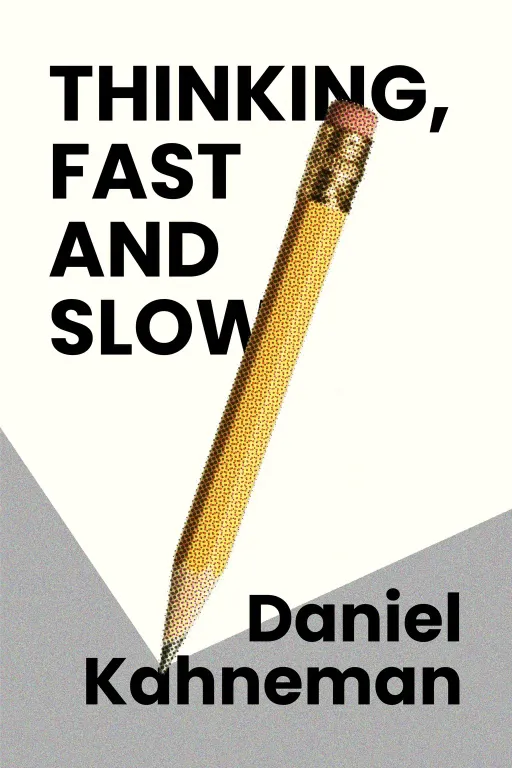
Nova: Well, it's a premise deeply explored by two titans of behavioral science, whose insights have fundamentally reshaped how we understand human decision-making. Today, we're talking about Daniel Kahneman, author of "Thinking, Fast and Slow," and Richard H. Thaler, who gave us "Nudge." Kahneman, a psychologist, actually won the Nobel Memorial Prize in Economic Sciences, which is incredibly rare and speaks volumes about how his work on human judgment turned economic theory on its head. And Thaler, a pioneer in behavioral economics, built on that, showing how our cognitive quirks can be gently guided for better outcomes.
Atlas: So, we're essentially talking about moving from what feels right, to what right, in the most critical of fields: patient care. It's about taking the guesswork out of healing.
Nova: Precisely. And it starts with understanding how our own minds work. Because every decision in healthcare matters, and relying solely on that powerful, but sometimes flawed, intuition can lead to significant errors.
The Peril of Intuition: System 1 vs. System 2 Thinking in Healthcare
SECTION
Atlas: Okay, so you mentioned our brains sabotaging us. Lay it on me. How does this 'thinking fast and slow' concept play out in a busy clinic or hospital? Because I imagine a lot of our listeners are facing high-stakes situations where 'slow' isn't always an option.
Nova: Absolutely. Kahneman introduces us to two systems of thought. System 1 is our fast, automatic, intuitive thinking. It's what allows a seasoned nurse to quickly assess a patient's distress or a doctor to recognize a common symptom pattern almost instantly. It's efficient, powerful, and often correct.
Atlas: Like recognizing a familiar face in a crowd without consciously thinking about it.
Nova: Exactly! But System 1 also relies on shortcuts, or heuristics, and that's where cognitive biases creep in. For example, let’s imagine a nurse, highly experienced, who recently cared for a patient with a rare, aggressive form of pneumonia. The case was memorable, perhaps even tragic. The very next day, a new patient presents with a cough and fatigue.
Atlas: And System 1 immediately screams "pneumonia!" because that recent, vivid memory is so readily available. It’s the availability heuristic at play.
Nova: Bingo. The nurse might unconsciously prioritize tests for severe pneumonia, perhaps overlooking other possibilities, because that recent, impactful case is so 'available' in their mind. They might dismiss a less dramatic symptom or a minor detail that points to something else entirely, like a severe allergic reaction or even a different type of infection. The cause here was the brain's natural tendency to retrieve easily recalled information. The process involved a rapid, almost subconscious diagnostic leap. And the outcome? Potentially delayed diagnosis, unnecessary treatments, or even a misdiagnosis, leading to patient harm.
Atlas: Wow. That's actually really inspiring, but also a bit terrifying. So, in that high-pressure moment, the brain's efficiency becomes a liability. How do busy caregivers, who are constantly making rapid decisions, consciously identify and then mitigate this kind of cognitive bias? It sounds like you're asking them to slow down when every second counts.
Nova: That’s a crucial point, and it's not about always slowing down. It's about deliberate, System 2 thinking—our slower, more analytical, effortful thought process—being applied strategically. The tiny step Kahneman suggests is to consciously identify potential cognitive bias before your next patient interaction. For our nurse, that might mean pausing for just a moment after the initial intuitive assessment and asking, "What else could this be? Am I being influenced by that recent pneumonia case?"
Atlas: So, it's like a mental checklist or a brief internal audit. But how do you train yourself to do that in the heat of the moment? Isn't System 1 designed to bypass those checks?
Nova: It is, which is why it requires conscious effort and training. It’s about building a habit. Many healthcare institutions are now incorporating bias awareness training, using checklists for complex procedures, or even implementing 'pause points' in critical decision pathways. It's not about eradicating intuition, which is valuable, but about acknowledging its blind spots and building in safeguards. It's about moving from an automatic response to an informed, strategic action, ensuring optimal patient outcomes.
The Power of Nudge: Guiding Better Choices for Optimal Patient Outcomes
SECTION
Atlas: Okay, that makes sense. We need to be aware of our own internal wiring. But if our brains are wired for these shortcuts, and we're trying to mitigate those biases, how do we design a system that helps us, and our patients, make better choices without feeling like we’re being forced down a path?
Nova: That’s a brilliant segue, Atlas, because it leads us directly to Richard Thaler's work on "Nudge." If Kahneman shows us where our brains go wrong, Thaler shows us how we can gently guide them back on track. A 'nudge' is any aspect of the choice architecture that alters people's behavior in a predictable way without forbidding any options or significantly changing their economic incentives.
Atlas: So basically you’re saying, it’s not a mandate, it’s a suggestion, but a really effective one. Like, if you put the healthy snacks at eye level in the cafeteria, people will choose them more often without being told they can't have chips.
Nova: Exactly! It's about designing environments, or "choice architecture," that make the desired behavior the easiest or most obvious one. In healthcare, this framework has profound implications. Imagine a hospital trying to increase flu shot rates among its staff. Instead of just sending out an email saying 'Get your flu shot,' they might change the default on their internal health portal to 'Yes, I consent to a flu shot' with an easy option to opt-out.
Atlas: Oh, I like that. So, instead of requiring active consent, you're requiring active. That subtle shift in the default option could dramatically increase participation without taking away anyone's freedom to choose.
Nova: Precisely. Or consider patient adherence to medication. A common problem. A nudge might involve redesigning prescription labels to highlight the most crucial information in a clear, visual way, or sending automated text message reminders that are framed as friendly prompts rather than stern warnings. The cause here is understanding human inertia and the power of defaults and framing. The process is a subtle restructuring of the choice environment. And the outcome is significantly improved patient adherence, better public health outcomes, and a reduction in preventable complications.
Atlas: That's actually really inspiring. It feels less like manipulation and more like empowerment through intelligent design. But what’s the line? When does a nudge become, well, too much of a push? How do we ensure these interventions truly empower patients, especially those who feel disempowered in the healthcare system, rather than just steering them without their full awareness?
Nova: That's the ethical tightrope, and it's a critical discussion. Thaler and Sunstein, his co-author, emphasize that nudges should be transparent and easily avoidable. They should improve welfare, be consistent with people's likely best interests, and always preserve freedom of choice. It’s about making the healthy choice the easy choice, not the only choice. For instance, in patient communication strategies, a nudge might be framing a treatment discussion not as "here are your options," but "many patients in your situation find X option leads to better quality of life, but let's discuss what matters most to you." It's guiding, but still centering the patient's values.
Atlas: So it's about making the path clearer, not building a fence around it. That makes a lot of sense, especially for our listeners who are constantly trying to bridge that gap between complex medical information and real-world patient understanding.
Synthesis & Takeaways
SECTION
Nova: Exactly. What we've discussed today—Kahneman's revelation of our cognitive biases and Thaler's framework for nudging better choices—they're not just academic theories. They are fundamental tools for every caregiver. They shift our approach from reactive guesswork to proactive, evidence-based strategy.
Atlas: I mean, that's such a hopeful way to look at it. It transforms the caregiver's role from simply treating symptoms to becoming an architect of healthier behavior and more precise decision-making. It's about understanding the human element so deeply that you can design systems and interactions that gently guide both yourself and your patients towards optimal outcomes. It’s about leveraging profound insights into human nature to build trust and ensure healing.
Nova: And that's the ultimate goal. So, as you go about your week, whether you're a diligent bridge-builder in healthcare or simply navigating your own decisions, we invite you to reflect: Where might System 1 thinking be leading you astray? And where could a subtle 'nudge'—either for yourself or for those you care for—make all the difference?
Atlas: Food for thought indeed.
Nova: This is Aibrary. Congratulations on your growth!









