Stop Guessing, Start Connecting: The Guide to Client Psychology.
Golden Hook & Introduction
SECTION
Nova: Alright Atlas, quick game. I say a word, you give me the first thing that comes to mind, no filter. Ready?
Atlas: Always. Hit me.
Nova: Client.
Atlas: Opportunity.
Nova: Decision.
Atlas: Emotion.
Nova: Trust.
Atlas: Fragile.
Nova: Exactly. Fragile, yet fundamental. And that's exactly what we're dissecting today, because understanding that fragility, understanding those hidden drivers, is the secret to building truly lasting relationships. We're talking about 'Stop Guessing, Start Connecting: The Guide to Client Psychology,' a profound exploration of how understanding the human mind transforms professional relationships. What's fascinating is how this guide pulls together the seminal work of behavioral economists and social psychologists, like Daniel Kahneman, who actually won a Nobel Prize for his groundbreaking work on prospect theory and decision-making under uncertainty.
Atlas: A Nobel Prize winner? Wow. That’s not just fluffy 'mindset' stuff then. This is hardcore science applied to client interactions. So we're talking about practical knowledge that's backed by serious research, not just anecdotal evidence.
Nova: Absolutely. It's about peeling back the layers to see how minds really make decisions, often without conscious thought. That insight unlocks genuine connection and trust.
The Dual Systems of Client Thought: Fast vs. Slow
SECTION
Nova: So, Atlas, have you ever presented what you thought was an absolutely bulletproof proposal to a client, all the data lined up, every logical argument in place, and they just... said no? Or worse, they seemed to agree, then ghosted you?
Atlas: Oh, man. Many times. It feels like hitting a brick wall. Like, all the logic in the world just vanishes. You walk away scratching your head, wondering what you missed.
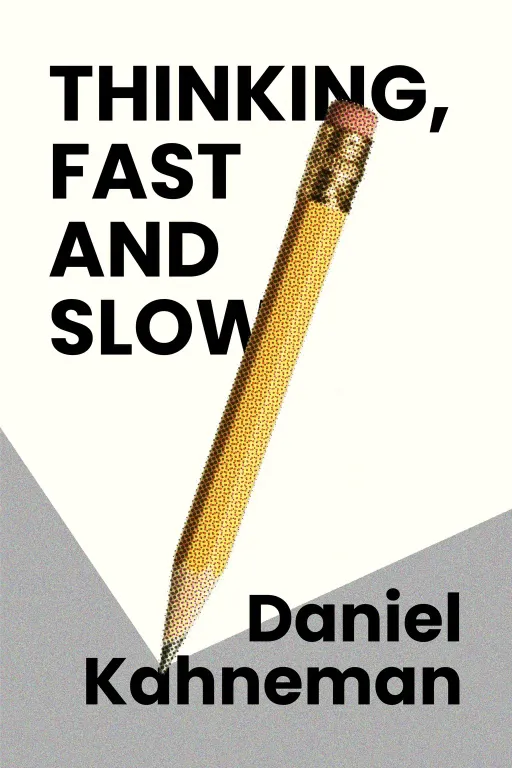
Nova: You're not alone. That's often Kahneman's System 1 at play. He talks about two systems of thought. System 1 is fast, intuitive, emotional, often subconscious. It's our gut reactions, our heuristics, our biases. System 2 is slow, logical, deliberate, and requires effort. It's where we do complex calculations or deeply analyze a problem. The mistake we often make is assuming our clients are always in System 2 mode, rationally weighing pros and cons.
Atlas: So you’re saying a client might look at my meticulously crafted spreadsheet and their brain is actually just going, 'Ugh, too much work,' or 'I don't like the color of that chart'?
Nova: Precisely. Let's take a common scenario. A client needs a new software solution. You present a comprehensive, technically superior, and cost-effective option. The numbers are clear. But the client hesitates, eventually choosing a slightly inferior, more expensive option from a competitor. You're baffled. What happened?
Atlas: Yeah, like how does that even happen? Objectively, it makes no sense.
Nova: Often, the System 1 reaction was triggered by something subtle. Maybe your presentation felt a little too formal for their culture, or a previous negative experience with a similar-looking interface from another vendor subconsciously colored their perception. Their System 1 just screamed 'risk' or 'discomfort,' even if their System 2 would have logically approved. The emotional resonance of a familiar, less optimal choice from the competitor, perhaps someone they’d met at a conference and liked, overrode the objective benefits of your solution. Their gut feeling, their System 1, made the decision before System 2 even had a chance to fully engage.
Atlas: I can see that. So the cause was an emotional trigger, the process was System 1 hijacking, and the outcome was a missed opportunity, all because we didn't appeal to the right system. How do you even spot that? How do you know if they're in System 1 or System 2?
Nova: System 1 reactions are often quick, emotional, and hard to articulate. If a client gives a vague 'I just don't feel right about it' or changes the subject quickly, that's a clue. System 2 engagement involves asking clarifying questions, requesting more data, or taking time to deliberate. The key is to recognize that we often need to address both. You can't just present facts; you have to consider the emotional landscape.
Ethical Influence: Cialdini's Principles for Lasting Trust
SECTION
Atlas: Okay, so once we know how they're thinking – whether it's fast and intuitive or slow and logical – how do we actually effectively? I mean, without feeling like we're manipulating them, which is a fine line sometimes.
Nova: That's a crucial distinction, and it perfectly bridges us to Robert Cialdini's work in 'Influence: The Psychology of Persuasion.' Cialdini identifies six universal principles of influence, but he emphasizes their ethical application. We're not talking about manipulation; we're talking about guiding clients to mutually beneficial decisions, fostering loyalty. Let's focus on two: Reciprocity and Social Proof.
Atlas: Reciprocity, I get that. You give something, they feel obligated to give back. But how does that build trust, not just a transactional exchange?
Nova: It’s about genuine giving. Not a quid pro quo. Imagine a potential client calls you, overwhelmed by a minor, specific problem that's not even directly related to your core service. Instead of quoting them a fee or saying it's outside your scope, you spend fifteen minutes on the phone, genuinely helping them solve that small issue, no charge, no expectation.
Atlas: So you’re saying you just… give away your expertise?
Nova: Exactly. You provide unexpected value. A few weeks later, when they have a much larger, complex project that in your wheelhouse, who do you think they're going to call? That act of genuine, unbilled assistance triggers a powerful sense of reciprocity, not just obligation, but trust. You demonstrated competence and care without immediate gain. The cause was genuine help, the process was activating the principle of reciprocity, and the outcome was a trusted, long-term engagement.
Atlas: That’s a great example. It’s like building a relationship instead of just making a sale. What about social proof? How does that play into ethical influence?
Nova: Social proof is our tendency to look to others for cues on how to think, feel, and act, especially when we're uncertain. A client might be hesitant about a new service, but if they see testimonials from similar businesses, or hear that their peers are thriving with it, their uncertainty decreases. It’s the "everyone else is doing it" phenomenon, but used ethically. For example, if you highlight how many clients similar to theirs have successfully implemented a solution, you're providing social proof. The common mistake is to invent or exaggerate this proof, which quickly erodes trust. You must be authentic.
Atlas: Okay, so that makes me wonder, what's a tiny step our listeners can take today to apply this? I imagine a lot of our listeners are looking for tangible actions.
Nova: Absolutely. Today, observe one client interaction. Can you identify one System 1 reaction – that gut feeling, that quick judgment – and one System 2 thought process – maybe a thoughtful question, a request for more data? And then, try to offer one small, genuinely helpful piece of advice or assistance, without immediate expectation, activating that principle of ethical reciprocity.
Synthesis & Takeaways
SECTION
Nova: So, Atlas, when we put these pieces together – understanding the fast and slow thinking, and then ethically applying principles like reciprocity and social proof – it really changes the game, doesn't it? It moves us beyond just presenting services.
Atlas: It does. It’s not just about what you offer, but how you offer it, and how deeply you understand the person on the other side of the table. It’s about respecting the brain’s natural tendencies, not just trying to force information into it. The cold fact is, success isn't just about services; it's about deeply understanding human behavior.
Nova: Exactly. It's genuinely connecting with people on a deeper level. When you understand those underlying psychological mechanisms, you're not guessing anymore. You're connecting. You're building trust that lasts. It's about moving from transactional to transformational relationships.
Atlas: That’s actually really inspiring. It makes every interaction more meaningful, knowing you’re navigating those invisible forces. It’s about being a better human, not just a better professional.
Nova: Well said. So, for everyone listening, your tiny step today: observe a client interaction. Identify one System 1 reaction and one System 2 thought process you encounter. And perhaps, offer one moment of unexpected, genuine value. See what happens.
Atlas: What a powerful way to put this into practice.
Nova: This is Aibrary. Congratulations on your growth!