Stop Chasing Perfection, Start Embracing 'Good Enough': The Guide to Decisive Action.
Golden Hook & Introduction
SECTION
Nova: What if the very thing you've been told is a virtue—the relentless pursuit of perfection—is actually the biggest obstacle to your success and impact?
Atlas: Whoa, Nova, that's a bold claim right out of the gate! I mean, for visionaries and strategists, building with purpose often a high standard. Are you saying we should just… settle?
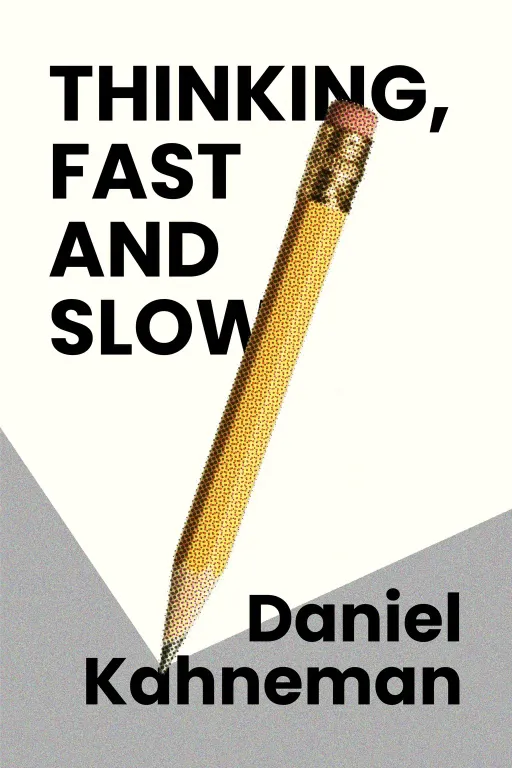
Nova: Not settle, Atlas, but pivot. We're talking about embracing 'good enough' as the guide to decisive action. Today, we're diving into insights from a powerful synthesis of ideas, drawing heavily from the groundbreaking work of Nobel laureate Daniel Kahneman and the practical frameworks of Chip and Dan Heath. Kahneman, whose work redefined our understanding of human judgment, and the Heath brothers, known for their research-backed advice, offer a compelling argument that the real world demands action, not endless deliberation.
Atlas: Okay, so you’re suggesting that for those of us who are driven by impact, who want to build something meaningful, our perfectionism might actually be slowing us down? That resonates, honestly. It’s a constant struggle to balance vision with the need to just something.
Nova: Exactly. It's about moving from analysis paralysis to effective, timely decisions. And that journey starts with understanding how our own minds can sometimes betray our best intentions.
The Cognitive Traps of Perfectionism: Why 'Good Enough' is a Breakthrough
SECTION
Nova: So, let's talk about we get stuck. Daniel Kahneman, in his seminal work, reveals the two systems that drive our thinking: System 1, which is fast, intuitive, and emotional, and System 2, which is slow, deliberate, and logical.
Atlas: Ah, the gut feeling versus the deep dive. I know that dichotomy well. My instincts often push me forward, but my strategic mind wants to dissect every angle.
Nova: That’s it. And the problem arises when we let System 2, the deliberate thinker, get caught in an endless loop, especially when we're chasing perfection. Imagine a leader, a true visionary, who's spent months, even years, refining a new product strategy. They're constantly tweaking the pitch deck, analyzing every single market variable, endlessly running simulations. The fear of launching something that isn't absolutely flawless becomes so overwhelming that they never actually launch.
Atlas: Oh, I’ve seen that movie. I’ve probably starred in that movie a few times! But for someone who wants to build with purpose, who cares about the legacy of their work, how do you trust your instincts without sacrificing that rigorous, critical lens? Isn’t that System 2 thinking essential for building something truly impactful?
Nova: Absolutely, System 2 is vital. The point isn't to abandon it, but to understand its proper role. Kahneman shows us that System 1 is brilliant for quick judgments, but prone to biases. System 2 helps us correct those biases. The trap is when System 2 becomes an engine for disguised as. It's the fear of being wrong, the fear of imperfection, that keeps us stuck in that endless deliberation cycle. We seek certainty where none exists, delaying action until we have the information, which, in the real world, is never.
Atlas: That makes me wonder, then, how do you know when you’ve done System 2 thinking? When do you switch from deliberate analysis to trusting that calibrated instinct, especially when the stakes are high, and you're building something that truly matters?
Nova: It's about being aware of the of continued deliberation. Every extra hour spent refining a decision that's already 90% solid is an hour not spent acting, not learning, not adapting. The real impact comes from action, not just perfect planning. And that leads us perfectly to we can actually make those decisive choices.
The Four Pillars of Decisive Action: Navigating Uncertainty with a 'Good Enough' Mindset
SECTION
Nova: So, if understanding our thinking helps us avoid the traps, how do we actually those decisive choices? This is where Chip and Dan Heath, in their book "Decisive," offer a brilliant, four-step framework: Widen your options, reality-test your assumptions, attain distance before deciding, and prepare to be wrong.
Atlas: I’m curious, how do these four steps help someone who's already prone to overthinking, someone who wants to make the decision, not just decision?
Nova: Let’s break it down. First,. Most people faced with a decision think in binary: A or B. The Heaths argue that this narrow framing is a huge pitfall. Instead, consciously look for at least three alternatives you hadn't considered. Not just A or B, but what about C, D, or even a hybrid solution? This forces your System 2 to be creative, not just analytical.
Atlas: I see. So, instead of agonizing over two paths, you’re saying actively seek out more, which sounds counter-intuitive if you’re trying to simplify. But I suppose more options could lead to a better 'good enough' rather than an agonizing 'perfect.'
Nova: Exactly. Second,. Instead of just thinking a decision, actually go out and it. Talk to people who have faced similar challenges. Run small experiments. Don't just predict the future; sample it. For a company considering a new market entry, this isn't just reading reports; it's talking to potential customers in that market, running a small pilot program.
Atlas: That's a great way to put it. It’s like, don’t just build the whole house; lay a few bricks and see if the foundation holds. And for someone who values a grounded approach, that external validation is crucial.
Nova: Precisely. Third,. This means stepping back from short-term emotions. The Heaths suggest a few techniques: use the 10/10/10 rule—how will you feel about this decision in 10 minutes, 10 months, 10 years? Or imagine what advice you’d give a friend in the same situation. This helps you tap into a more objective part of yourself.
Atlas: That's powerful. It’s so easy to get caught in the immediate urgency, especially when you're deeply invested in a project. Stepping back, gaining that perspective… it sounds simple, but it’s probably the hardest thing to do in the moment.
Nova: And finally, the step that truly embodies the 'good enough' philosophy:. This isn't about planning to fail; it’s about anticipating potential pitfalls and building contingencies. It’s about asking: "If this decision goes south, what would be the signs? What would I do?" This makes your decision more robust, not less. It transforms fear of failure into strategic foresight.
Atlas: But for someone building with purpose, someone who’s all about impact, isn't 'preparing to be wrong' a difficult mindset? How do you maintain conviction while also planning for failure? It feels almost contradictory to the visionary spirit.
Nova: It’s not contradictory, Atlas; it’s resilient. A true visionary doesn't just see the ideal outcome; they also anticipate the inevitable challenges. Preparing to be wrong means you've thought through the worst-case scenarios, so if they happen, you're not paralyzed. You have a plan B, or even a plan C. It's about proactive problem-solving, not pessimistic surrender. It actually your conviction because you know you can adapt.
Synthesis & Takeaways
SECTION
Nova: So, what we've learned today is that by understanding our cognitive biases—how our System 1 and System 2 thinking can lead us astray—and by applying a structured approach like the Heath brothers' four steps, we can move beyond the crippling pursuit of perfection. 'Good enough' isn't about mediocrity; it's about effective progress, about making the best decision you can with the information you have, and then.
Atlas: That’s actually really inspiring. It frames 'good enough' not as a compromise, but as a strategic advantage for impact. For those of us who are builders, who want to leave a legacy, action is the fundamental ingredient. So, what’s one concrete step our listeners can take right now to put this into practice?
Nova: The book offers a perfect tiny step: For your next important decision, list three alternative options you hadn't considered and evaluate them quickly. Just three. It breaks the binary trap immediately.
Atlas: That’s brilliant. It forces you out of that narrow tunnel vision without demanding a full-blown strategic overhaul. It’s a low-friction way to start thinking differently.
Nova: Absolutely. It opens up the mind to possibilities, reduces the pressure of finding "the one perfect answer," and gets you moving.
Atlas: So, the question isn't 'Can I be perfect?' but 'Can I be effective?'
Nova: Exactly. And what's one more option you haven't even considered for that big decision you're facing right now?
Nova: This is Aibrary. Congratulations on your growth!