Mastering the Art of Explaining Anything to Anyone
Golden Hook & Introduction
SECTION
Nova: Atlas, what's something you find incredibly complex, something you've tried to explain a hundred times, but it just never quite lands?
Atlas: Oh, I know that feeling. For me, it's definitely the intricacies of quantum physics. I mean, the double-slit experiment? My brain just short-circuits. How do you even begin to make that accessible?
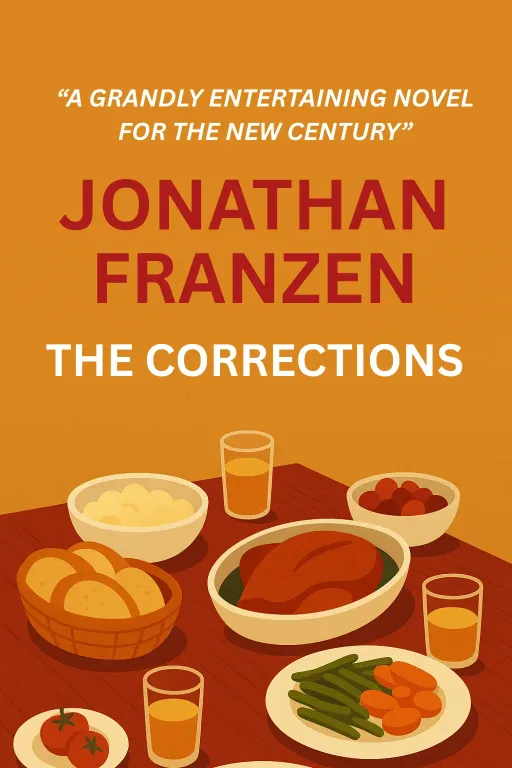
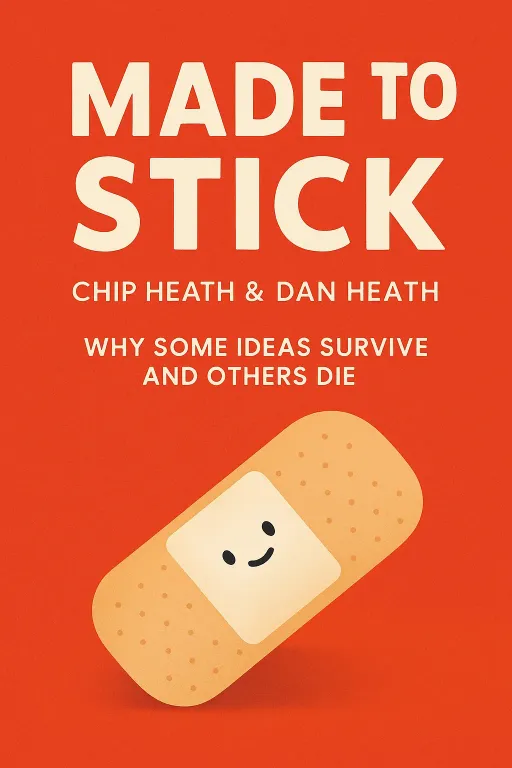
Nova: Exactly! And that, my friend, is the heart of what we're unraveling today. We're diving into the brilliant insights of Chip Heath and Dan Heath's "Made to Stick" and Daniel Kahneman's "Thinking, Fast and Slow." These aren't just academic texts; they're your secret weapons for cutting through the noise and making any idea, no matter how complex, resonate. What’s fascinating is that Kahneman, a Nobel laureate, completely revolutionized how we understand decision-making, showing us the hidden biases that make explaining things so tricky.
Atlas: That makes me wonder, so we’re talking about not just you say, but the brain actually hears it? Like, tailoring your message to bypass those mental shortcuts?
Nova: Precisely. It’s about understanding the listener's cognitive landscape as much as it is about your own message.
The Clarity Compass: Navigating Complex Ideas
SECTION
Nova: Let's start with "Made to Stick." Heath and Heath break down the anatomy of an idea that sticks. They give us six principles: Simplicity, Unexpectedness, Concreteness, Credibility, Emotions, and Stories. Think of them as your clarity compass.
Atlas: Oh, I like that. A clarity compass. So, if I'm trying to explain, say, the orbital mechanics of a satellite, where do I even start with those six? Simplicity first, I'd imagine?
Nova: Absolutely. Simplicity isn't about dumbing down; it's about finding the core, the essence. As they put it, it's about stripping away the extraneous to reveal the message's heart. For example, when you explain orbital mechanics, can you boil it down to a single, powerful analogy? Is it like a rock being perpetually thrown around the Earth, always falling but never hitting?
Atlas: That’s a great way to put it. I usually launch into equations and gravitational forces, and by the time I'm done, people are just staring blankly. So, find the core, then make it unexpected?
Nova: Yes! Unexpectedness is crucial for grabbing attention. Our brains are wired to notice what’s new or surprising. If you start with something counter-intuitive about orbital mechanics—like how astronauts are constantly falling—you immediately pique curiosity. It’s like, “Wait, falling? But they’re floating!” That creates a knowledge gap, and the brain loves to fill knowledge gaps.
Atlas: Huh. That’s a powerful insight. So, instead of leading with "gravity holds things in orbit," I could say, "Astronauts in space are actually falling at 17,500 miles per hour, but they never hit the ground." That’s definitely unexpected.
Nova: Exactly! And then you bring in Concreteness. Instead of abstract terms, use vivid imagery and sensory language. Don't just say "high altitude"; describe the view of Earth as a "marbled blue gem against the black velvet of space."
Atlas: I can definitely see how that would make the satellite explanation less like a textbook and more like a story. But what about Credibility? How do you make a complex idea believable, especially if it sounds a bit out there?
Nova: Credibility can come from many places. It could be an expert, a statistic, or, as Heath and Heath highlight, anti-authority. Sometimes the most credible source is someone who has lived the experience, even if they're not a recognized expert. Or, it can be internal—the idea itself is so well-constructed and logical that it feels inherently true. Think of a proverb; its credibility comes from its inherent wisdom.
Atlas: So, if I'm explaining orbital mechanics, I could talk about how the principles were first observed by ancient astronomers, linking it to a long history of human understanding. That makes sense.
Nova: And then we get to Emotions and Stories. These are perhaps the most powerful. Emotions make us care, and stories provide a simulation, allowing us to mentally rehearse how we’d act in a similar situation. They make abstract ideas tangible and relatable. When you weave in the story of a mission, the challenges, the triumphs, suddenly orbital mechanics isn't just physics; it's human endeavor.
Atlas: That gives me chills. So, it’s not just about conveying information, it’s about making people something about that information. That's a huge shift from how I usually approach explaining things.
Your Pedagogical Toolkit: Simplification Strategies
SECTION
Nova: And this is where Kahneman's "Thinking, Fast and Slow" comes in, giving us the psychological bedrock for those principles work. He introduces System 1 and System 2 thinking. System 1 is fast, intuitive, emotional; System 2 is slow, deliberate, logical. When you're trying to explain something complex, you're usually targeting System 2, but Kahneman shows us that System 1 often overrides it.
Atlas: Okay, so that’s why my detailed, logical explanations often fail. People are reacting with their gut, their System 1, before my System 2 even gets a chance to engage.
Nova: Exactly! And this is crucial for understanding varied learning styles. Some people naturally lean on System 1, seeking patterns and narratives, while others are more comfortable with System 2, diving into data and logic. Effective teaching isn't just about what you know, but how you present it to cater to both. Nova's take is that understanding cognitive processes helps you tailor your explanations for maximum impact.
Atlas: So, how do I cater to both? When I'm trying to explain something intricate, like the nuances of a complex English grammar rule, how do I get past that initial System 1 resistance and engage their deliberate thought?
Nova: That's where your pedagogical toolkit comes in. One powerful strategy is the "Tiny Step" method. Kahneman highlights how our brains prefer small, digestible chunks of information. Try explaining your complex English concept to a five-year-old. What words do you change? What analogies do you use?
Atlas: Oh, I’ve been there. When I try to explain the subjunctive mood, for instance, I usually start with "It's for hypothetical situations..." and eyes glaze over. But if I thought about explaining it to a five-year-old, I'd probably say something like, "It's when you're wishing for something that isn't real right now, like 'If I a bird...'"
Nova: Perfect! You've simplified the language, grounded it in a relatable example, and made it concrete. You’re appealing to their System 1 with a simple, imaginative scenario, then gently leading them towards the System 2 understanding of the grammatical rule. The Heath brothers would call that a story and an emotion.
Atlas: That’s actually really inspiring. So, it's about breaking it down until it feels almost obvious, then building back up. And then for the "Deep Question," about leveraging storytelling for intricate grammar rules or literary theories, how does that connect?
Nova: It connects directly to the power of narrative. Kahneman shows us that our brains love stories. We create narratives to make sense of the world. So, instead of just presenting a grammar rule, tell a story about when that rule would be critical. Imagine a character whose fate hinges on using the past perfect tense correctly. Or a literary theory—what’s the story of its origin? Who were the thinkers who developed it, and what problem were they trying to solve?
Atlas: Wow, that’s kind of heartbreaking for my old teaching methods. I mean, I can see how that would make even the most dry literary analysis accessible. Instead of just dissecting a poem, you tell the story of the poet’s struggle, or the societal context that birthed the work. That makes it instantly more engaging.
Nova: It’s about transforming information into an experience. By understanding how our minds process information, and by using these "Made to Stick" principles, you don't just explain; you ignite understanding.
Synthesis & Takeaways
SECTION
Nova: So, what we've really uncovered today is that mastering explanation isn't a mystical art; it's a science, backed by deep psychological insights. It's about designing your message to be sticky, to bypass cognitive biases, and to resonate with both the fast, intuitive parts of our brains and the slow, deliberate ones.
Atlas: I guess that makes sense. It’s not just about being knowledgeable; it’s about being a strategic communicator, understanding the recipient's mind. For anyone who's ever felt like their brilliant insights just bounce off people, this is a game-changer. It’s about building bridges, not just throwing information across a chasm.
Nova: Absolutely. And the true power is in empowering others. When you master the art of explaining, you're not just sharing knowledge; you're transforming understanding, one sticky idea at a time.
Atlas: That’s actually really inspiring. So the next time I'm trying to explain a complex topic, I'm not just thinking about the facts, I'm thinking about the story, the surprise, the emotion, and the small, concrete steps. And I'm definitely going to try explaining it to a five-year-old first.
Nova: You'll be amazed at the clarity that emerges. It’s a journey, and every conversation is a step. Your voice matters, and how you use it to explain truly impacts the world.
Atlas: I'll certainly be practicing spontaneous dialogue with this in mind daily. This is Aibrary. Congratulations on your growth!