How to Lead Through Change Without Losing Your Impact.
Golden Hook & Introduction
SECTION
Nova: What if I told you that the biggest mistake leaders make during times of massive organizational change isn't about their grand strategy, or even their communication plan, but about a fundamental misunderstanding of human nature itself? That our brains are actually wired to resist precisely what we think is logical and good for us?
Atlas: Whoa, whoa, whoa. Wait. Are you saying our perfectly rational, carefully constructed plans, backed by all the data in the world, are doomed from the start because of some hidden human quirk? That feels almost like a betrayal of strategic thinking for someone who lives and breathes impact.
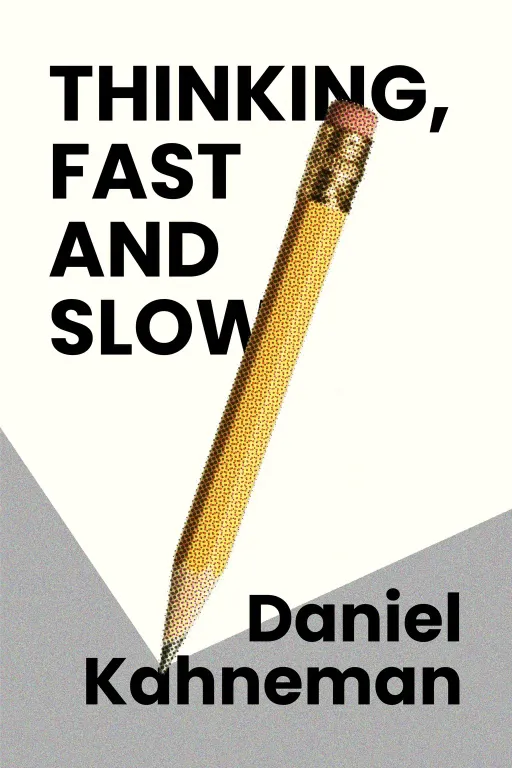
Nova: Absolutely not doomed, Atlas, but certainly handicapped if we ignore the hidden currents beneath the surface. Today, we're unpacking a concept deeply rooted in the groundbreaking work of Nobel laureate Daniel Kahneman, author of "Thinking, Fast and Slow," and further illuminated by Richard Thaler and Cass Sunstein in "Nudge: Improving Decisions About Health, Wealth, and Happiness."
Atlas: Kahneman, the psychologist who won a Nobel in Economics? That's always fascinated me – the idea that economics isn't just about numbers, but fundamentally about the messy, unpredictable human mind.
Nova: Exactly! Kahneman, alongside Amos Tversky, completely reshaped our understanding of human judgment and decision-making. He proved, with rigorous research, that our brains often take mental shortcuts, leading to predictable biases and what we might call 'irrational' choices. It's this very insight into our often illogical minds that forms the 'blind spot' leaders so frequently overlook.
Atlas: Okay, so this isn't just pop psychology; this is Nobel-level insight into how we actually make choices. But how does this 'fundamental misunderstanding' manifest in leadership? What is this 'blind spot' you're talking about?
The Blind Spot: Unveiling the Irrational Leader
SECTION
Nova: That's the perfect question, Atlas. Most leaders, being rational, data-driven individuals themselves, assume their teams are also rational. They present a logical case for change – "Here are the market forces, here's the efficiency gain, here's the future state." They communicate to the logical, deliberate part of our brain, what Kahneman calls System 2.
Atlas: The part that processes spreadsheets and long-term goals. Makes sense.
Nova: Precisely. But here's the rub: during times of uncertainty, stress, or significant change, our brains often default to System 1. That's the fast, intuitive, emotional part. It's the part that reacts to a sudden loud noise, or helps you instantly recognize a friend's face. It’s powerful, it’s quick, and it’s heavily influenced by emotion and ingrained habits.
Atlas: So, when a company announces a massive restructuring, and everyone starts panicking, gossiping, and resisting, even though the PowerPoint clearly showed the business case for survival, that's System 1 in overdrive? How does a leader, who prides themselves on data and logic, even begin to counter that primal, almost gut-level resistance?
Nova: It’s exactly that, Atlas. Think about something as seemingly simple as a company-wide migration to new software. Let's say the new system is objectively better: faster, more integrated, more secure. Leaders spend months on training, documentation, and town halls, meticulously laying out the benefits.
Atlas: The logical approach.
Nova: Right. But what happens? Resistance. People drag their feet, find workarounds, complain about the learning curve. They know the new system be better eventually, but the immediate friction of learning something new, the fear of making mistakes in front of colleagues, and the comfort of the old, familiar system – that's System 1 screaming "Danger! Effort! Avoid!" It’s a subtle psychological cost of change that leaders often ignore.
Atlas: That's incredible. So, we're not just fighting a lack of understanding; we're fighting primal brain wiring that perceives change as a threat. For innovators trying to drive adoption of a new product or strategy, this is huge. It's not that people don't 'get it,' it's that their gut says 'no' even when their brain says 'yes.'
Nova: You've hit the nail on the head. The "blind spot" is this mismatch: leaders communicate to System 2, expecting a System 2 response, but they're often getting a System 1 reaction – which is emotional, habit-driven, and often 'irrational' from a purely logical standpoint. This fundamental disconnect causes immense frustration and, very often, failed change initiatives. It's like trying to explain quantum physics to someone who's just had their lunch stolen. Their system one is preoccupied.
Atlas: That’s a perfect analogy. The emotional state completely overrides the logical capacity.
Strategic Nudges: Guiding Decisions Without Dictating Them
SECTION
Nova: And understanding that blind spot is precisely what unlocks the power of our second core idea: strategic nudging. If you can't reason people out of an emotional, System 1 response, how you effectively guide their behavior and decisions?
Atlas: Okay, 'nudging' sounds a bit like manipulation, which is usually a red flag for ethical leaders. What exactly is a 'nudge' and how is it different from just telling people what to do, or worse, tricking them into something?
Nova: That's a crucial distinction, and Thaler and Sunstein are very clear about it in "Nudge." A nudge is an intervention that alters people's behavior in a predictable way without forbidding any options or significantly changing their economic incentives. It's about designing the "choice architecture" to make desired behaviors easier, more attractive, or more intuitive, without removing freedom of choice.
Atlas: Can you give an example that makes it clearer?
Nova: Absolutely. Think about organ donation. In some countries, you have to actively 'opt-in' to be an organ donor – you check a box on a form. The default is 'no.' Participation rates are often low. In other countries, the default is 'opt-out' – you are automatically an organ donor unless you actively check a box to say 'no.'
Atlas: And I imagine the participation rates in the 'opt-out' countries are dramatically higher.
Nova: Dramatically higher. The core choice remains the same – you can still be a donor or not – but the default option, the 'nudge,' profoundly influences behavior. It's not about forcing; it's about making the desired choice the path of least resistance. Another classic example is placing healthy food at eye level in a school cafeteria, or making it the first option in a line.
Atlas: So, for a leader trying to implement a new, perhaps complex, workflow or a new company policy – instead of just more training sessions or stern memos, they should be thinking about how to 'nudge' their team towards using it? Like, making the new system the default, or embedding quick wins that make it feel rewarding, almost effortless?
Nova: Precisely. Consider how leaders design onboarding processes for new employees. Instead of handing them a massive manual and expecting them to digest it all, leaders can 'nudge' successful integration. They might pre-fill forms to minimize initial effort, create default settings on new software that align with best practices, or pair new hires with peer mentors who naturally guide them through the ropes. It’s about reducing cognitive load and making the 'right' way the easiest and most natural way.
Atlas: That's a game-changer. It shifts the burden from 'convincing' to 'designing the environment.' For market-leading brands or leveraging AI for competitive advantage, this is about designing user experiences that naturally guide adoption, not just selling features. It's like building guardrails instead of just posting 'don't fall' signs.
Nova: Exactly. It understands that people are busy, often distracted, and prone to defaults and habits. Instead of battling that, you work with it. You engineer environments where making good decisions – or adopting new behaviors – is simply easier.
Synthesis & Takeaways
SECTION
Nova: Ultimately, leading through change isn't just about the 'what' or the 'why' of the change, but deeply understanding the 'how' people actually process and react to it. It's about moving beyond the rational facade and acknowledging the powerful, intuitive forces at play.
Atlas: Exactly. It's about impacting behavior at a deeper, almost subconscious level, without resorting to coercion. For leaders aiming for influential roles, this isn't just a management trick; it's a profound insight into human influence and how to create lasting, positive change. It’s about building a bridge between strategy and human psychology.
Nova: So, the next time you're facing resistance to change, or trying to get a new initiative off the ground, pause. Instead of doubling down on logic or issuing another directive, ask yourself: 'How can I 'nudge' people towards this outcome? How can I make the desired path the easiest, most attractive, or default one?'
Atlas: Reflect on that, and tell us: what's one area where you've seen a 'nudge' work incredibly well, or where you wish you could apply one to guide better decisions? Share your thoughts with us on social media. We'd love to hear how you're applying these insights in your own leadership journey.
Nova: This is Aibrary. Congratulations on your growth!