Deconstructing Human Behavior: The Science Behind Our Choices
Golden Hook & Introduction
SECTION
Nova: You know, Atlas, I was reading this wild statistic the other day: studies suggest that up to 95% of our daily decisions are made subconsciously, driven by instinct and habit rather than deliberate thought. It makes you wonder, how much free will do we really have?
Atlas: Whoa, Nova, that's a bit unsettling. Ninety-five percent? So are we just… elaborate automatons then? Because I like to think I consciously chose this coffee this morning.
Nova: Exactly! It's that tension between our perceived agency and the hidden forces at play that we're diving into today. We're deconstructing human behavior, peeling back the layers to understand the science behind our choices, often without us even realizing it.
Atlas: That’s going to resonate with anyone who’s ever wondered why they keep making the same "mistakes" or falling for the same cognitive traps. I’m curious, what’s guiding our exploration today?
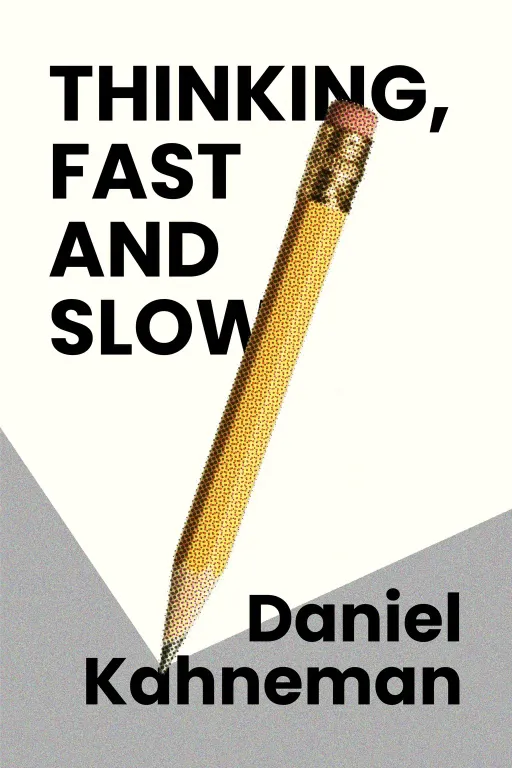
Nova: We’re drawing heavily from two seminal works: Daniel Kahneman's groundbreaking "Thinking, Fast and Slow" and Jonathan Haidt's incredibly insightful "The Righteous Mind." Kahneman, a Nobel laureate in Economic Sciences, completely revolutionized our understanding of how our minds work, challenging decades of traditional economic theory with his work on cognitive biases. His research, often in collaboration with Amos Tversky, laid the foundation for behavioral economics and earned him that Nobel Prize.
Atlas: A Nobel laureate, no less! So we're talking about heavy hitters here. What’s the core idea linking these two titans?
Nova: The core of our podcast today is really an exploration of the invisible architecture of our minds—how our decisions, beliefs, and even our morality are shaped by forces we rarely acknowledge. Today we'll dive deep into this from two perspectives. First, we'll explore the dual operating systems of our minds and the biases they create, then we'll discuss how our moral compass is fundamentally intuitive rather than rational, and finally, we'll connect these frameworks to better understand societal trends and group dynamics.
The Dual Systems of the Mind: Fast vs. Slow Thinking
SECTION
Nova: Let's start with Kahneman and "Thinking, Fast and Slow." He introduces us to two distinct systems of thinking: System 1 and System 2. Atlas, what's your gut reaction to that idea?
Atlas: Oh, I get that. It’s like when I’m driving and I just instinctively hit the brakes versus when I’m trying to solve a complex puzzle and really have to concentrate. So, System 1 is the fast, intuitive one, and System 2 is the slow, deliberate one, right?
Nova: Exactly! System 1 is our automatic pilot – fast, effortless, emotional, and often unconscious. It’s what allows you to recognize faces, understand simple sentences, or react to a sudden noise. It’s brilliant for survival and efficiency. But its speed comes at a cost.
Atlas: Hold on, what’s the cost? Because it sounds pretty good to have a fast, efficient brain.
Nova: The cost is its reliance on heuristics, mental shortcuts that can lead to predictable errors or cognitive biases. Kahneman illustrates this beautifully with countless experiments. Think about the "anchoring effect." If I ask you, "Is the tallest redwood tree more or less than 1,200 feet tall?" and then ask you to estimate its actual height, your answer will be significantly higher than if I had started with "Is it more or less than 180 feet tall?" Even though 1,200 feet is wildly off, that number acts as an anchor for your System 1.
Atlas: That’s fascinating, but also a bit sneaky. So basically, System 1 jumps to conclusions based on whatever information is most readily available, even if it's irrelevant?
Nova: Precisely. Another classic example is the "availability heuristic." We tend to overestimate the likelihood of events that are easier to recall. For instance, after seeing news reports about plane crashes, people often overestimate the risk of flying, even though statistically, driving is far more dangerous. System 1 sees the vivid images and dramatic stories, and instantly concludes it's a bigger threat.
Atlas: I can see that. That makes me wonder, how does this play out in everyday life for our listeners, especially those in high-stakes environments? For someone leading a team or making critical decisions, relying on their "gut" might feel like a strength.
Nova: It’s a double-edged sword. System 1 provides valuable intuition, but when those intuitions are based on biased information or flawed shortcuts, even experts can make irrational decisions. Kahneman’s work shows how skilled professionals—doctors, financial analysts, even judges—are susceptible to these biases. They might diagnose a rare disease because a recent case is "available" in their memory, or make investment decisions based on recent market trends rather than long-term data.
Atlas: So basically you’re saying that even our most confident, experienced decisions could be secretly swayed by these unconscious biases? That’s kind of heartbreaking, actually. What's the takeaway then? Just distrust our own brains?
Nova: Not distrust, but understand and mitigate. The beauty of Kahneman’s work is that by understanding System 1’s tendencies, we can learn to engage System 2—our slower, more logical, and effortful thinking—to check and correct those automatic impulses. It's about being aware of when to pause, reflect, and apply critical thinking, rather than blindly following our initial impressions. It's about recognizing the moments when our fast thinking might lead us astray and deliberately slowing down.
The Intuitive Roots of Morality: The Elephant and the Rider
SECTION
Nova: And that naturally leads us to the second key idea we need to talk about, which often acts as a counterpoint to what we just discussed: Jonathan Haidt's work on moral psychology, especially from "The Righteous Mind." While Kahneman shows us how our thinking is biased, Haidt reveals that our morality itself is largely driven by emotion and intuition.
Atlas: Oh, I love this. So it's not just our everyday choices, but our deep-seated sense of right and wrong that's more gut-feeling than reasoned argument?
Nova: Exactly. Haidt offers a powerful metaphor: the mind is like an elephant and its rider. The rider represents our conscious, rational reasoning—our System 2, if you will—trying to steer the elephant. But the elephant? That’s our System 1, our powerful, intuitive, emotional side. And the elephant almost always goes where it wants to go, with the rider often just trying to justify the elephant's path after the fact.
Atlas: That’s a great analogy! So the rider thinks it's in charge, but the elephant's really calling the shots. I’ve definitely felt like my emotions have dragged my logic along sometimes.
Nova: We all have. Haidt argues that our moral judgments are rarely the product of careful, dispassionate reasoning. Instead, we have an immediate, intuitive reaction to a situation—a feeling of "rightness" or "wrongness"—and then our reasoning kicks in to construct a post-hoc justification for that feeling.
Atlas: So basically you’re saying that when I argue with someone about politics, I’m not really trying to convince them with facts; I’m trying to justify my own emotional stance?
Nova: In many cases, yes. Haidt's research suggests that reasoning is primarily used for two purposes: to persuade others that our intuitive judgment is correct, and to protect our own self-image as rational, moral individuals. This offers profound insights into why political and social divisions often seem so intractable. People aren't necessarily disagreeing on facts; they're disagreeing on deeply held, emotionally charged moral intuitions.
Atlas: That makes perfect sense, especially when you look at how quickly people form opinions on complex social issues, and then dig their heels in. It's not about logic; it's about tribal identity and gut feelings.
Nova: And Haidt goes further, identifying what he calls "moral foundations"—innate psychological systems that form the basis of our moral intuitions. These include care/harm, fairness/cheating, loyalty/betrayal, authority/subversion, sanctity/degradation, and liberty/oppression. Different cultures and political ideologies prioritize these foundations differently, leading to vastly different moral landscapes.
Atlas: That’s actually really inspiring. It means that if we want to understand societal trends, or even just why our family argues at Thanksgiving, we need to look beyond the surface arguments to these deeper, intuitive moral foundations.
Nova: Absolutely. It’s about understanding that people aren't necessarily "bad" or "irrational" for disagreeing with us; they might simply be operating from a different set of moral intuitions, with their elephant being guided by different values. This perspective can foster a great deal more empathy and understanding, even if it doesn't always lead to agreement.
Synthesis & Takeaways
SECTION
Nova: So, bringing Kahneman and Haidt together, we get this incredibly rich tapestry of human behavior. Kahneman shows us how our fast, intuitive System 1 is prone to biases, influencing our decisions. Haidt then illustrates how this intuitive system is also the primary driver of our moral judgments, with reason often serving as a press secretary for our emotional elephant.
Atlas: Right, so it’s not just about knowing we think, but we think it, and we think it. It's a powerful combination for understanding everything from individual choices to global conflicts. For our listeners who crave unique insights and want to challenge conventional thinking, how can they apply these frameworks?
Nova: By recognizing that much of our behavior, and the behavior of others, isn't purely rational. When you observe a societal trend, a group dynamic, or even your own choices, ask yourself: Is System 1 at play here? What cognitive biases might be influencing this decision? And on the moral side, what moral intuitions—care, fairness, loyalty—are driving this belief or action, and how might they differ from my own?
Atlas: That’s a practical step. It's about developing a sort of meta-cognition, a thinking about thinking, to better navigate the world and our place in it. It encourages a deeper, more empathetic understanding of diverse perspectives, which is crucial for anyone interested in geopolitics, ethical philosophy, or the history of ideas.
Nova: Exactly. It's about moving beyond simply judging outcomes to understanding the underlying psychological mechanisms. It’s a profound shift in perspective, offering not just intellectual value but real-world wisdom for making sense of our complex world. The more we understand these hidden levers, the more agency we can truly claim over our decisions and beliefs.
Atlas: That’s such a hopeful way to look at it, Nova. It’s not about being powerless against our biases, but about gaining the knowledge to consciously engage our slower, more deliberate thought when it counts.
Nova: Precisely. It's about becoming more aware, more intentional, and ultimately, more in control of our own elephants. This is Aibrary. Congratulations on your growth!