

Decoding Human Behavior: Why We Do What We Do
Golden Hook & Introduction
SECTION
Nova: You know, Atlas, I was thinking about how often we talk about people being "irrational" or "making bad choices," as if it's some kind of personal failing.
Atlas: Right? Like, "Why did they fall for that obvious scam?" or "Why do I keep hitting snooze even though I know I'll be late?" It’s a constant battle, isn’t it?
Nova: Absolutely. But what if I told you that a huge chunk of those "irrational" decisions aren't failings at all, but rather the perfectly predictable outcome of how our brains are wired? That it's less about personal weakness and more about universal cognitive architecture?
Atlas: Oh, I'm listening. That shifts the blame from my morning self to my brain's operating system, which feels oddly comforting. So, are we talking about some grand conspiracy of the mind, or just… how we're built?
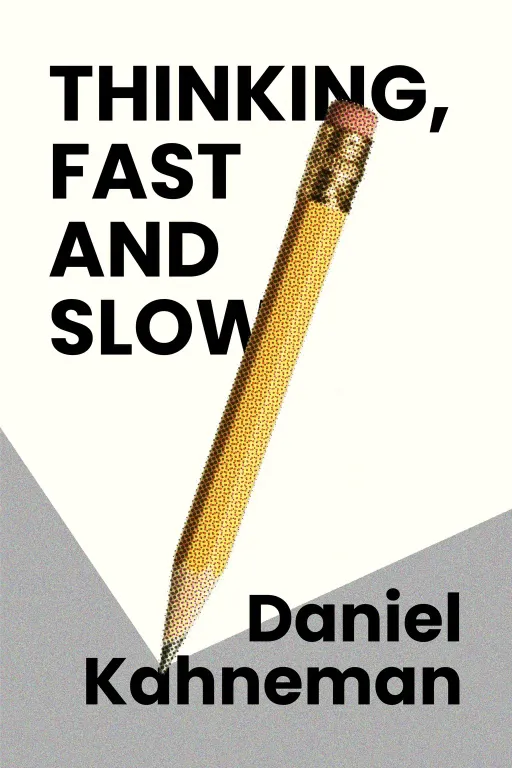
Nova: More the latter, actually. And it’s a concept brilliantly unpacked by two foundational texts that, when read together, give you an almost X-ray vision into human behavior. Today, we're diving into the profound insights of Daniel Kahneman's "Thinking, Fast and Slow" and Robert Cialdini's "Influence: The Psychology of Persuasion."
Atlas: Kahneman, the Nobel laureate. And Cialdini, who famously infiltrated compliance professions to learn their secrets. These aren’t just academic theories then; these are battle-tested insights into how our minds truly work. I imagine a lot of our listeners, especially those navigating complex career paths or trying to build something new, are constantly trying to understand why people—including themselves—make the choices they do.
Nova: Exactly! Kahneman, with his deep background in cognitive psychology, revolutionized our understanding of decision-making. His work, often in collaboration with Amos Tversky, completely upended traditional economics by showing that humans aren't the purely rational actors we often assume. And Cialdini's "Influence" is a masterclass in the practical application of those psychological levers, so powerful that it's required reading for anyone in sales, marketing, or even just trying to get their kids to clean their room.
Atlas: And I've heard Kahneman's book, in particular, was incredibly challenging to write, taking him years to synthesize decades of research into something so accessible. It's truly a monumental work in psychology.
Nova: It is! And the beauty of putting them side-by-side is that Kahneman gives you the "why" — the underlying machinery of the mind — and Cialdini gives you the "how" — how those mechanisms are leveraged in the real world. It’s like understanding both the engine and the driving techniques.
Atlas: That makes me wonder, how much of our daily lives are just these psychological principles playing out, often without us even realizing it?
The Dual Systems of Thought
SECTION
Nova: So, let's start with Kahneman's revolutionary concept: the two systems that drive our thinking. He simplifies our cognitive processes into System 1 and System 2. Think of System 1 as your intuition, your gut reaction. It’s fast, automatic, emotional, and requires little to no effort.
Atlas: Oh, I know that feeling. It’s the part of my brain that decides to hit "add to cart" after seeing one cool ad, or slams on the brakes without consciously thinking about it.
Nova: Precisely! It's what allows you to recognize a familiar face, understand simple sentences, or detect hostility in a voice. It’s constantly running in the background, generating impressions, intuitions, and feelings. It's incredibly efficient, but it's also prone to biases and quick judgments.
Atlas: So, it’s the brain's autopilot, great for routine tasks but maybe not for navigating complex decisions. But if that's System 1, what's System 2 doing?
Nova: System 2 is the more deliberate, effortful part of your mind. It’s what you use for complex calculations, focusing your attention in a crowded room, or filling out a complicated form. It’s logical, analytical, and requires conscious mental energy.
Atlas: Ah, that’s the part that kicks in when System 1 gets overwhelmed, or when I'm trying to figure out a tough problem at work. It feels like a mental workout.
Nova: It absolutely is. And here's the crucial part: System 1 is always active, constantly suggesting ideas and impressions to System 2. System 2, being lazy, often just accepts these suggestions without much scrutiny. It only mobilizes when System 1 runs into trouble or when the stakes are high.
Atlas: That makes so much sense! It explains why we can be so easily swayed by emotional appeals or snap judgments, even when we we're being rational. Our System 1 has already made up its mind before System 2 even gets a chance to weigh in.
Nova: Exactly. Think about a time you bought something because it "felt right," even if the numbers didn't quite add up. Or how you might instantly dislike someone based on a first impression, before you've gathered any real evidence. That's System 1 in action, often bypassing System 2's critical analysis.
Atlas: So, the challenge isn't that we be logical, but that our brains are designed to take mental shortcuts most of the time, to conserve energy. That’s a powerful insight, especially for someone trying to make sense of their own decisions or understand team dynamics. It means we're all susceptible.
The Six Principles of Persuasion
SECTION
Nova: And this is where Cialdini steps in, showing us how these inherent cognitive shortcuts, particularly System 1's tendencies, are masterfully exploited for persuasion. He identified six universal principles, almost like psychological levers.
Atlas: Okay, so if Kahneman explained the machinery, Cialdini found the buttons. Lay them on me.
Nova: First,. We feel obligated to return favors. If someone gives you something, you're more likely to give something back. Think about free samples at a grocery store, or even a small gift from a salesperson. It creates an almost unconscious debt.
Atlas: Oh man, that's powerful. It's like when a colleague helps you out with a small task, and suddenly you feel compelled to go above and beyond for them later. It's not even a conscious agreement.
Nova: Right? Your System 1 registers "they gave me something," and it triggers a feeling of obligation, often before System 2 can rationalize it away. Then there's. Once we make a small commitment, we feel pressure to be consistent with that commitment, even if it's not entirely logical.
Atlas: So, like signing a petition, and then being more likely to donate to that cause later? Or agreeing to a small task, and then finding yourself doing a much larger one?
Nova: Precisely. It's why salespeople often start with a small request. It gets your foot in the door, and then your internal drive for consistency takes over. The third is. We're herd animals. We look to others to determine what's correct or appropriate behavior, especially when we're uncertain.
Atlas: Ah, the classic "everyone else is doing it" phenomenon. Online reviews, best-seller lists, or even just seeing a crowded restaurant. It's System 1 saying, "If so many people like it, it must be good."
Nova: Exactly. It's a powerful shortcut. Then,. We tend to obey authority figures, or even symbols of authority, like uniforms or titles. Our System 1 is wired to trust perceived experts.
Atlas: That's a scary one, honestly. It shows how easily people can be led, even against their better judgment, if the request comes from someone in a position of perceived power.
Nova: Then comes. We're more easily persuaded by people we like. This isn't just about attractiveness; it's about similarity, compliments, and cooperation. If you feel a connection, you're more open to influence.
Atlas: So, the friendly salesperson who finds common ground with you, or the charismatic leader. It’s not just about their message, but about how much we them.
Nova: And finally,. Opportunities seem more valuable when their availability is limited. "Limited time offer!" "Only three left in stock!" This creates a sense of urgency.
Atlas: Oh, the classic FOMO! Fear of Missing Out. My System 1 panics, thinking "I have to get it now before it's gone!" without fully evaluating if I even need it.
Nova: Exactly! These six principles, when understood, are everywhere. They're not inherently good or bad; they're simply powerful tools that leverage our natural cognitive architecture. For someone navigating career choices or building strategies, understanding these principles is like having a superpower.
Synthesis & Takeaways
SECTION
Nova: So, what does this all mean for us, Atlas, and for our listeners who are explorers, analysts, and cultivators of growth? The core of our podcast today is really an exploration of self-awareness and strategic thinking.
Atlas: It’s a profound realization that our own minds are not always our most reliable narrators. It's like discovering your internal operating system has these incredibly efficient, but sometimes flawed, default settings. For those of us trying to find our path or build something new, it's critical to understand that our decisions, and the decisions of others, are often less about pure logic and more about these powerful, subconscious drivers.
Nova: Absolutely. The tiny step we suggested—observing a conversation or decision-making process through the lens of System 1 vs. System 2, or Cialdini’s principles—is incredibly illuminating. You start to see the hidden levers at play, not just in others, but in your own reactions, your own "gut feelings."
Atlas: That gives me chills, actually. It takes away the mystery from a lot of human interactions and turns it into something understandable. It’s not about being cynical; it’s about being truly aware. And the deep question, "How can this help identify career opportunities or build effective strategies?" Suddenly, the answer feels less abstract.
Nova: It becomes very concrete. If you understand how scarcity drives action, you can frame your skills or your startup's offering in a way that resonates. If you understand social proof, you know the power of testimonials. And if you understand your own System 1 biases, you can build in checks and balances to make more deliberate, System 2-driven decisions when it truly matters.
Atlas: So, it's really about embracing this uncertainty and using it as fertile ground. Instead of being victims of our own psychology, we can become architects of our choices. It's about knowing when to trust your gut, and when to slow down and let System 2 do the heavy lifting.
Nova: Precisely. It's about finding that balance. Because while System 1 is efficient, it's System 2 that allows for true wisdom and long-term strategic thinking. The more you understand these mechanisms, the more effectively you can navigate the world, whether you're seeking meaning, exploring new industries, or building practical business strategies.
Atlas: It's empowering, actually. It changes the narrative from "I should try harder" to "I should understand better." That's a truly valuable insight.
Nova: It is. And that understanding is the first step toward genuine personal evolution and growth.
Atlas: This is Aibrary. Congratulations on your growth!









