Beyond the Sale: Mastering Persuasion through Human Psychology.
Golden Hook & Introduction
SECTION
Nova: Atlas, what's the first thing that comes to mind when I say 'sales psychology'?
Atlas: Uh, probably a guy in a too-shiny suit trying to convince me I an extended warranty on a toaster.
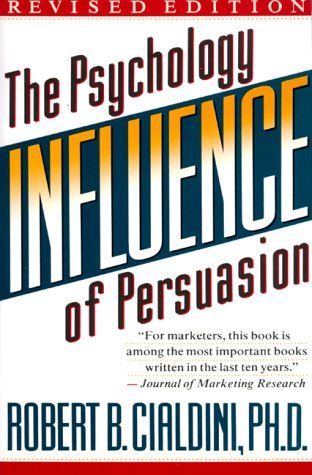
Nova: Excellent! And that, my friend, is exactly what we're going to dismantle today. Because what if I told you that mastering persuasion isn't about slick tactics or manipulation, but about deeply understanding human decision-making? Today, we're diving into two foundational texts that redefine how we think about influence: Robert Cialdini's seminal work, "Influence," and Daniel Kahneman's groundbreaking "Thinking, Fast and Slow." What's fascinating about Cialdini's research is that he didn't just theorize; he spent years going undercover, immersing himself in various industries—from door-to-door sales to fundraising organizations—to observe persuasion in its natural habitat. He literally became a 'compliance professional' to understand the tactics from the inside out. And Kahneman, of course, won a Nobel Prize for his work in behavioral economics, showing us the inner workings of our minds.
Atlas: Wow, "compliance professional" sounds a little ominous. So we're talking about ethical Jedi mind tricks, not just selling more stuff? That's going to resonate with anyone who's trying to lead a team without feeling like they're constantly 'selling' their vision.
Cialdini's Ethical Influence: Beyond Manipulation
SECTION
Nova: Precisely. And that's where Cialdini's work becomes so powerful, especially for leaders. He identified six universal principles of persuasion, not as tools for manipulation, but as fundamental human drivers. Let's start with Reciprocity. This is the idea that we feel compelled to return favors. If someone gives us something, we feel obligated to give back. Think about those free samples at the grocery store.
Atlas: Oh, I know that feeling! I always end up buying something, even if I didn't intend to. It's like my brain says, "They gave you a tiny sausage, you owe them a whole pack of mini hot dogs!"
Nova: It's exactly that. But on an ethical leadership level, it means genuinely helping someone first, offering value without immediate expectation. If you, as a leader, consistently provide support, mentorship, or resources to your team, they're far more likely to reciprocate with loyalty, hard work, and going the extra mile. It builds a bank of goodwill.
Atlas: Okay, but wait, isn't that just a fancy word for psychological trickery if not done genuinely? How do you use that responsibly when you're trying to build a cohesive team, not just close a deal?
Nova: That's the critical distinction. Ethical reciprocity isn't about a transactional ledger; it's about establishing a culture of generosity. It's offering help because you genuinely want to see your team succeed, not because you're calculating a return. When it's authentic, it fosters trust and a sense of shared purpose. Then there's Social Proof. We tend to follow what others are doing, especially if those others are similar to us. It's why we look at reviews before buying something, or why we follow trends.
Atlas: Right, like when you're trying to decide on a restaurant and see one that's packed versus one that's empty. Your brain automatically assumes the packed one is better, even if you don't know why.
Nova: Exactly. For leaders, this means highlighting team successes, showcasing positive behaviors, and celebrating achievements. When a team member sees their peers embracing a new strategy and succeeding, it acts as powerful social proof, making them more likely to adopt it too. It's about creating a positive collective example.
Atlas: That makes sense. So instead of just people to do something, you them others successfully doing it. But what about Authority? That one feels a bit more top-down, which can be tricky in a flat organizational structure.
Nova: Authority isn't just about hierarchical power. It's about credibility, expertise, and trustworthiness. Cialdini shows that we're more likely to be persuaded by someone we perceive as knowledgeable or legitimate. Think about doctors in lab coats, or even just someone who clearly knows their stuff.
Atlas: So it's not just about the title, but about demonstrating competence and integrity?
Nova: Exactly. As a leader, it's about communicating your expertise clearly, being transparent about your decision-making process, and showing that you've done your homework. It's also about leveraging the authority of others – bringing in experts, citing credible sources, or showing how a strategy aligns with industry best practices. It's about building belief in your vision, not just demanding compliance.
Kahneman's Dual-System Thinking: Appealing to Logic and Intuition
SECTION
Nova: And that naturally leads us to the second key idea we need to talk about, which often explains Cialdini's principles work so effectively: Daniel Kahneman's dual-system thinking. Kahneman, along with Amos Tversky, revolutionized our understanding of how we make decisions. He proposed that we have two systems of thought: System 1 and System 2.
Atlas: Okay, so what's the difference between System 1 and System 2? Are we talking about our conscious and subconscious minds?
Nova: You're close! System 1 is fast, intuitive, emotional, and automatic. It's what makes you flinch at a sudden loud noise, or recognize a familiar face instantly. It's constantly running in the background, making quick judgments. System 2 is slow, logical, deliberate, and effortful. It's what you engage when you're solving a complex math problem, or carefully weighing the pros and cons of a major decision.
Atlas: So System 1 is like our gut reaction, and System 2 is our rational brain. I can see how that plays out every day. My System 1 wants another slice of pizza, but my System 2 reminds me of my workout this morning.
Nova: Precisely. Now, here's where it gets powerful for leaders: Cialdini's principles often tap into System 1. Reciprocity, social proof, liking—these activate our intuitive, emotional responses. We obligated, we reassured, we connected.
Atlas: That makes perfect sense! So if System 1 is doing most of the heavy lifting, how do I, as a leader, make sure I'm not accidentally triggering System 1 fear when I need System 2 buy-in for a big, complex project? Or conversely, how do I tap into System 1's quick agreement when I need swift action?
Nova: That's the art of it. When you need buy-in for a complex strategic change, you need to engage System 2. That means providing clear data, logical arguments, detailed plans, and ample time for discussion and questions. You need to present the information in a way that allows people to process it deliberately. However, to get people to on that strategy, you might need to tap into System 1. You can do this by creating a compelling narrative, showing the emotional impact of the change, or leveraging social proof by highlighting early adopters who are seeing success.
Atlas: So, if I'm introducing a new, potentially disruptive technology to my team, I'd present the logical benefits, the ROI, the long-term strategic advantage for System 2. But then, to get them excited and overcome initial inertia, I'd bring in an early success story from another department, showing how it made lives easier, tapping into that System 1 emotional resonance and social proof.
Nova: You've got it. It's about understanding which system you're appealing to at any given moment and framing your communication accordingly. When you're trying to resolve a conflict, for instance, you might need to acknowledge the emotional, System 1 reactions first – validate feelings, create a sense of safety – before you can engage System 2 to logically work through solutions. It's about leading with empathy and then building a rational bridge.
Synthesis & Takeaways
SECTION
Nova: So, what's the big takeaway from all this, Atlas? How do we bring these powerful psychological insights into our daily leadership?
Atlas: It feels like the ultimate empathetic leadership tool. It's not about forcing people, but understanding them so well that the "ask" feels like their own best idea. It's about aligning their natural human drives with the collective goals, which is crucial for a team architect.
Nova: Exactly. For our listeners leading teams, preparing for that next big pitch, or even just trying to build stronger relationships, here’s your tiny step: Next time you’re in a conversation, identify one of Cialdini’s principles – maybe reciprocity, by offering genuine value first, or social proof, by sharing a success story from a peer – and consciously incorporate it.
Atlas: And pay attention to whether you're speaking to their immediate gut reaction or their thoughtful, deliberative mind. That simple awareness can transform your influence, helping you delegate more effectively and empower your team to rise, as our user profile might say.
Nova: Absolutely. Ethical persuasion is about clarity, connection, and ultimately, building trust that leads to mutually beneficial outcomes. It’s about making the decision feel natural and beneficial.
Atlas: This is Aibrary. Congratulations on your growth!