Beyond the Code: Mastering the Art of Influence and Persuasion in Cybersecurity.
Golden Hook & Introduction
SECTION
Nova: Atlas, five words. Describe the biggest hurdle in cybersecurity leadership today.
Atlas: Technical genius, human skills gap.
Nova: Ooh, I like that. Mine: "Code is king, people are emperors."
Atlas: That's a good one too! But it hints at something I think many of our listeners, the architects of defense, wrestle with. We're often told technical mastery is everything.
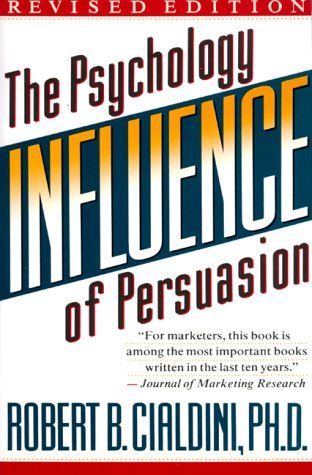
Nova: Absolutely. And today, we're diving headfirst into why that's only half the story, drawing insights from two titans of human behavior. We're talking about Robert Cialdini’s and Daniel Kahneman’s.
Atlas: Kahneman, Nobel Prize winner, right? And Cialdini... I remember reading that he literally went undercover for years, immersing himself in sales and marketing to understand how people are persuaded. That’s some serious dedication.
Nova: It is! He spent three years doing that, not just observing, but participating in sales training programs, advertising agencies, fundraising organizations. He wanted to understand the psychology of compliance from the inside out. His book is a direct result of that deep-dive, and it’s become a cornerstone for anyone looking to genuinely understand human behavior, not just manipulate it. And then Kahneman’s work unpacks how our brains actually make decisions, often irrationally. It’s a powerful combo.
Atlas: I’m curious, though. For our listeners who are focused on building robust defenses and designing enduring solutions in cybersecurity, how do these seemingly non-technical books apply? How do they help someone secure a network?
Nova: That’s the core of it, isn't it? It’s not just about firewalls and intrusion detection systems anymore. It’s about influencing the people behind the keyboards, the executives in the boardrooms, and the policy-makers in government. It's about leading beyond the technical.
The Human Element in Cybersecurity: Beyond Technical Mastery
SECTION
Nova: The cold, hard fact in cybersecurity today is this: advancing to higher roles, shaping policy, even just getting your brilliant security initiatives implemented, isn't just about how technically skilled you are. It’s about influencing people.
Atlas: For someone who builds robust defenses, that sounds almost… soft. How does "influencing people" actually build a stronger firewall or make a system more resilient?
Nova: Let me paint a picture. Imagine a brilliant, technically flawless security architect. They design this incredible new protocol, perfectly engineered to stop the next big threat. It’s a masterpiece of code. But when they present it to the executive team, who are non-technical, they use all the jargon, focus purely on the technical superiority, and don't explain the business value. They don't build consensus among department heads who see it as an inconvenience.
Atlas: So, the "robust defense" they built was technically sound, but practically useless because they couldn't "sell" it? That’s a stark reality check. I imagine many of our listeners, who design enduring solutions, have faced similar frustrations when their brilliant technical plans hit a brick wall of human resistance.
Nova: Exactly! The architect understood the code, but not the boardroom. The biggest threats often aren't just technical vulnerabilities, but human ones. Phishing attacks, insider threats, or simply a lack of buy-in for crucial security updates because no one understood they mattered. You can have the best technology in the world, but if people aren't persuaded to use it, or if stakeholders aren't convinced to fund it, it's just shelfware.
Atlas: That’s a powerful point. It really highlights that strategic foresight isn't just about anticipating technical threats, but anticipating human reactions.
Nova: It absolutely is. It's about understanding the psychology of your users, your colleagues, your leadership. It’s about inspiring teams and building consensus. That’s the real frontier of cybersecurity leadership: leading beyond the technical.
Cialdini's Principles: A Toolkit for Cybersecurity Influence
SECTION
Nova: And this is where Cialdini's becomes our secret weapon. He breaks down six universal principles of persuasion, and they're invaluable for gaining buy-in. Let's start with 'Authority' and 'Social Proof.'
Atlas: Okay, Authority makes sense in security – you're often the expert, the CISO, the architect. But 'Social Proof'? You mean like, 'everyone else is doing it, so you should too'?
Nova: Precisely. Let's take that CISO example. A CISO presents a new security policy, like mandatory multi-factor authentication. Their title and expertise lend inherent weight – that's 'Authority.' But it's not just about pulling rank. It's about demonstrating authority.
Atlas: How do you do that effectively, though? It’s easy to say "I'm the expert," but harder to get people to genuinely listen and act.
Nova: Here’s a case study: A security team needs to implement MFA across the entire organization. Instead of just sending out a technical mandate from the IT department, the CISO records a short, concise video. In it, they explain MFA is crucial, sharing a real, anonymized story of a recent breach that was prevented specifically because MFA was in place. They then show how simple and quick it is to set up. Their clear, confident communication, combined with a demonstrated understanding of the users' potential pain points, leverages 'Authority' effectively. They’re not just telling, they’re teaching and empathizing.
Atlas: That’s a clever approach. It moves beyond just a directive.
Nova: Now, layer 'Social Proof' on top of that. Following the CISO's video, the security team then shares internal statistics, again anonymized, showing that 90% of a high-performing department—let's say, the R&D team, known for being tech-savvy but also time-crunched—has already adopted MFA and experienced no disruption.
Atlas: Ah, so it’s not just "do this because the boss said so," it’s "do this because the boss, who knows their stuff, explained why, and look, everyone else is already benefiting from it." That’s a powerful one-two punch. I can see how that bypasses some of the typical resistance we see when new security measures are rolled out. It really makes sense for our listeners who are driven to protect, and are thinking about mentorship frameworks. This is about empowering others through effective communication, just like you mentioned in my growth recommendations. It’s not about forcing, but about guiding.
Nova: Exactly. And let’s throw in 'Reciprocity.' If you want someone to do something for you, what do you usually do first?
Atlas: Offer them something? A favor?
Nova: Exactly. In cybersecurity, it might mean offering proactive, user-friendly security training that feels genuinely helpful, or streamlining systems to make them easier to use you ask for their compliance on a new, potentially inconvenient policy. Give value first, and people are far more likely to reciprocate. It creates a sense of obligation, but in a positive way.
Kahneman's Biases: Framing Arguments and Anticipating Resistance
SECTION
Nova: Now, even with Cialdini's principles, people still resist. That’s where Kahneman’s becomes indispensable, showing us the two systems of thinking that govern our decisions.
Atlas: System 1, the fast, intuitive, emotional one, and System 2, the slow, logical, deliberate one, right? So, people often make security decisions based on gut feelings, even when they shouldn't?
Nova: Precisely. System 1 is a fantastic shortcut, but it's prone to biases. Take 'availability bias.' If a team leader just read a headline about a massive data breach affecting a competitor, they're far more likely to approve a security budget increase, even if their own internal risk assessment hasn't fundamentally changed. The information about the breach is vividly 'available' in their mind, influencing their System 1.
Atlas: That’s so true! We operate on what’s top of mind. So how do you use that knowledge to frame arguments more effectively for, say, a budget request?
Nova: Let’s look at a security team needing a budget increase for a new threat intelligence platform.
Atlas: Okay, I’m listening. This is a common battle.
Nova: Bad framing would be: "We need $200,000 for a new platform to mitigate a 0.01% risk of a specific type of ransomware." That’s too abstract, too academic. System 2 has to work really hard to process that, and System 1 just hears "expensive for something unlikely."
Atlas: And probably tunes out.
Nova: Exactly. Now, good framing, leveraging Kahneman, would be: "Investing $200,000 now prevents an average of $5 million in potential recovery costs from ransomware attacks, which are up 300% this year. We've seen similar companies in our sector hit hard, leading to months of operational downtime and significant reputational damage."
Atlas: That's a huge difference! The second one appeals to System 1's fear of loss and vivid examples, and then System 2 can quickly grasp the cost-benefit analysis. It's like you're speaking directly to their subconscious fears and then giving their rational brain a clear path forward. It makes me think about my own decision-making sometimes.
Nova: It’s not about tricking people. It’s about presenting critical information in a way that truly resonates and gets the right decisions made for everyone’s protection. Understanding these biases is paramount for strategic influence and ethical leadership, ensuring your message isn't lost in translation or ignored due to cognitive shortcuts.
Atlas: So, you’re not just building robust defenses with code, but also by understanding the human psyche that interacts with that code. That’s a profound shift.
Synthesis & Takeaways
SECTION
Nova: So, what we've discovered today is that the cybersecurity leader of tomorrow isn't just a brilliant coder or a meticulous network architect; they're a master psychologist, a subtle influencer, a strategic communicator.
Atlas: It really shifts the perspective from "how do I build the most impenetrable wall?" to "how do I get everyone to help me build and maintain it?" It’s about people, ultimately.
Nova: Exactly. The tiny step we recommend for our listeners this week is to identify one principle of influence from Cialdini's work – maybe reciprocity, or social proof, or even authority – and plan how you might subtly apply it in your next cross-functional meeting. Observe the reaction. See the difference in how your ideas are received.
Atlas: That's actually a super practical challenge. Instead of just focusing on the technical specs of a project, think about the human element: "What value can I offer first?" or "Who are the early adopters I can highlight to create social proof?"
Nova: And remember, this isn't about manipulation. It's about ethical leadership, shaping the cybersecurity landscape responsibly, and empowering the next generation by understanding how humans truly operate. The most robust defenses are built not just with code, but with consensus and understanding.
Atlas: It’s a powerful reminder that our greatest strengths often lie in our softest skills, and that to truly protect, we must first persuade.
Nova: Absolutely. This is Aibrary. Congratulations on your growth!