Beyond the Balance Sheet: The Hidden Power of Behavioral Finance
Golden Hook & Introduction
SECTION
Nova: What if I told you that the smartest person in the room, with all the data and spreadsheets, is probably making irrational financial decisions right now? And so are you.
Atlas: Whoa, Nova. That's a bold claim right off the bat! I like to think I’m pretty rational, especially with money. Aren't we all? We look at the numbers, we make the logical choice. That's the whole point, right?
Nova: That's what we tell ourselves, Atlas. But the truth is, our financial choices are deeply swayed by hidden biases and environmental cues, often without us even realizing it. Ignoring these blind spots can lead to some incredibly costly mistakes, and understanding them is actually key to building true wealth.
Atlas: So you're saying it's not just about crunching numbers, it's about understanding ourselves? For someone who's constantly trying to connect the dots and see the big picture, this feels like a crucial missing piece. What field are we even talking about here?
Nova: We're diving deep into the fascinating world of behavioral finance, a field that marries psychology with economics. It's a discipline that really took off thanks to the groundbreaking work of brilliant minds like Richard Thaler and Daniel Kahneman, both of whom have been recognized with Nobel Prizes for illuminating these very human quirks that impact our money. It shows us that economics isn't just about supply and demand on a spreadsheet, but about the messy, beautiful reality of human behavior.
Atlas: Nobel Prizes in economics for talking about human behavior? That's definitely seeing around corners. I'm intrigued. So, let's pull back the curtain on these hidden forces.
Nova: Absolutely. Let's start with what we call 'The Blind Spot.'
The Blind Spot: Why Rationality Fails Us in Finance
SECTION
Nova: The traditional view of finance assumes we're all perfectly rational actors, always making decisions that maximize our utility. But behavioral finance tears that idea apart. It reveals that our minds are wired with these financial shortcuts. We often assume we're making purely logical decisions, but our choices are deeply swayed by emotions, cognitive biases, and even the way options are presented to us.
Atlas: Okay, but what are these hidden biases? I mean, I'm an analyst, I thrive on data. What kind of irrationality are we talking about here that can actually sneak past a strategic mind?
Nova: Think about it this way: Daniel Kahneman, in his seminal work, talks about two systems that drive our thinking. System 1 is fast, intuitive, and emotional. It's what makes you swerve to avoid an accident or feel an immediate urge to buy something shiny. System 2 is slow, deliberate, and logical. It's what you use to solve a complex math problem or plan your retirement.
Atlas: So System 1 is basically my gut reaction, and System 2 is my spreadsheet brain?
Nova: Exactly! And here's the kicker: our financial choices are often dominated by that quicker, less rational System 1. Imagine someone checking their investment portfolio every hour during a market dip. System 1 screams "Panic! Sell everything!" even though System 2, if given the chance, would calmly remind them of their long-term strategy. The emotional pull to can override all logic.
Atlas: Oh, I know that feeling. It's like seeing a "limited time offer" and feeling an immediate pressure to buy, even if you don't need it. But how does that translate to mistakes for someone focused on building wealth? Is it just impulse buys, or something more systemic?
Nova: It's far more systemic. It's why people hold onto losing stocks for too long, hoping they'll rebound, a bias known as the "disposition effect." It's why we often under-save for retirement, because the immediate gratification of spending today outweighs the abstract benefit of future security. That System 1 preference for the now over the later can erode decades of potential wealth accumulation. It's not a lack of intelligence; it's a fundamental aspect of human psychology.
Atlas: That's a bit unsettling. So, I get the 'blind spot' idea now. But how do we even these blind spots in our financial routines? For someone who's always connecting dots, this feels like an invisible enemy. How do we fight something we can't see?
Nova: That's the profound insight, Atlas. We don't necessarily fight it directly with willpower. Instead, we learn to design around it. If our minds are wired with these shortcuts, the real shift is recognizing that we can design our environments to make better choices, rather than just relying on that often-failing willpower.
The Nudge & The Systems: Designing Better Financial Decisions
SECTION
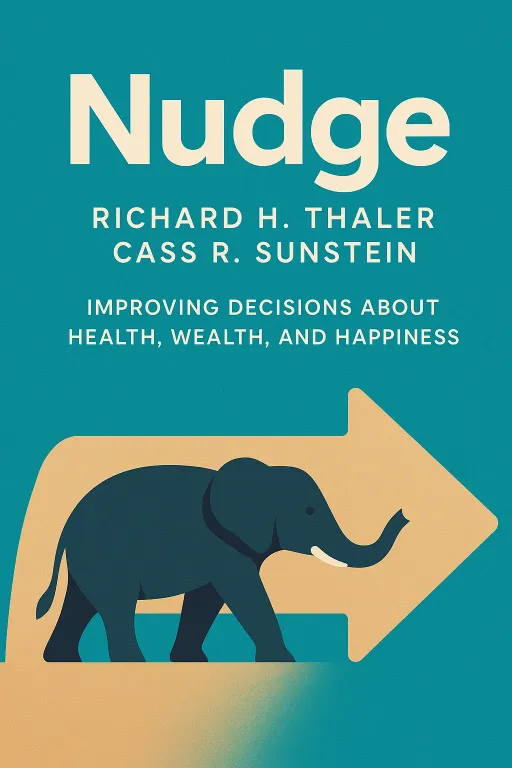
Nova: And that naturally leads us to the second key idea we need to talk about: if our minds are wired with these shortcuts, how do we design our financial world to work that wiring, instead of against it? This is where the concept of 'nudges' comes in, a term popularized by Richard Thaler and Cass Sunstein.
Atlas: Nudges? So, it's not about brute-force willpower, but about setting up the environment? Like, 'don't leave the cookie jar on the counter?' How does that translate to finance? Is it really that simple?
Nova: It can be surprisingly simple, and incredibly effective. Thaler and Sunstein show how 'choice architecture' subtly guides our decisions. Think about retirement savings. Traditionally, you had to actively to a 401k or similar plan. That's a System 2 decision – it requires effort, paperwork, and thinking. Many people procrastinated, never got around to it.
Atlas: And I imagine a lot of our listeners, especially those in fast-paced roles, can relate to the difficulty of adding another 'to-do' to their plate, even if it's important.
Nova: Exactly. But what happened when companies switched to an system? Meaning, you're automatically enrolled in the retirement plan unless you specifically choose to be. Suddenly, participation rates skyrocketed. The default setting, that subtle 'nudge,' completely transformed people's financial futures without them having to exert any extra willpower. It's a small, seemingly insignificant factor that had a massive impact on financial outcomes.
Atlas: That's fascinating. So, for someone driven by growth and impact, this isn't just about personal discipline; it's about strategic design, about 'cultivating' the right financial environment. It's about making the easy choice the choice. That sounds like a game-changer for building personal wealth.
Nova: It absolutely is. It's about understanding that people will often follow the path of least resistance. So, if you want better financial outcomes, make the path of least resistance lead to those outcomes. Automate your savings. Set up direct deposits to investment accounts. Make it harder to access emergency funds for non-emergencies. These are all subtle nudges you can build into your own financial architecture.
Atlas: But could 'nudges' be manipulative? I mean, where's the line between helping people make better choices and subtly controlling them? For a strategist, intent matters.
Nova: That's a critical question, and it's why behavioral finance emphasizes transparency and alignment with long-term well-being. A good nudge is one that helps people achieve what they want for themselves if they were thinking purely with System 2 – their rational, future-focused self. It's about empowering better decisions, not tricking people into something they don't want. It's about making the default option the most beneficial one.
Synthesis & Takeaways
SECTION
Nova: So, what we've really explored today is the hidden power of behavioral finance. It’s the profound insight that true financial mastery isn't just about understanding markets or balance sheets; it's about understanding the complex, often irrational human operating system that interacts with them. It’s about leveraging that knowledge to design better outcomes for ourselves.
Atlas: I totally agree. It’s a complete shift in perspective. Instead of battling our own nature, we can work with it. So, for our listeners, especially those who are strategists, who are always looking for an edge, where in their daily financial routine might a small 'nudge' lead to a significantly better outcome in the long run? What's one thing they can do this week?
Nova: Here's a simple one: automate a small, regular transfer from your checking account to a dedicated savings or investment account. Even if it's just $25 a week, that small, effortless 'nudge' will build up significantly over time. You won't miss the money, and your future self will thank you. It's about trusting your inner wisdom, as your growth recommendations suggest, and then setting up your world to support that wisdom.
Atlas: That's excellent. It really brings home the idea that building personal wealth and securing your future isn't just about grand gestures or complex financial models. It's about these small, consistent, behaviorally-informed actions. It's about designing your way to prosperity, not just willing your way there.
Nova: Exactly. It's a reminder that the most powerful financial tool you possess isn't a spreadsheet; it's your own mind, and understanding how it works.
Atlas: That's a perfect way to put it. This is Aibrary. Congratulations on your growth!