Beyond the Algorithm: Understanding Human Behavior for True Connection.
Golden Hook & Introduction
SECTION
Nova: There's a common belief that we're all rational actors, making logical choices based on facts and figures.
Atlas: Oh, I know that feeling. The idea that if you just present the data, people will naturally come to the right conclusion. It's a comforting thought.
Nova: Exactly. But what if that's completely wrong? What if most of our decisions are actually made by a fast, intuitive system we barely understand, often working our best rational intentions?
Atlas: Wait, are you saying our brains are actually working against us sometimes? That sounds a bit out there, but I'm intrigued. For anyone trying to get their ideas heard or build a network, this sounds like a critical blind spot.
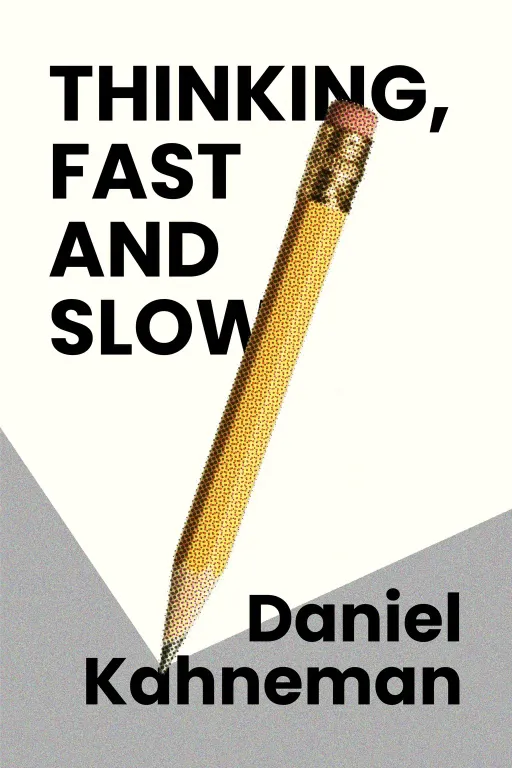
Nova: It is, Atlas, and it's precisely what our book for today, "Beyond the Algorithm: Understanding Human Behavior for True Connection," dives into. It’s a fantastic synthesis of groundbreaking work, particularly from two titans in the field. We're talking about Daniel Kahneman, whose seminal work "Thinking, Fast and Slow" introduced the world to these dual operating systems of the mind. He actually won a Nobel Prize in Economic Sciences for his work on prospect theory, demonstrating how deeply psychological factors influence our economic decisions – a truly groundbreaking achievement that fundamentally challenged the long-held belief in rational economic agents.
Atlas: That’s a bold claim, winning a Nobel for basically saying, "Hey, people aren't always rational." But it makes me wonder, if we're all walking around with these hidden biases, how does that impact how we connect, how we sell our ideas, or even how we just communicate effectively?
Nova: It impacts everything. And that's where we start today, by peeling back the layers of this fascinating "blind spot" in our own decision-making.
The Blind Spot: Unpacking Unconscious Biases
SECTION
Nova: So, Kahneman's big idea, simplified, is that our minds operate with two systems. System 1 is fast, intuitive, emotional, and largely unconscious. It's what tells you to slam on the brakes, or gives you that gut feeling about someone. System 2 is slow, deliberate, logical, and takes effort. It's what you use to solve a complex math problem or plan your next quarter.
Atlas: I can see that. It’s like the difference between a reflex and a deep strategic thought. But where does the "irrational" part come in? I mean, shouldn't System 2 always kick in and correct System 1 if it's going off the rails?
Nova: You'd think so, wouldn't you? But System 1 is lazy, and System 2 is expensive in terms of mental energy. So, System 1 often makes quick, biased judgments, and System 2, rather than correcting them, often just rationalizes them after the fact. One of the clearest examples of this is the "anchoring effect."
Atlas: The anchoring effect? I'm curious. Give me a scenario where System 1 completely overrules System 2, especially for someone trying to make a smart decision.
Nova: Imagine you're negotiating a price for a new project, or even a car. The first number mentioned, the "anchor," even if it's completely arbitrary, disproportionately influences the final outcome. Let’s say you're buying a used car. The seller throws out a ridiculously high price, say $30,000, even though the car is probably worth $20,000. Your System 1 latches onto that $30,000.
Atlas: Oh, I see. So the cause is the initial number. Then my System 1 quickly processes it, and even if I logically know it's too high, that number becomes a mental benchmark.
Nova: Precisely. The process is that your intuitive System 1 establishes that high number as a reference point. And the outcome? Even if you negotiate them down to $25,000, you feel like you got a deal, even though you might have paid $5,000 more than the car is actually worth. Your System 2 might try to justify it, but the anchor pulled you in.
Atlas: That's actually really powerful. But for someone who prides themselves on being autonomous and analytical, how do you even your own System 1 at work? It sounds like a hidden enemy. And how does this impact how someone information, say, when I'm introducing a new product or service?
Nova: It’s not an enemy, Atlas, more like a co-pilot you need to understand. The first step is awareness. Biases like confirmation bias—where we seek out information that confirms what we already believe—or the availability heuristic—where we overestimate the likelihood of events that are easily recalled—are System 1 at play. When you're introducing your work, if you don't account for these, people might filter your message through their existing beliefs or focus on the most easily recalled, but not necessarily relevant, information. Your brilliant new idea might just bounce off their System 1's preconceived notions.
The Influence Playbook: Leveraging Persuasion Principles
SECTION
Nova: Once we start to understand these deep-seated biases, we can then look at how they're often leveraged, sometimes unconsciously, through predictable principles of persuasion. This brings us to another foundational work that "Beyond the Algorithm" draws from: Robert Cialdini's "Influence." Cialdini actually spent years going undercover, working in sales jobs and marketing firms, to study how influence works in the real world, observing it in action rather than just in a lab.
Atlas: Wow. So if Kahneman tells us how our brains, Cialdini tells us how to them, right? What are some of these principles that are particularly relevant for someone trying to build connections or introduce a new idea, especially for our listeners who are all about tangible results?
Nova: Absolutely. Cialdini identified six universal principles. Let's focus on two that are incredibly powerful and often overlooked: Reciprocity and Social Proof. Reciprocity is simple: people feel indebted to those who provide a gift or service first. It's a deep-seated human urge to return favors.
Atlas: Can you give an example of reciprocity in action that goes beyond just returning a favor? How does it actually play out in a way that someone could use it?
Nova: Think about those free samples at a grocery store. The cause is the unsolicited free taste of food. The process is that you feel a subtle, often unconscious, obligation to the person who gave it to you. And the outcome? You're significantly more likely to buy that product, even if you weren't planning to, because System 1 nudges you to return the favor. Or consider a consultant who gives away valuable advice for free in an initial meeting. That act of generosity creates a powerful sense of obligation.
Atlas: I can definitely relate to that. It's like, someone gives you something, and suddenly you're thinking, "How can I help them back?" It's a powerful social norm. What about social proof?
Nova: Social proof is our tendency to look to others to determine what is correct, especially when we're uncertain. If everyone else is doing it, it must be the right thing to do. The cause is the perception of what others are doing. The process is that our System 1 assumes others have more information or are making the right choice. The outcome is that we follow suit.
Atlas: Like when you see a long line outside a restaurant, you instantly think it must be amazing, even if you know nothing about it.
Nova: Exactly! Or a "best-seller" badge on a book. It’s not just about the content; it’s the social validation. For a self-starter, trying to get noticed or build a network, how do you ethically use reciprocity without feeling manipulative? And how do you create "social proof" when you're just starting out and don't have a huge following? These are critical questions.
Nova: It’s all about genuine value. For reciprocity, it's about giving first, without expecting an immediate return. Share your expertise freely, offer a helpful introduction, or provide a valuable insight without strings attached. For social proof, it's about highlighting early successes, testimonials, or even just showing the engagement you have. It could be sharing a positive comment from one person, or showcasing the number of people who have signed up for a beta. It’s not about faking it, but about making visible the positive reception you're already generating.
Synthesis & Takeaways
SECTION
Nova: So, by understanding Kahneman's biases, we become more aware of how people actually process information. And then, by ethically applying Cialdini's principles, we can design our interactions, our communications, and our networking efforts to resonate more effectively with that underlying human psychology.
Atlas: That's actually really powerful. It shifts the focus from just "selling" an idea or "pitching" a connection to truly "connecting" with someone's underlying psychology. It's about designing for human nature, not just assuming rationality. So, how might acknowledging these inherent human biases fundamentally change someone's approach to networking or introducing their work, especially for our listeners who are all about tangible results and building their own path?
Nova: It fundamentally changes everything. It means you stop trying to overwhelm people with data and start thinking about how to engage their System 1. It means giving genuine value first, understanding that people are more likely to reciprocate. It means showcasing the enthusiasm or adoption of others, because social proof is a powerful motivator. It's about communicating the human brain, not just it. It’s about empathy and designing interactions that naturally align with how people think, leading to more genuine connection and better reception for your ideas.
Atlas: Wow, that’s actually really inspiring. For anyone feeling like their brilliant ideas aren't landing, or their networking feels like shouting into the void, this is a total game-changer. It's about understanding the human element that algorithms often miss.
Nova: Precisely. It's about building bridges, not just throwing information over a wall. And that's something every self-starter, every pragmatist, every explorer can immediately apply.
Atlas: Absolutely. It's not about being manipulative; it's about being intelligently human. And that's a skill worth cultivating.
Nova: Exactly. So, for our listeners who value autonomy and effectiveness, we encourage you to reflect on your last few interactions. Where might a 'System 1' bias have been at play, either in yourself or in the person you were communicating with? And how could a principle like reciprocity or social proof have been ethically applied to build a stronger connection?
Atlas: That’s a great challenge. It makes you think about every interaction differently.
Nova: This is Aibrary. Congratulations on your growth!